Column | Pao Lien Djie
For a year now, 80% of Amsterdam’s through roads have had a speed limit of 30 km. For drivers it often takes some getting used to, but for residents it is mainly a relief; they no longer have to rush across the street at the risk of their own lives and noise pollution has also decreased considerably.
The width of some lanes instinctively invited driving faster than that mandatory 30 km. Therefore, the municipality wanted to visually narrow the lanes. A center lane with bricks or a green strip are common methods for this. There was only a short time to adapt the hundreds of kilometers of road to the changed speed limit. A faster and cheaper solution was found in crossable center lanes.
The Public Space Design team took a remarkable route by engaging Martens & Martens, the firm of graphic designer/typographer Karel Martens and his children Diederik and Klaartje, for its design. A first in their design practice so far, and extra nice because the designers are based in Amsterdam.
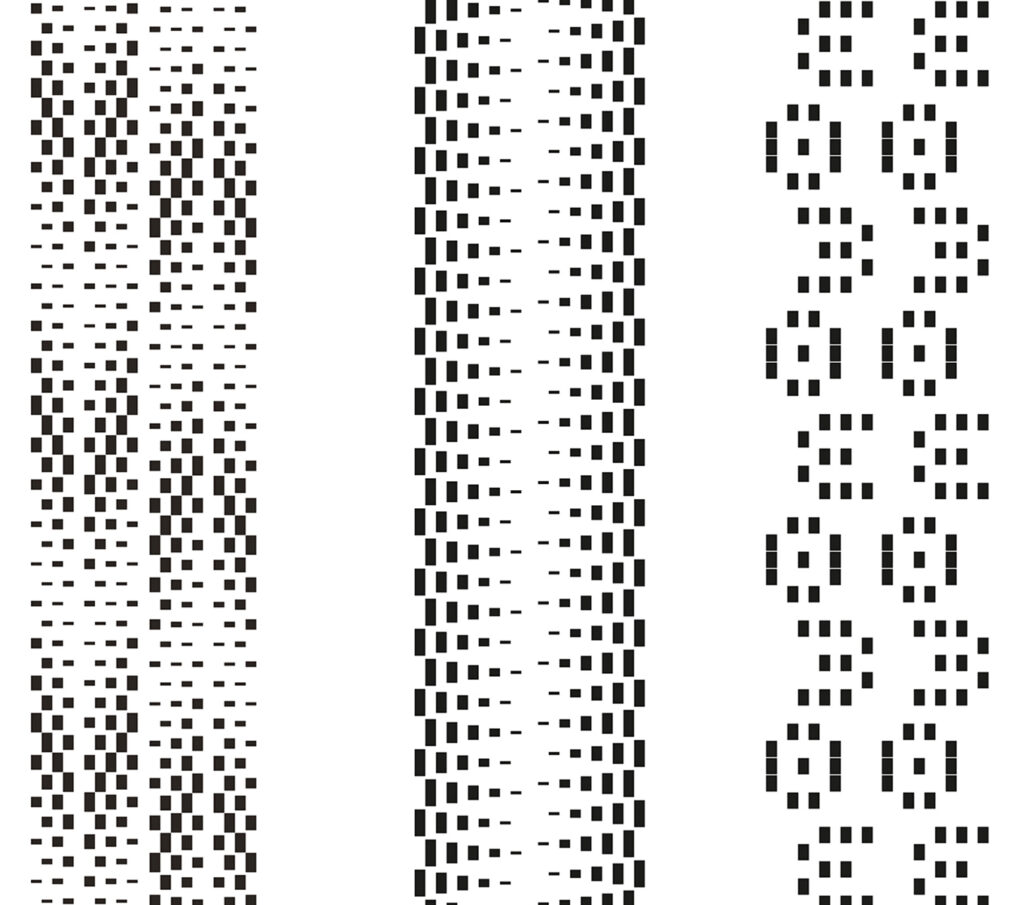
The formal framework for the design was dictated by the programmable capabilities of the striping machine. The valves of this machine are programmable and open or close at set times to leave the desired pattern of white thermoplastic stripes on the asphalt. At a time, the machine can print an area of 50 cm with 10 lines, each 5 cm wide.
Within this system, Martens & Martens developed a pattern of white planes that together form an abstracted 30, strung together in alternating reading directions as in a beaded necklace.
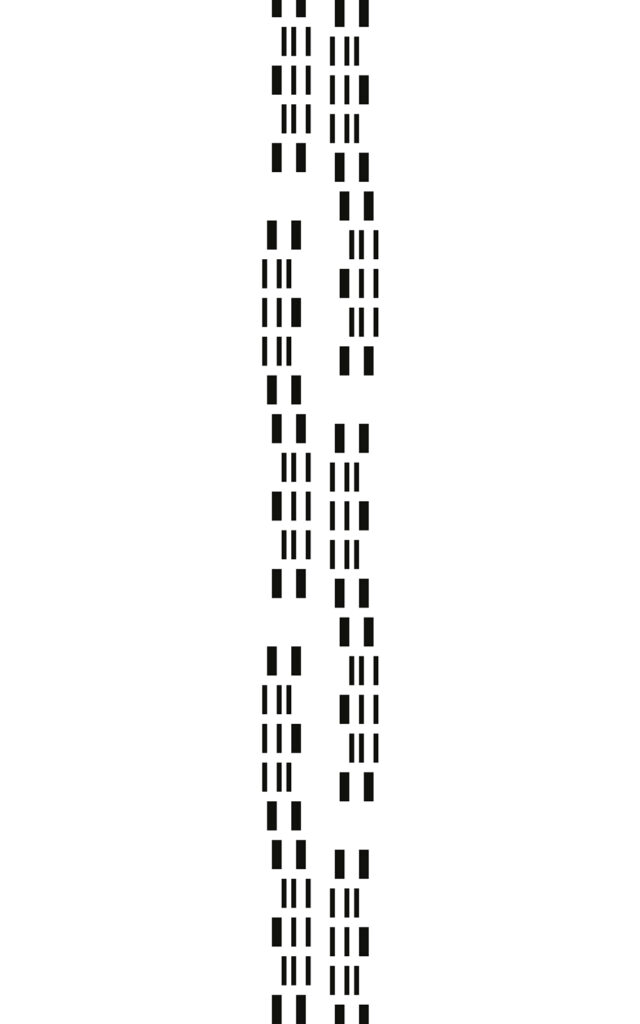
Those familiar with his work will recognize Karel Martens’ typical handwriting in the numbers thus constructed. But many road users do not read numbers in the patterns at all and simply accept the stripes as part of regular signage. And even for practiced viewers, it may take some time before they understand what they are looking at.
Neither designers nor clients find that a problem. On the contrary, it is important if people discover it for themselves and make it their own, Karel says. For the municipality, the association of the pattern with 30 km is already sufficient; after all, there are also regular traffic signs. Other cities have already shown interest.
With thanks to Diederik Martens (Martens & Martens) and Dirk Wijffels (team design Public Space, Municipal Amsterdam).
Photo Karel Martens in the Diepenbrockstraat in Amsterdam: JW Kaldenbach