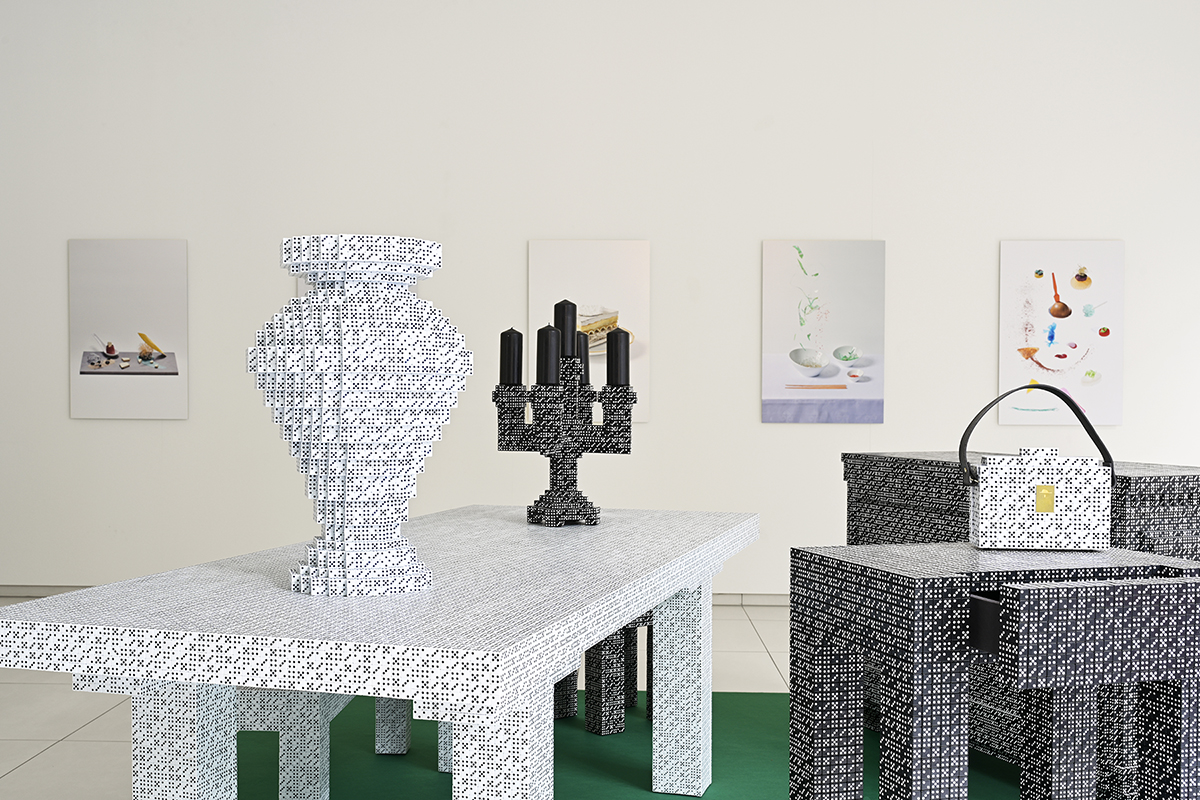
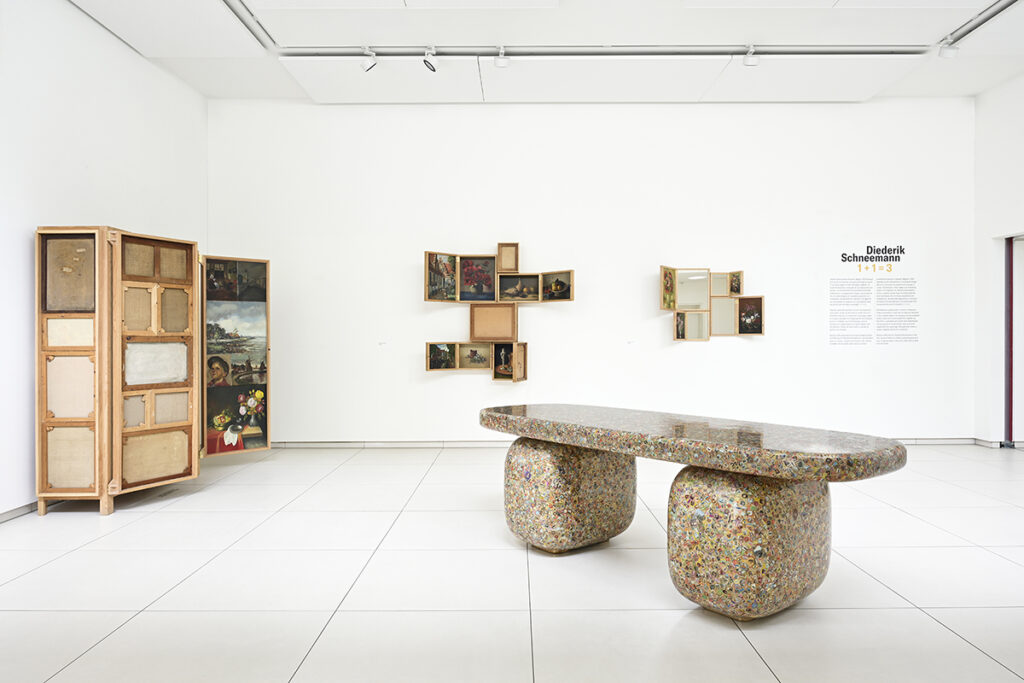
Museum JAN is currently hosting designer Diederik Schneemann’s first solo museum exhibition, featuring a mix of existing works and a number of intriguing new pieces. Schneemann (born in Hasselt in 1979) grew up in Maastricht and studied at the AKI ArtEZ Academy of Art and Design in Enschede.
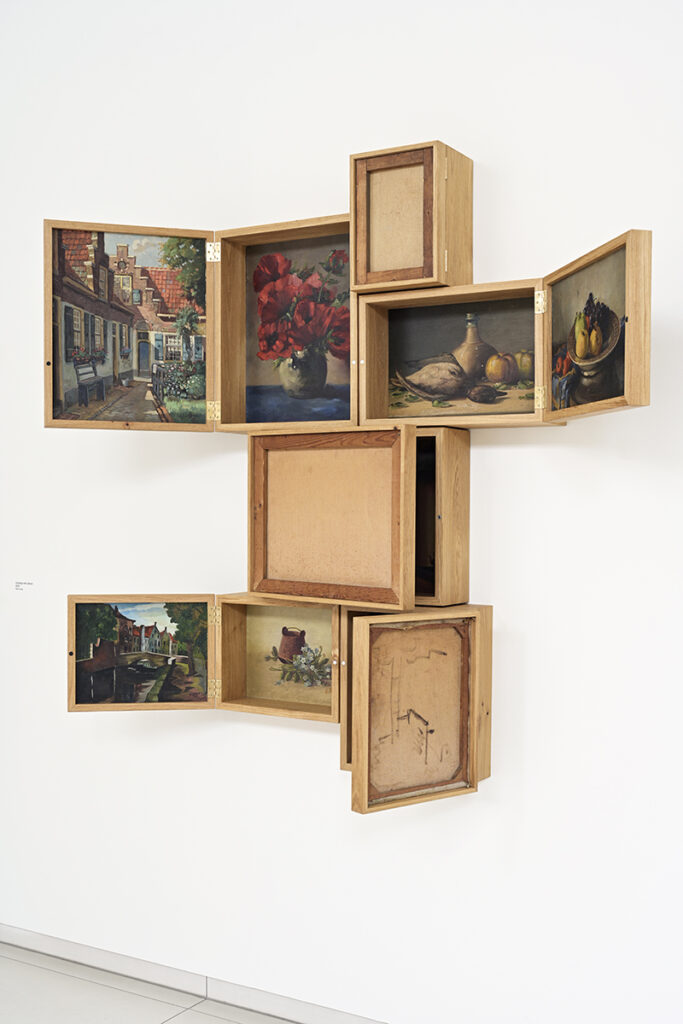
In his art, Schneemann plays with the concept of value, using existing objects or discarded items. He transforms thousands of dice, washed-up flip-flops, perfume bottles, and matchboxes into furniture, sculptures, and installations. Schneemann alters existing items, changing their appearance or function, and thereby giving them an extra dimension. 1 + 1 = 3.
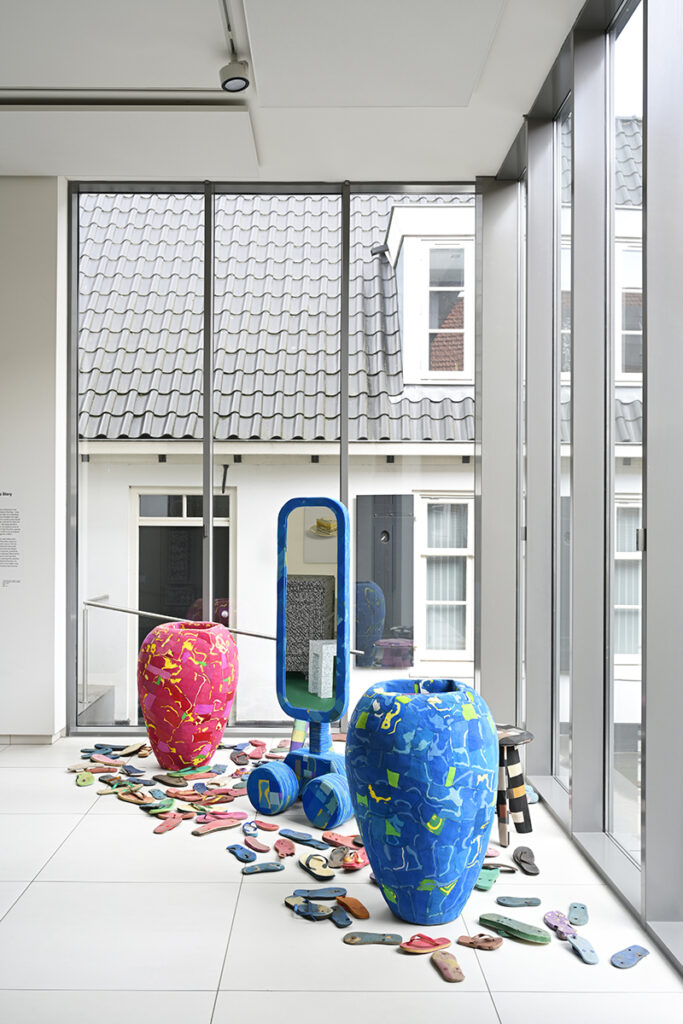
A Flip Flop Story
During a vacation in Kenya, Schneemann was struck by the 45,000 kilograms of flip-flops that wash up on Mombasa’s beaches every year. Inspired by a marine biologist who, among other things, makes doorstops out of these flip-flops, Schneemann produced a series of objects under the name A Flip Flop Story: a vase with a drawer, lampshades, stools—and caused a sensation in 2011 at Salone del Mobile, the prestigious design fair in Milan, where he displayed his Flip-Flop works amid a pile of fresh, smelly flip-flops amidst all the sleek design. Since then, his work has been exhibited at various design fairs and galleries both domestically and abroad.
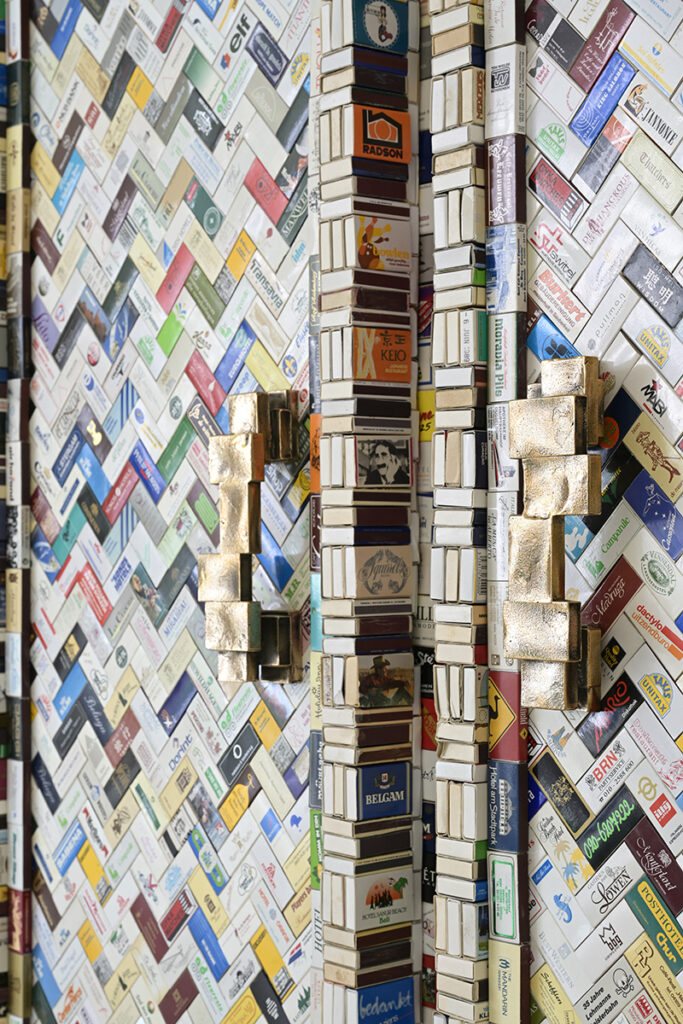
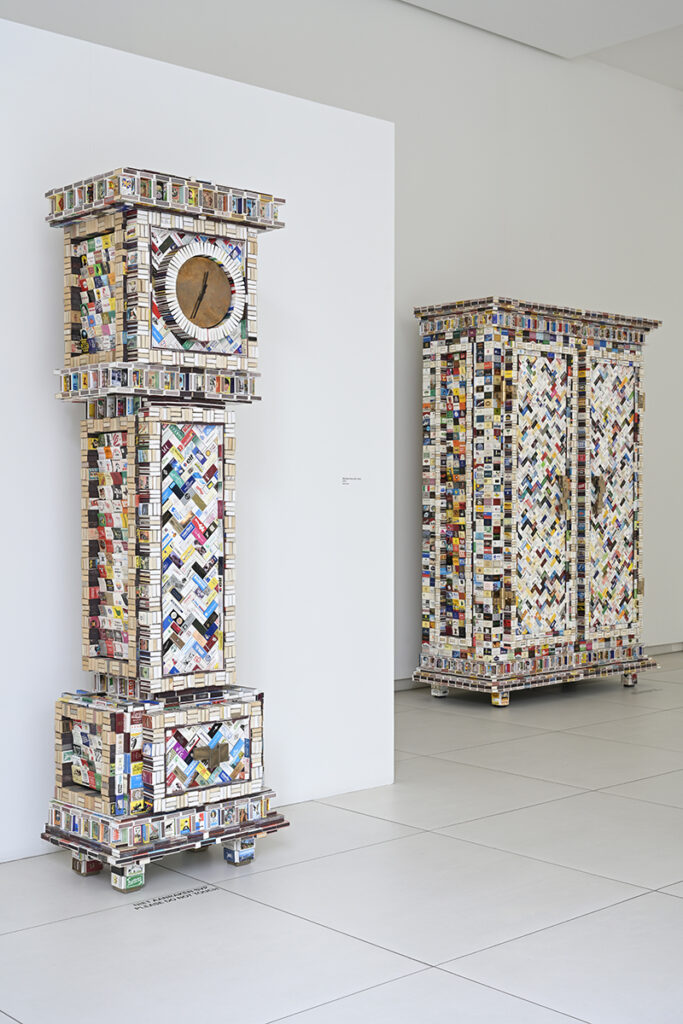

Series
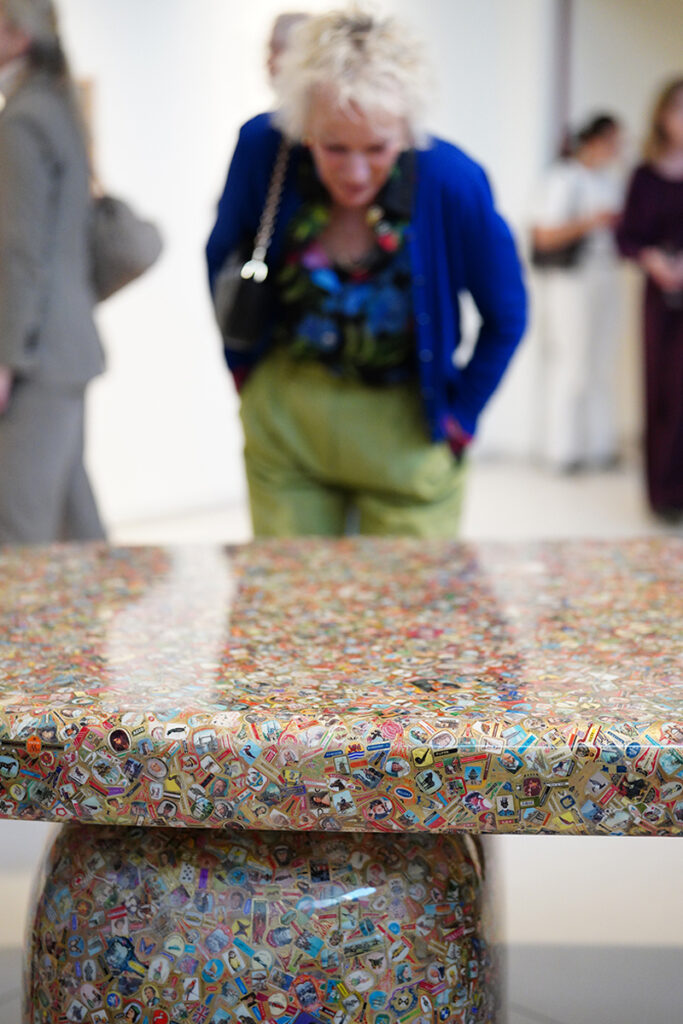
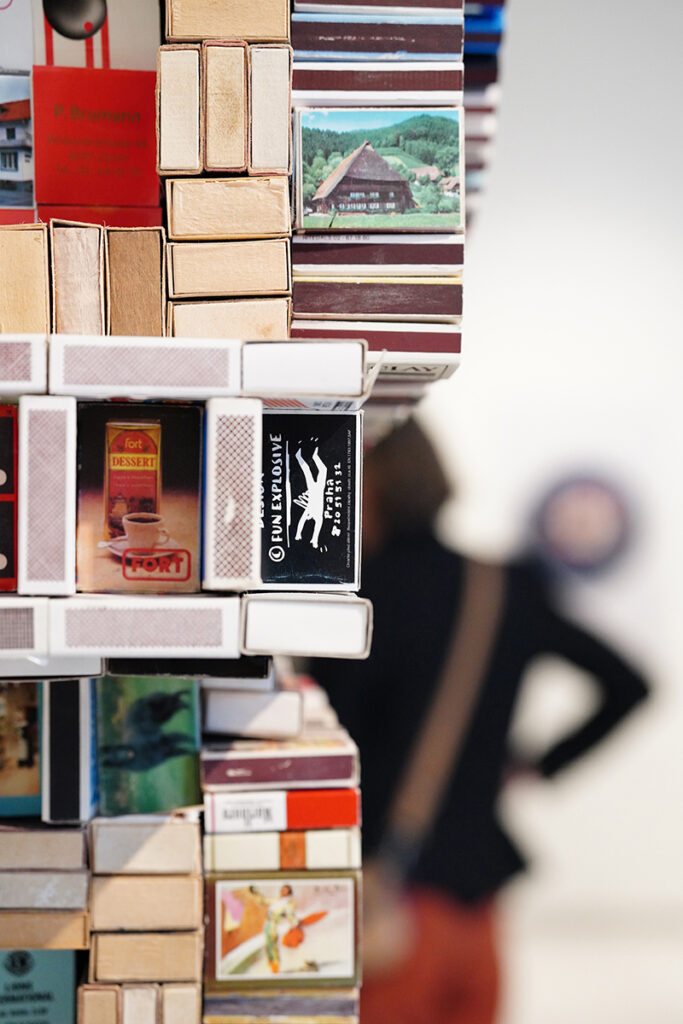
Schneemann operates at the intersection of furniture design, product design, and art. His fascination with old, discarded, and unique collections that people have cherished for decades led to the Cherished series: cabinets and clocks made from matchboxes, imposing chandeliers crafted from hundreds of perfume bottles, and a desk covered in cigar bands.
And the Smurf Dynasty Ming Vases: large vases—the size of a Chinese Ming vase—made from Smurfs. Schneemann: “Those old Smurf figurines were hand-painted in China. My association was quite logical: blue and white and hand-painted in China? That has to be a Ming vase.”
Humor
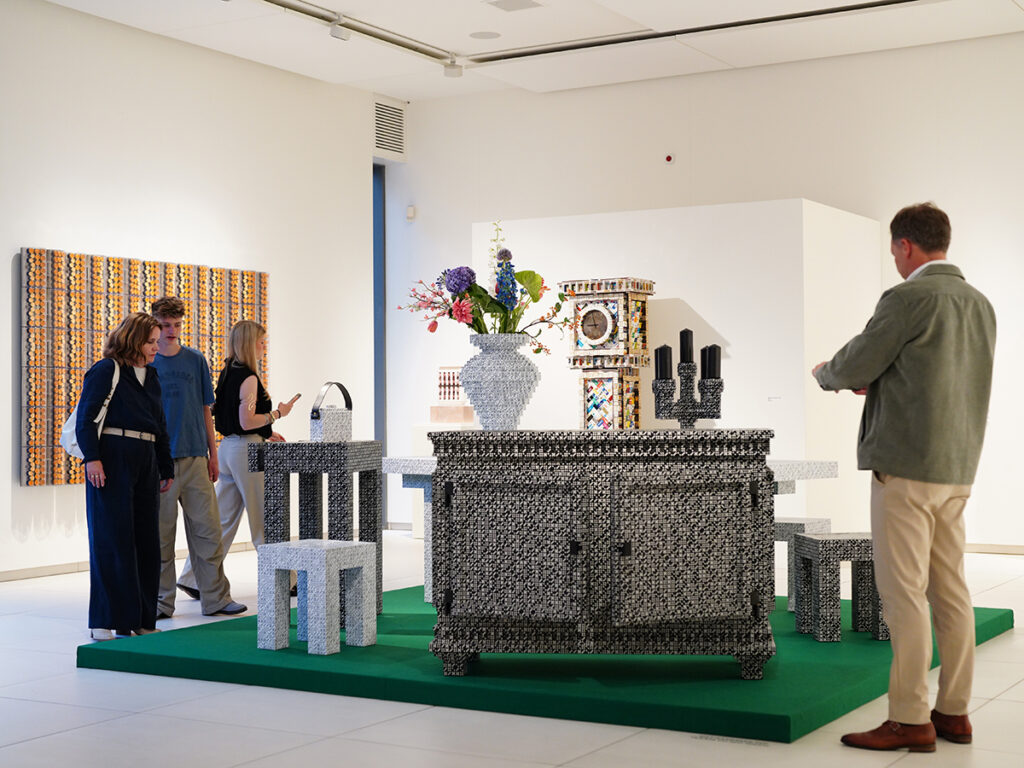
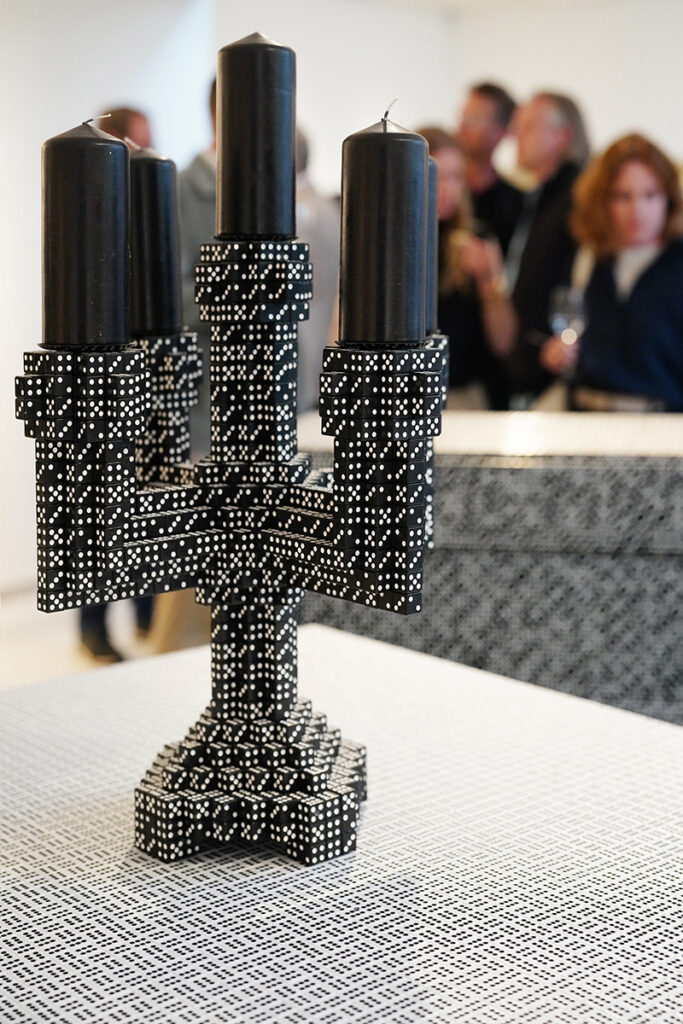
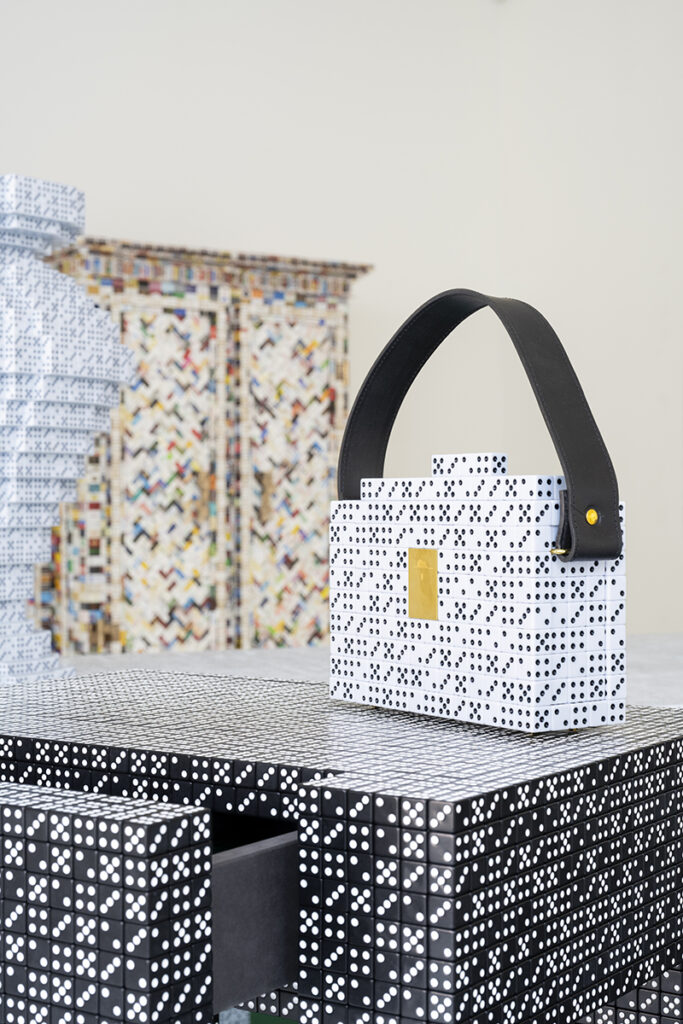
Museum JAN is exhibiting pieces from various collections Schneemann has created over the past ten years, including the Lucky Dice series, for which he first attempts to roll a six. Only once the dice land on six are the (tens of thousands!) of dice incorporated into the furniture pieces. This is done to capture luck and thus create a lucky charm. In MashUp—a series of 3D-printed furniture—Schneemann combines elements of world-famous designs. Are you looking at a Rietveld or an Eames, or has it now become a Schneemann? He plays with and explores the boundaries of originality and copyright. Recognition and alienation intertwine. His recent work is more conceptual, such as the Permanent Collection series, an abstract “tableau” made from Carmen curler sets, which museums without their own permanent collection can borrow from him. His designs often elicit a smile from the visitor, and that is exactly what Schneemann aims for.

Value
The use of existing objects is a recurring theme in Schneemann’s body of work. “My mother always said, ‘The trick is to make something out of nothing.’ By utilizing collections, trash, or everyday objects, he adds a conceptual layer that transcends the sum of its parts. What is worthless to one person may be valuable to another. ‘By encouraging people to look at the used objects through a different lens, they discover new beauty or meaning. My objects tell a new story,’ says the artist. In doing so, he challenges the commercialization of the art world. At PAN Amsterdam, Schneemann literally served up a pan of hot air.
Diederik Schneemann, 1 + 1 = 3
Museum JAN, Amstelveen
8 May – 1 November, 2026
museumjan.nl
Photography: Naomi Heidinga (opening), Eddy Wenting


