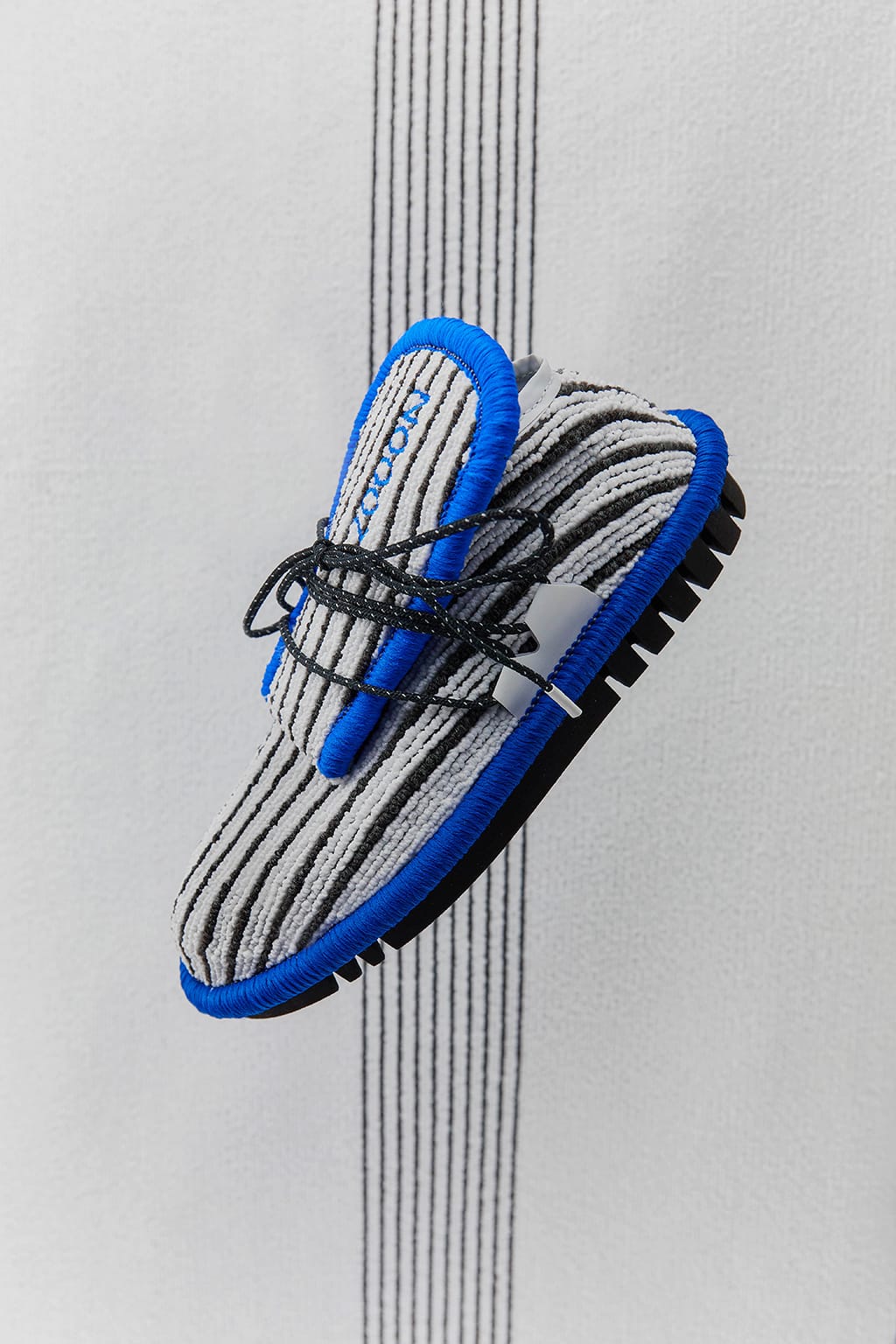
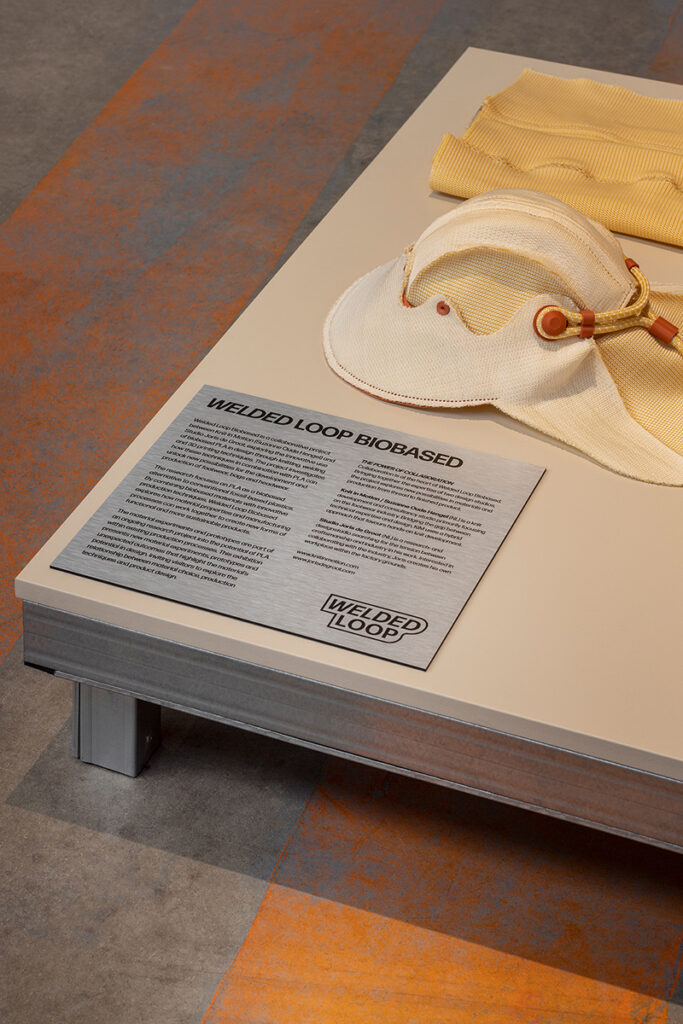
Welded Loop Biobased is a collaborative project between Knit in Motion (Suzanne Oude Hengel) and Studio Joris de Groot, exploring the innovative use of biobased PLA in design through knitting, welding and 3D printing techniques. The project investigates how these techniques in combination with PLA can unlock new possibilities for the development and production of footwear, bags and headwear.
The research focuses on PLA as a biobased alternative to conventional fossil-based plastics. By combining biobased materials with innovative production techniques, Welded Loop Biobased explores how material properties and manufacturing processes can work together to create new forms of functional and more sustainable products.
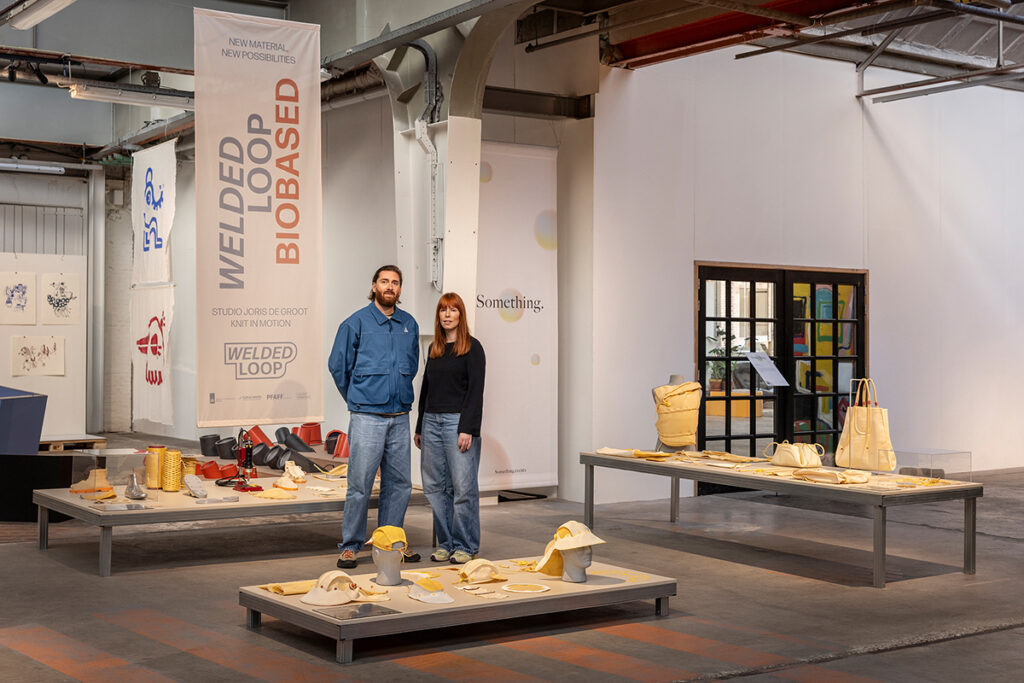
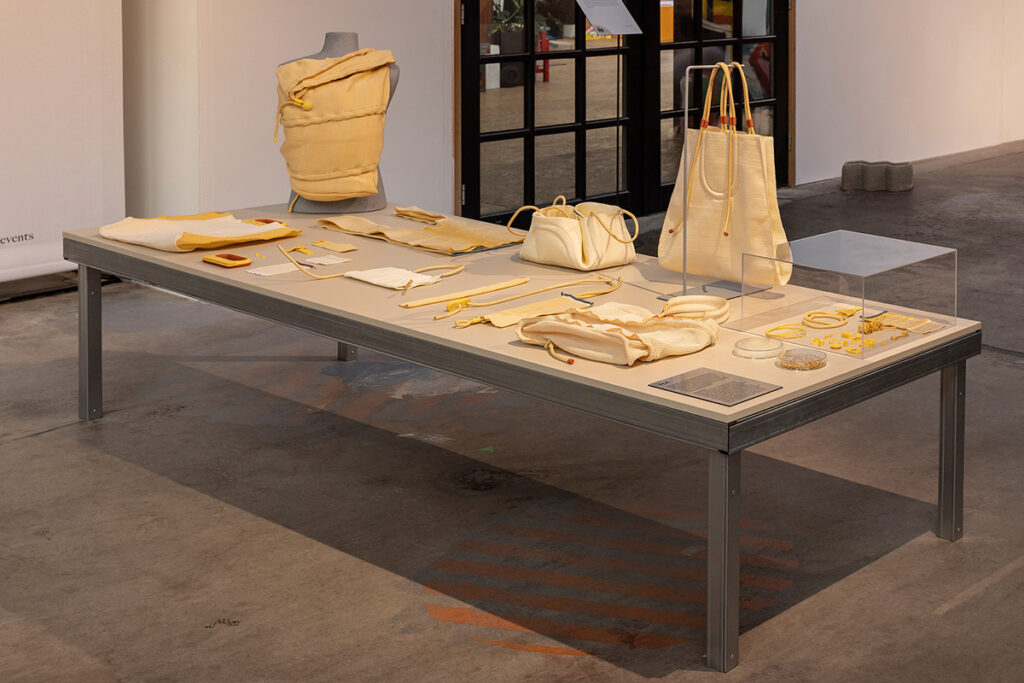
The material experiments and prototypes are part of an ongoing research project into the potential of PLA within existing production processes. The exhibition during the Dutch Design Week 2026 presents new material experiments, prototypes and unexpected outcomes that highlight the material’s potential in design, inviting visitors to explore the relationship between material choice, production techniques and product design.
The power of collaboration
Collaboration is at the heart of Welded Loop Biobased. Bringing together the expertise of two design studios, the project explores new possibilities in materials and production from thread to finished product.
Knit in Motion / Suzanne Oude Hengel is a knit development and consultancy studio primarily focusing on the footwear industry. Bridging the gap between technical expertise and design, KiM uses a hybrid approach that favours hands-on knit development.
Studio Joris de Groot is a research- and designstudio searching for the tension between craftsmanship and industry in his work. Interested in collaborating with the industry, Joris creates his own workplace within the factory grounds.
PLA
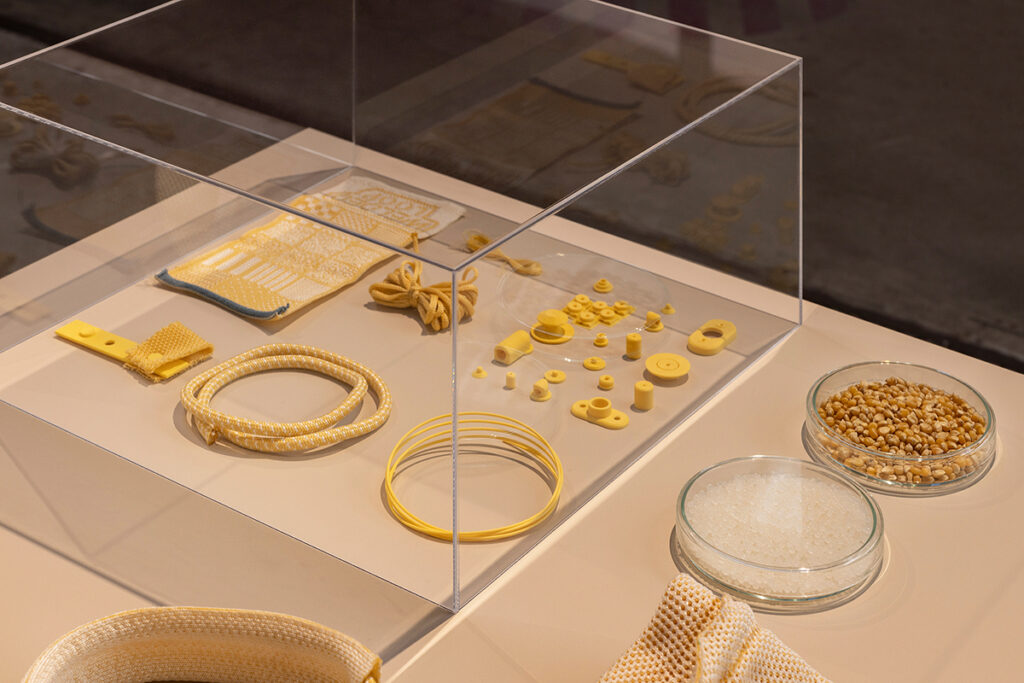
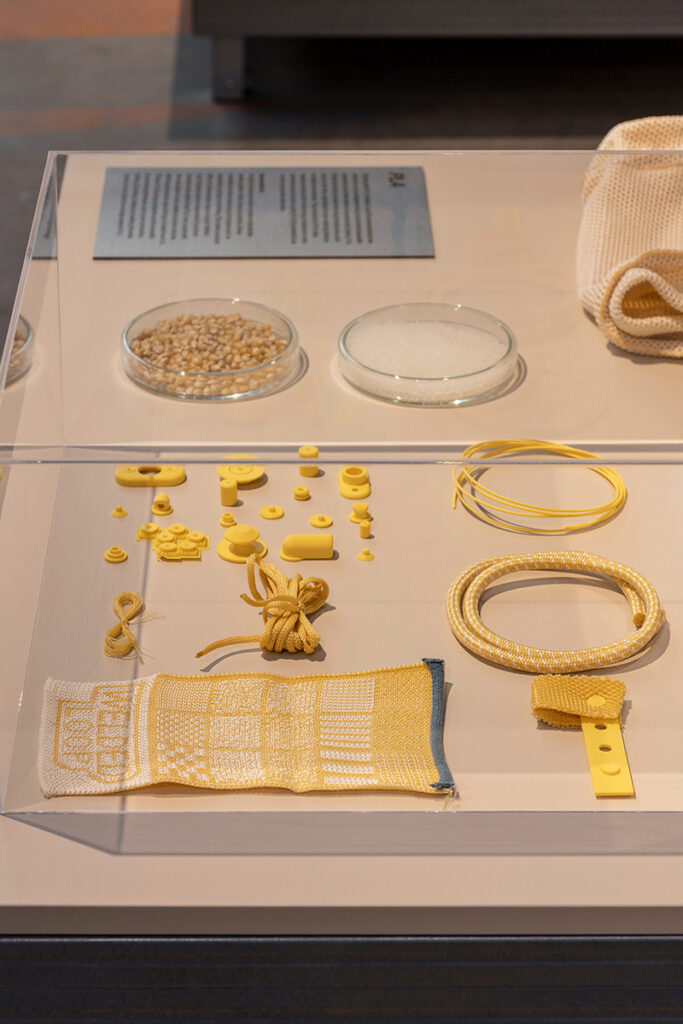
Starting with PLA, Welded Loop Biobased explores how products can be designed using natural and renewable materials as an alternative to conventional plastics. PLA (Polylactid Acid), is made from natural resources, such as corn and other agricultural crops, reducing reliance on fossil raw materials. The production of PLA also requires relatively little fossil energy compared to many petroleum-based plastics, giving PLA the potential to be a more sustainable alternative.
Monomaterial
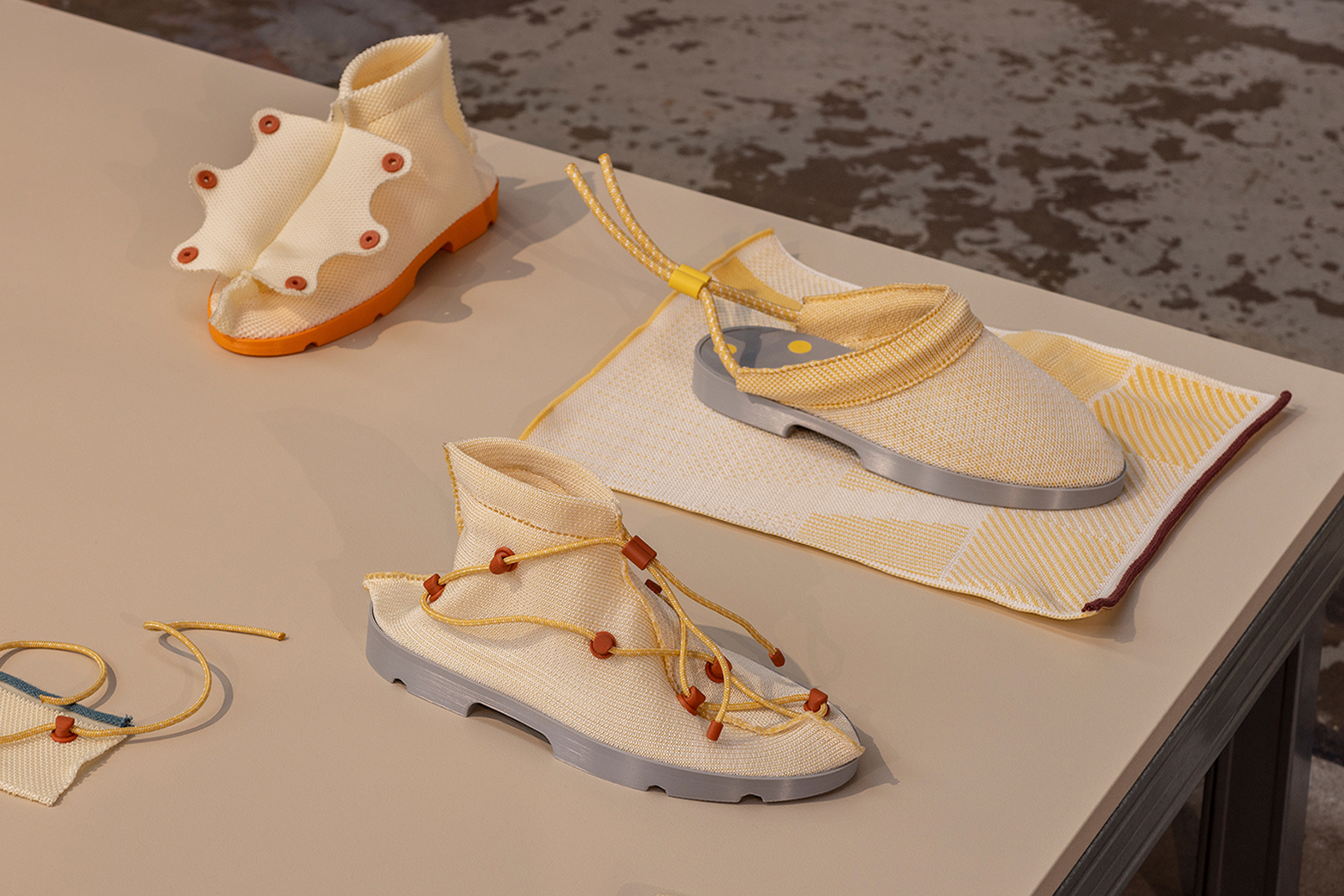
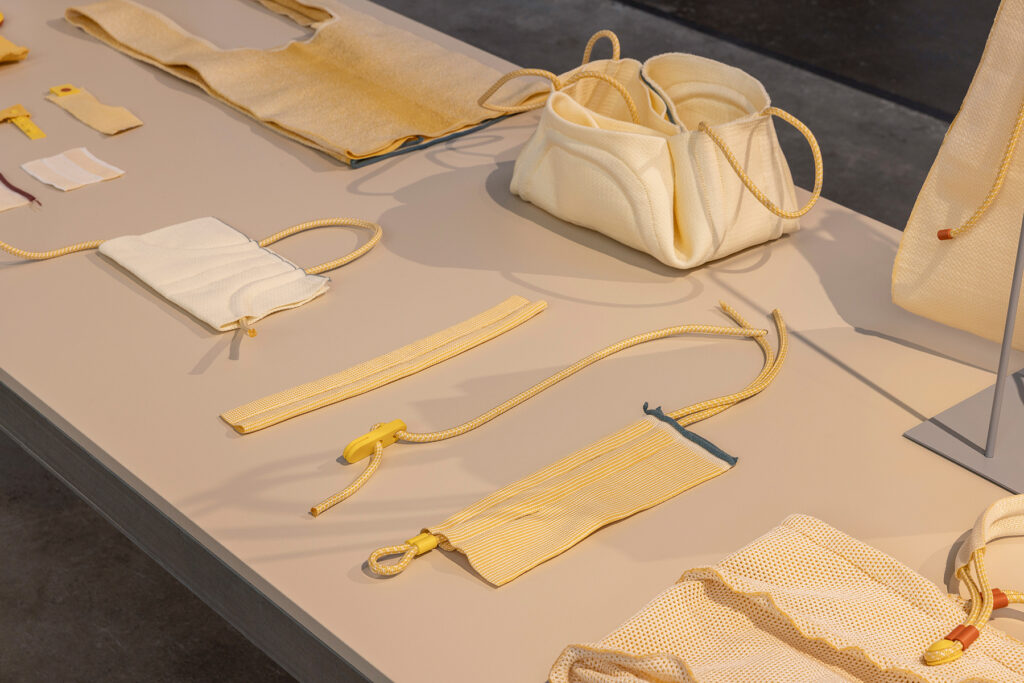
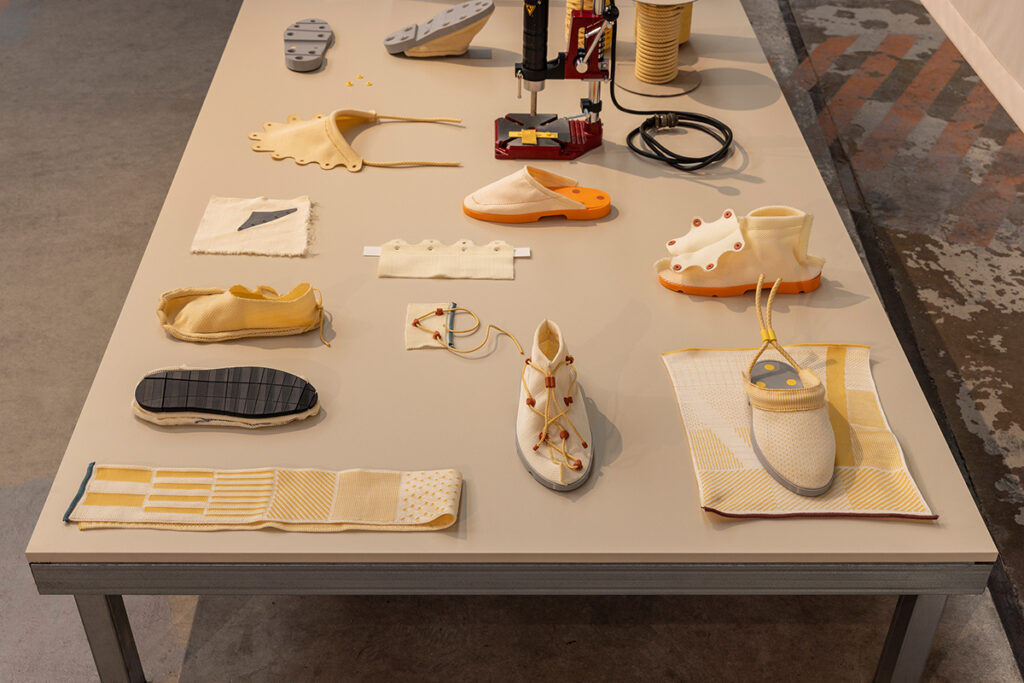
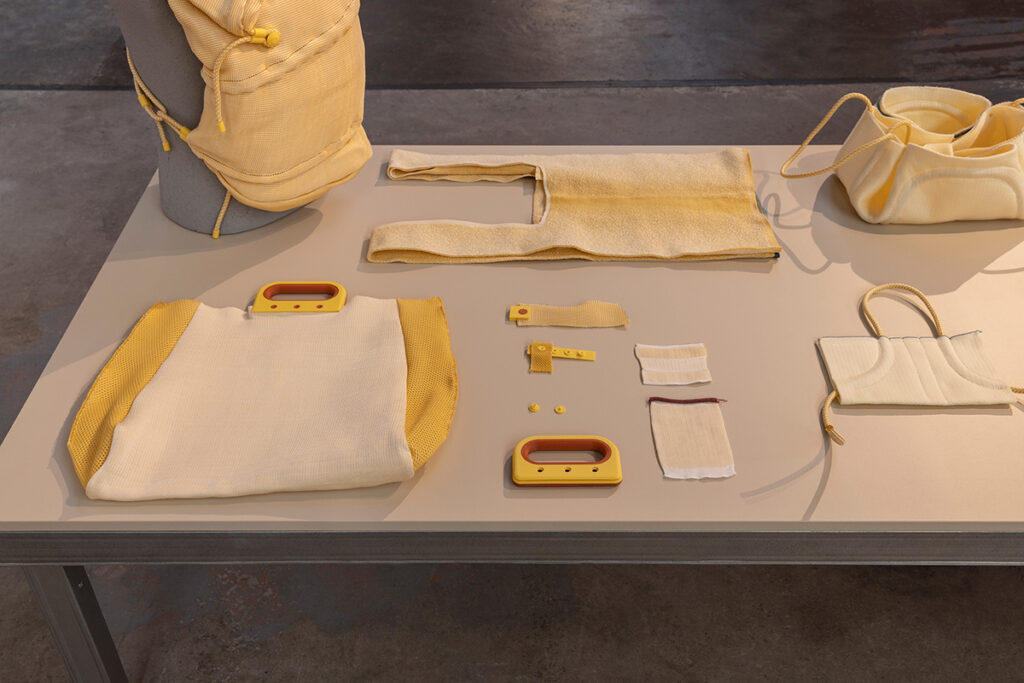
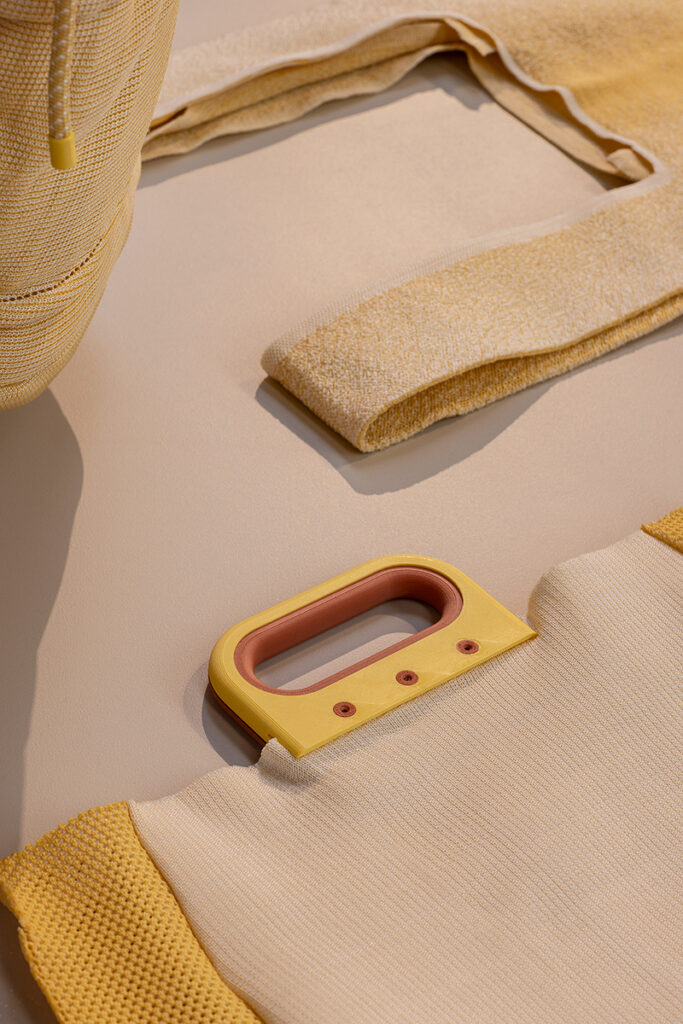
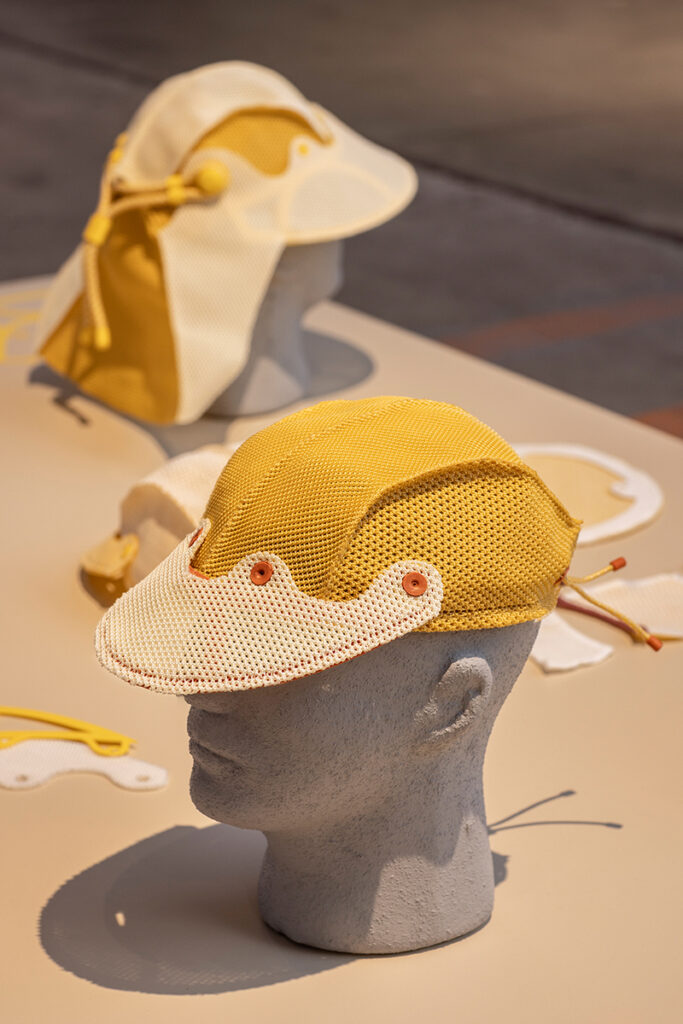
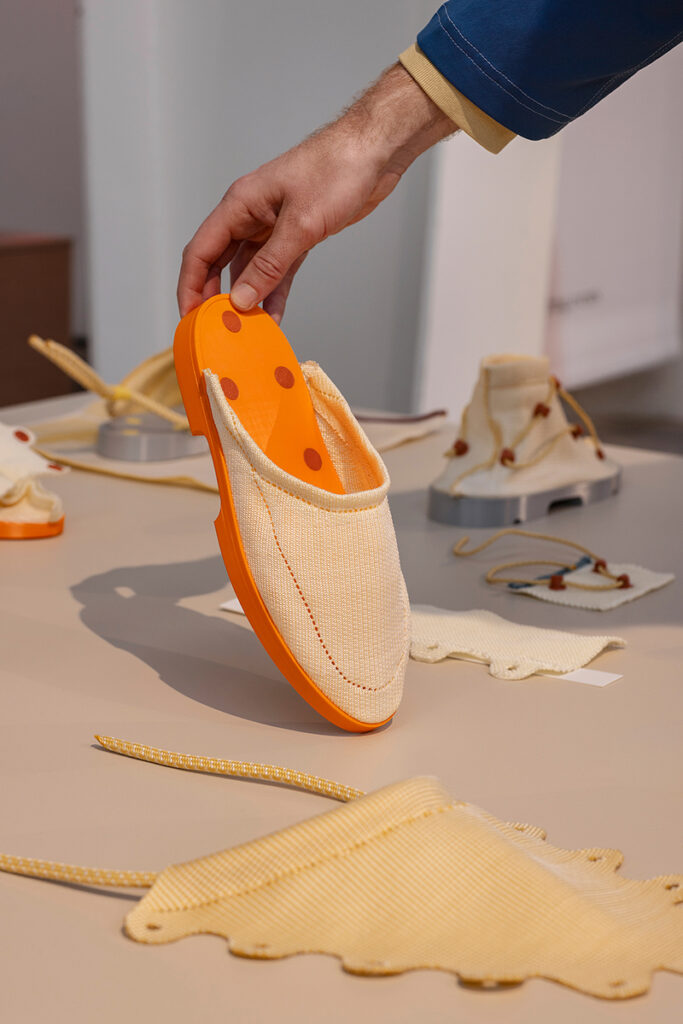
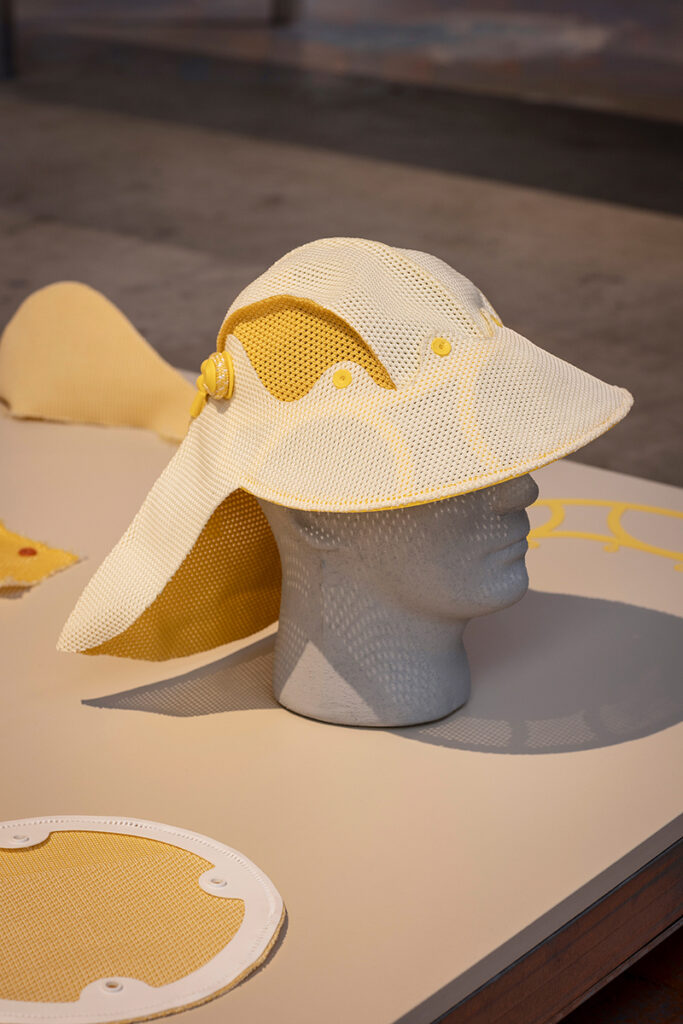
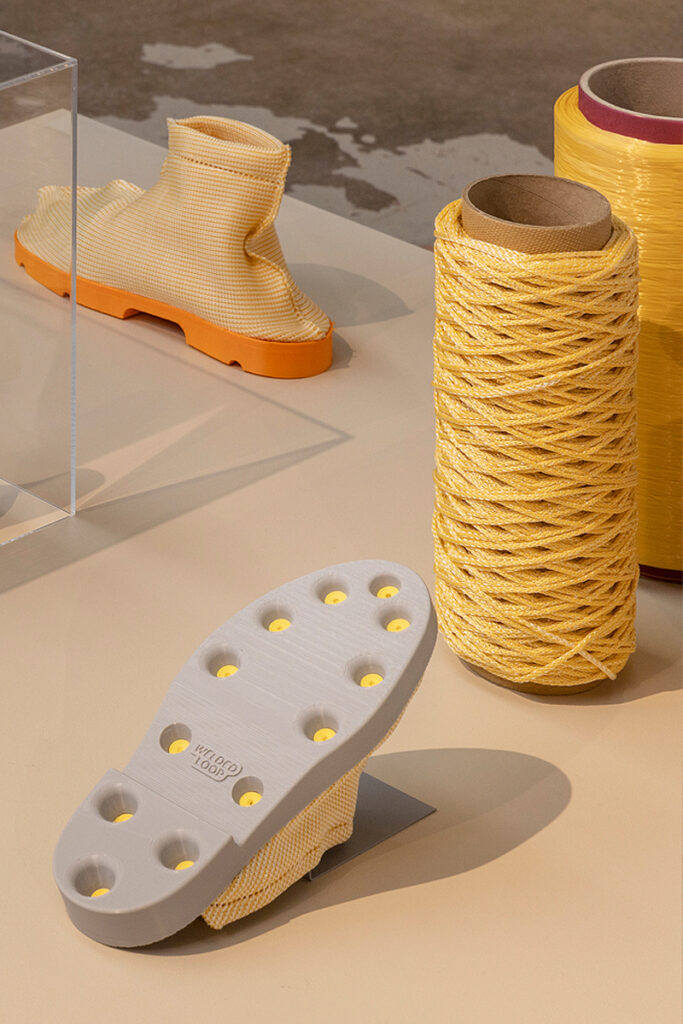
Fashion accessories often combine materials like textiles, leather, rubber, foam and plastics. These materials are often joined using techniques such as adhesives, coatings and stitching. This makes products difficult to disassemble, reuse or recycle. Welded Loop Biobased explores monomaterial functional products made entirely from PLA. Every component, from shoe laces to soles, textile structures, closures, stiffening elements in caps and bags, is made from PLA. Thanks to PLA’s unique properties and its versatility in processing techniques, such as yarn production, knitting, 3D printing, braiding and welding, the entire product can be made from a single material: PLA.
Techniques
Within Welded Loop Biobased, various techniques were explored to process PLA to create more sustainable and functional products.
Knitting
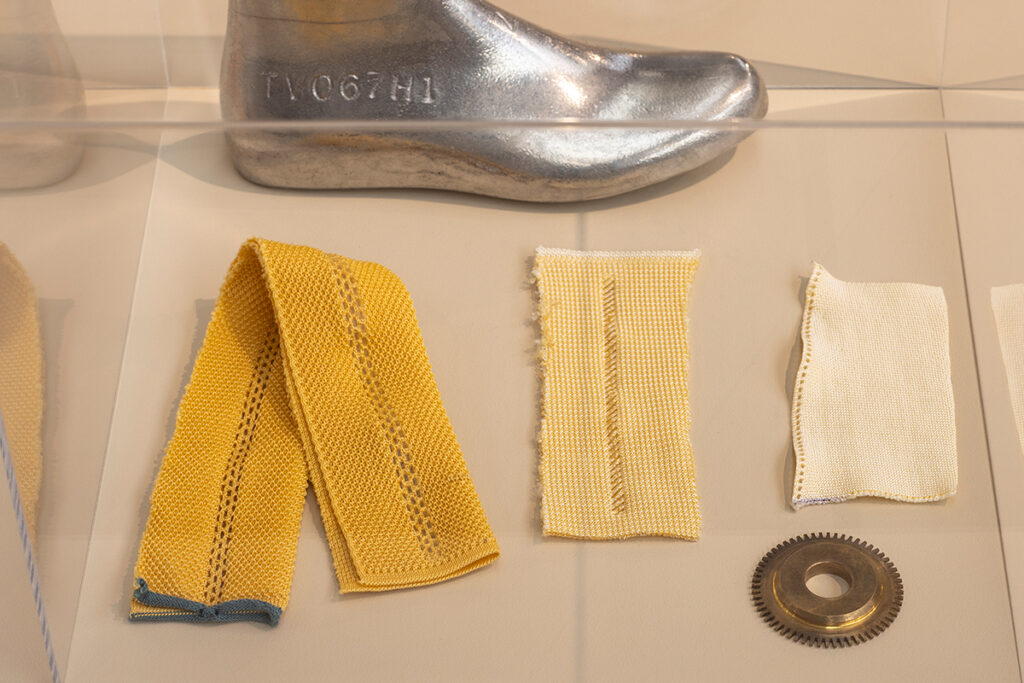
For Welded Loop Biobased, a custom yarn made entirely from PLA was developed in three colours. With this yarn, we developed and knitted our own bespoke textiles.
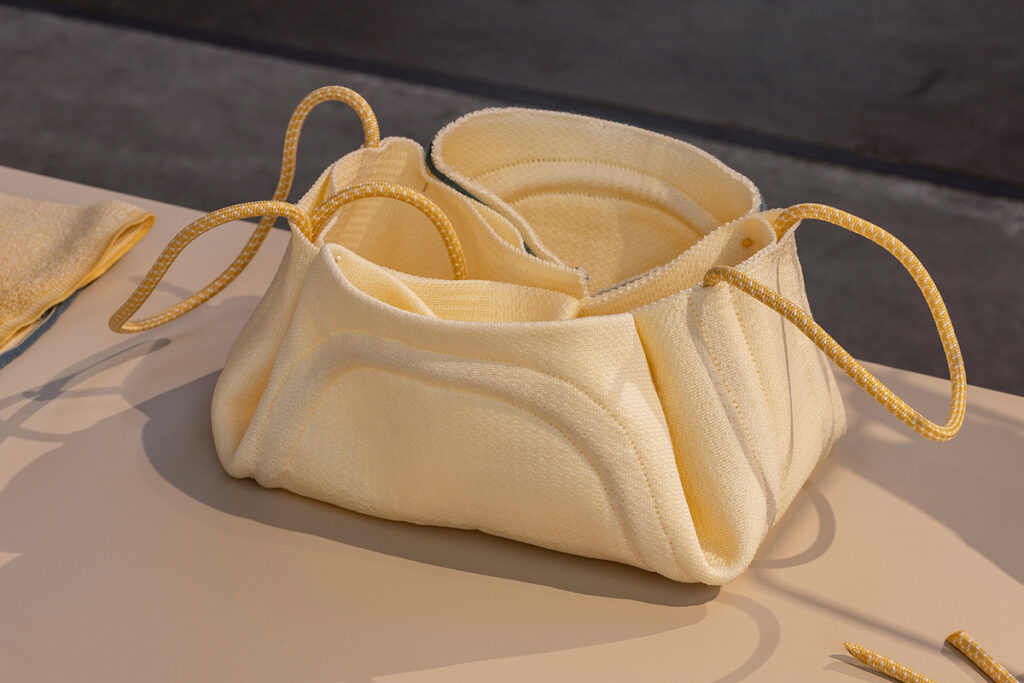
Different knitting techniques and structures were explored, including open-knit structures, spacer knits and jacquard knits. The research focused on variations in structure, thickness and strength, as well as the integration of graphic patterns, colour transitions and markings. Each product is designed with a knit structure suited to its function and form.
3D printing
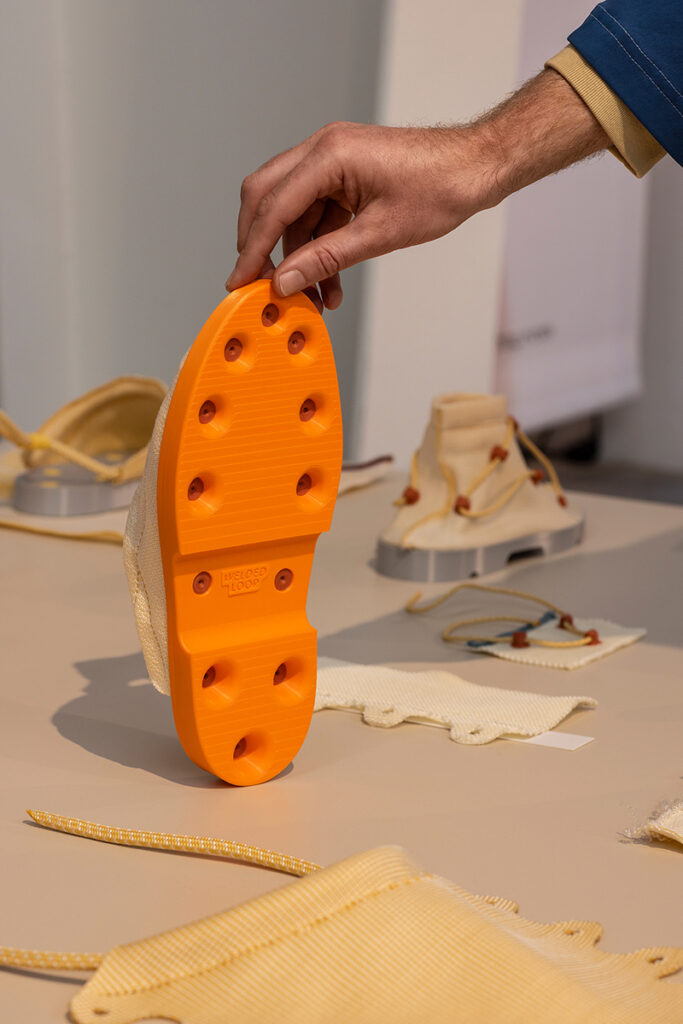
PLA’s unique properties make it suitable for 3D printing. Within Welded Loop Biobased, this technique was used to develop functional components, including shoe soles, lace connectors, cap frames and bag handles and closures.
Rope braiding
Rope is incorporated in various Welded Loop Biobased products. For this project, the developed PLA yarn is braided into ropes of varying thicknesses. Made from 100% PLA, the ropes are developed in collaboration with Eurocarbon.
Ultrasonic welding
Within Welded Loop Biobased, two types of ultrasonic welding techniques are used to join different product components through high-frequency vibrations, eliminating the need for adhesives or additional materials. Within the project, this technique has been applied in a way that draws inspiration from the automotive industry, where it is frequently used to create continuous seams or precise joining points. Spot welding, for example, is commonly used to join panels in car doors. The project researches the strength of welded connections, including the joining of soft and hard materials and the bonding of 3D-printed components to textiles. For this technique, we collaborated with Pfaff Industrial.
Photography: Barbara Medo