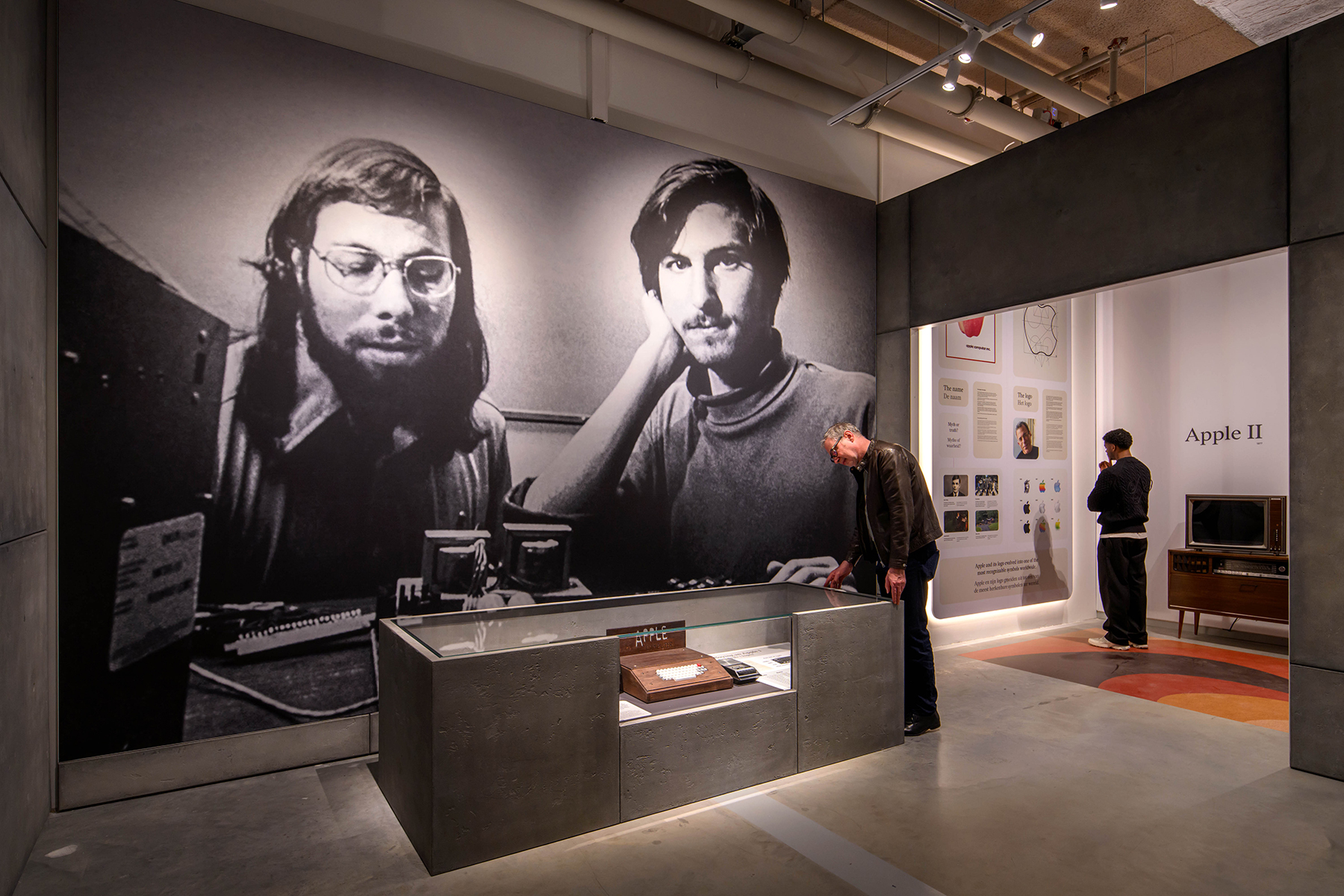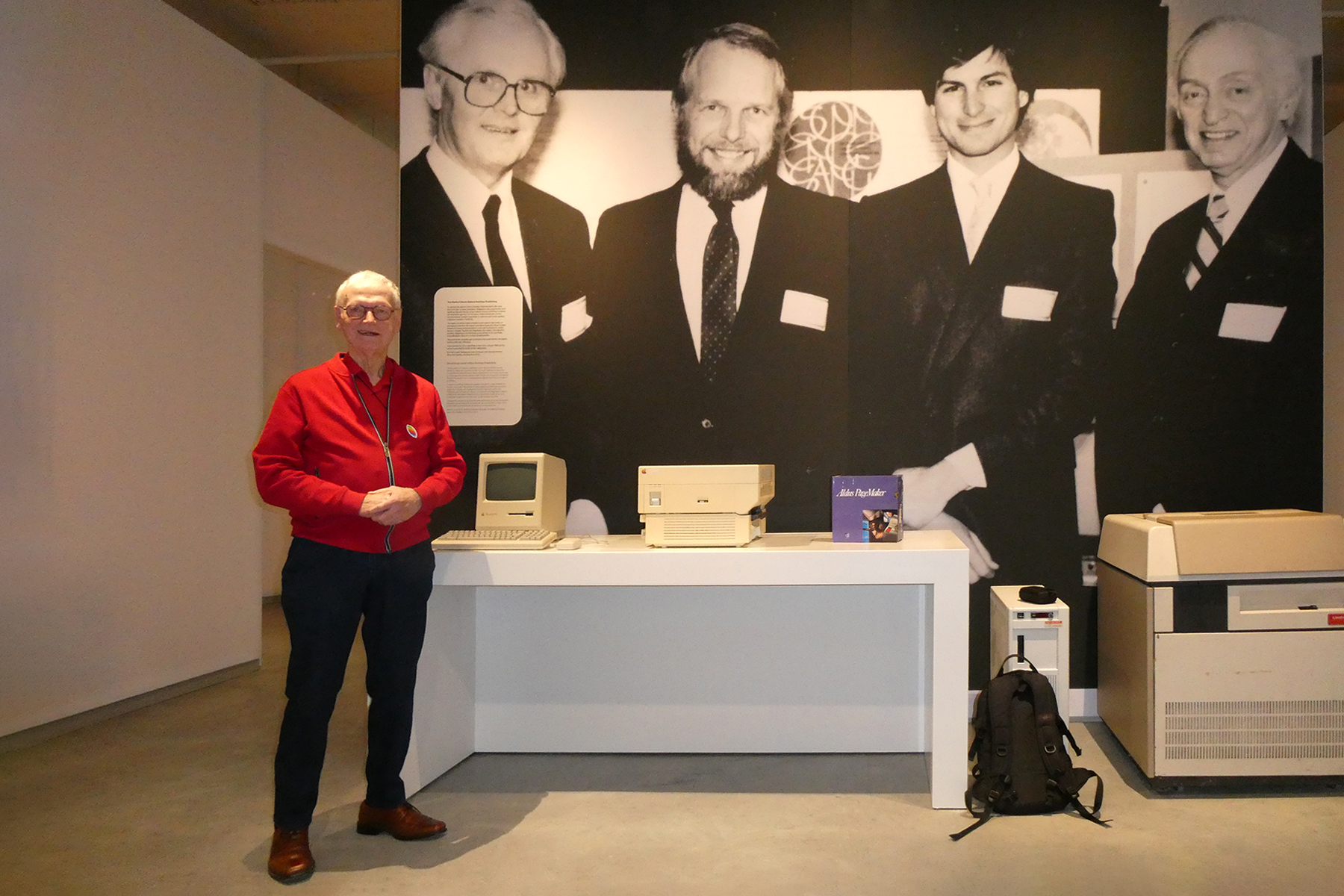
Museum Celebrates Apple’s Golden Jubilee
The company could have been called Executek in 1976. Matrix Electronics, perhaps. Or Personal Computers Inc. But in the end, Steve Wozniak and Ronald Wayne opted for the name suggested by their partner Steve Jobs: Apple. Over the next fifty years, through ups and downs, it grew into an iconic tech brand. Henk Gianotten reflects on what is perhaps one of Apple’s most significant achievements: the introduction of desktop publishing.
In the 1980s, Gianotten was responsible at the Tetterode trading company for the sale of both reproduction systems and photographic typesetting systems. At the time, these systems were necessary for producing text blocks, individual headlines, and continuous tone prints of images, which were then assembled—with a great deal of manual labor—into pages for newspapers, books, and magazines. “The integration of text and images was not possible with the techniques used at the time—it was a dead end. We had to look for other techniques.”
“This is the future”
When Buhrmann Tetterode (BT) took over sales of Linotype phototypesetting systems and digital typefaces in seven countries in 1984, it soon became clear to Gianotten that the long-awaited new technology was indeed on the horizon. It turned out that Linotype was collaborating with Adobe—founded in 1982—on a page description language called PostScript, which would make it possible to format text, vector graphics, continuous tone images, and raster images in both black-and-white and color on a page layout. “From the very beginning, it was clear to me: this is the future.”
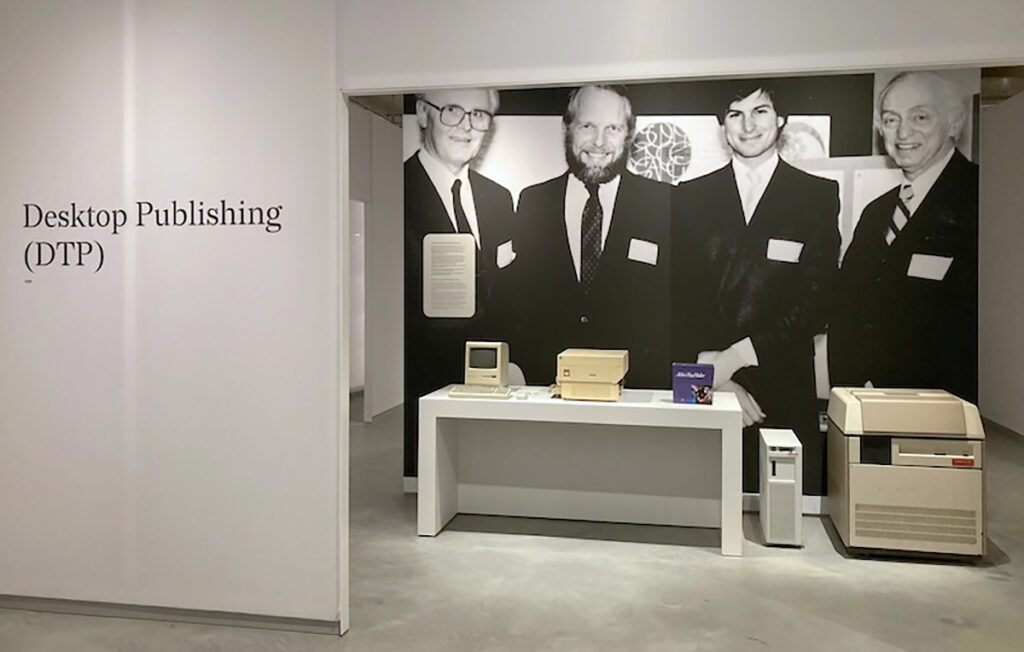
It wasn’t until somewhat later that Gianotten realized Steve Jobs was also deeply involved in the project involving Linotype, Adobe, and the type foundry ITC: “In the end, it was a fantastic combination. Jobs considered typography—and the quality of typography—to be of the utmost importance. He was adamant that Helvetica be available on his printers and sought a way to make it easier to control from within Apple.” Adobe met Apple’s requirements with its page description language because it had obtained licenses from Linotype, at that time the leading supplier of digital typefaces for the graphic arts industry.
Mister Postscript
Gianotten calls it “brilliant” that Jobs took control of the launch of the first LaserWriter printer and the announcement of PostScript in 1985. “Jobs said: We’re not going to introduce it at a computer trade show. We’re going to New York, to Madison Avenue, where all the advertising agencies are. We’re going to present it in that market, because if we have the advertising industry behind us and they say, ‘Yes, this is the future,’ then the rest will follow naturally.”
His enthusiasm for the new desktop publishing capabilities earned Gianotten the nickname “Mister Postscript” in the Netherlands. But not everyone immediately shared his vision: competitors called it “DT Prut,” and some people within his own organization didn’t see the point of it at all. “Some of the customers also said, ‘You guys are completely crazy to be doing this.’”
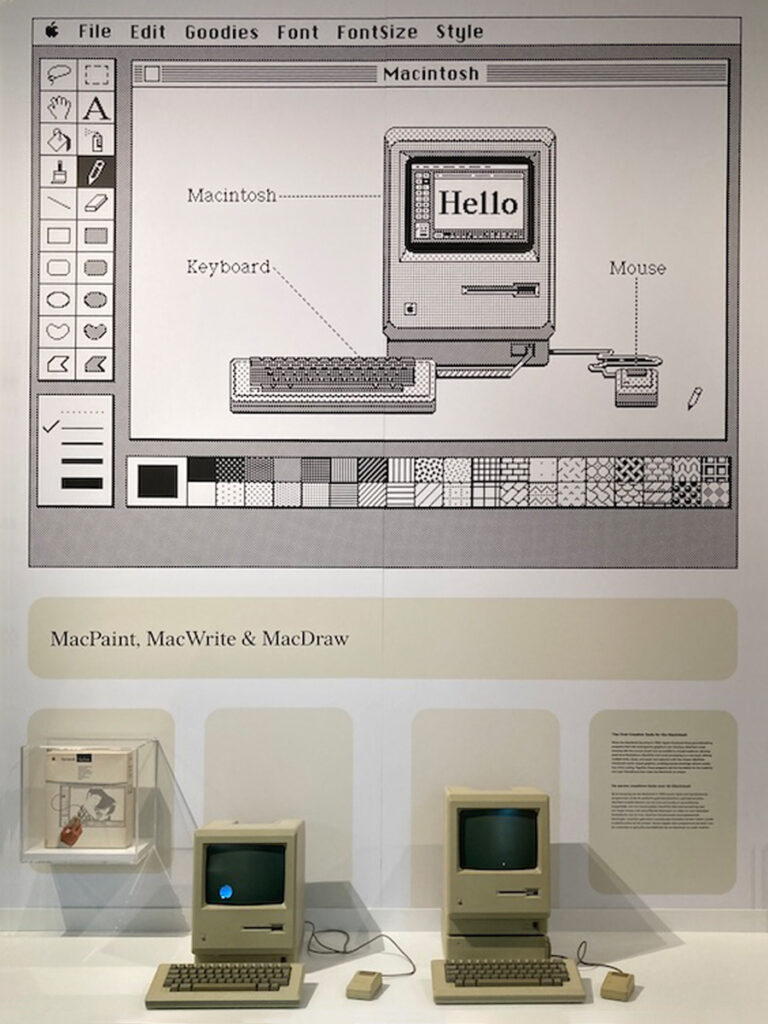
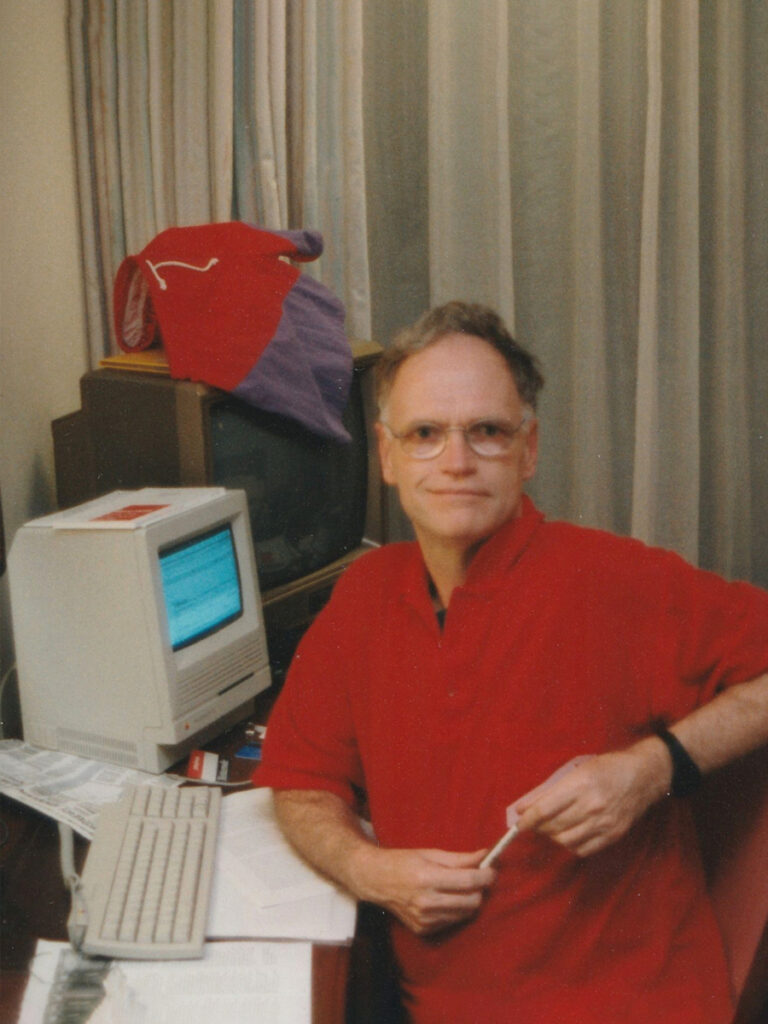

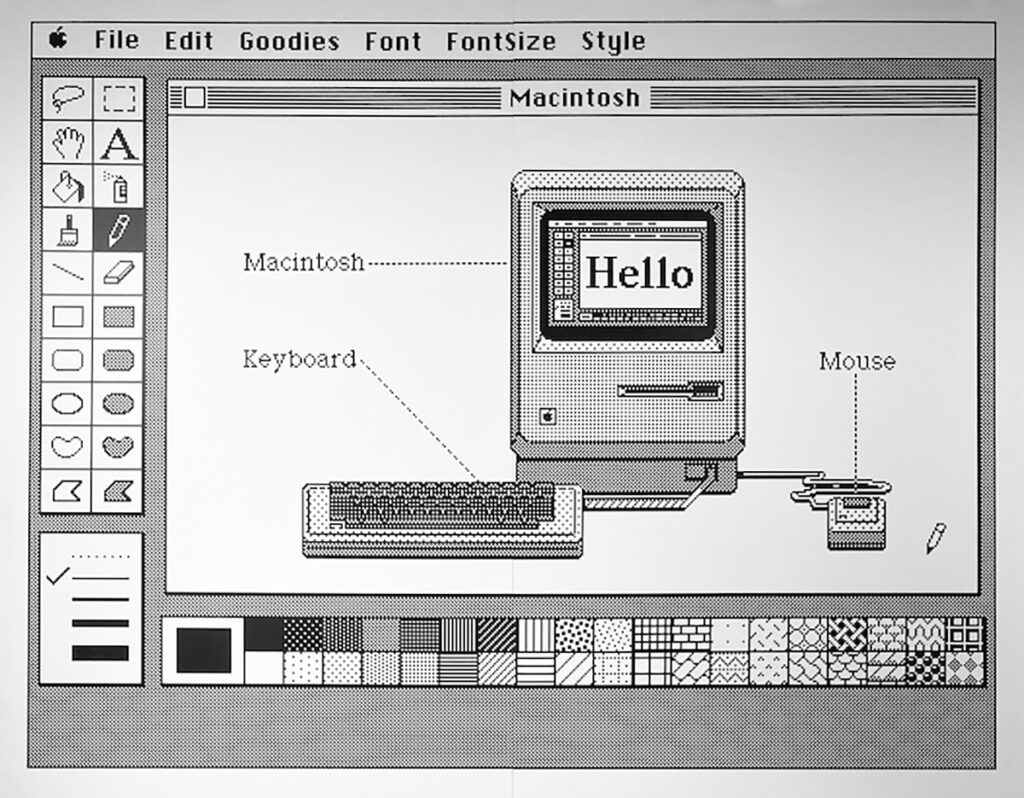
Others saw the rise of DTP as a threat: “Back then, we still needed lithographers and typesetters to create pages. But as soon as you could lay out a page using WYSIWYG (What You See Is What You Get) on an Apple Macintosh and send it directly, that was a threat. People also held that against me. They said: “Henk, you helped shrink the graphic arts industry; we’ve lost a huge chunk of our work to graphic designers and advertising agencies.” But to me, it was crystal clear: this is the future.”
The industry has been completely transformed
Looking back, Gianotten describes the success of DTP as “downright destructive” for the industry: “It has completely transformed the graphic arts industry and significantly reduced its size. And this technology has also completely changed the graphic design process. The positive aspect is that printed materials are now more attractive and of higher quality, can be produced more quickly, and have also become relatively much cheaper.”
“The revolution that Apple helped spark in 1985 ultimately led, among other things, to today’s standardized color management: ‘ICC has now become the global standard, and virtually every form of color management—whether in physical or digital form—is now based on it. It’s a technology we all use without even realizing it. Apple made that possible,’ says Gianotten.”
He also points out the Unicode character encoding, which was made possible in part by Apple: “The so-called UTF-8 (Universal Transformation Format) is now the standard for word processing and messaging virtually everywhere. Unicode is there, but you hardly notice it.” Or take the universal PDF file format: “It makes it very easy to exchange a wide variety of content between all kinds of media with virtually no problems. We’ll never be able to do without PDF.”

This article is based on (edited) excerpts from the interview with Henk Gianotten featured in the Radio Grafisch podcast by De Grafische Vakpers and on the presentation Henk Gianotten gave during the opening of the Apple Museum in Utrecht on April 1, 2026.