Report by Branko Popovic
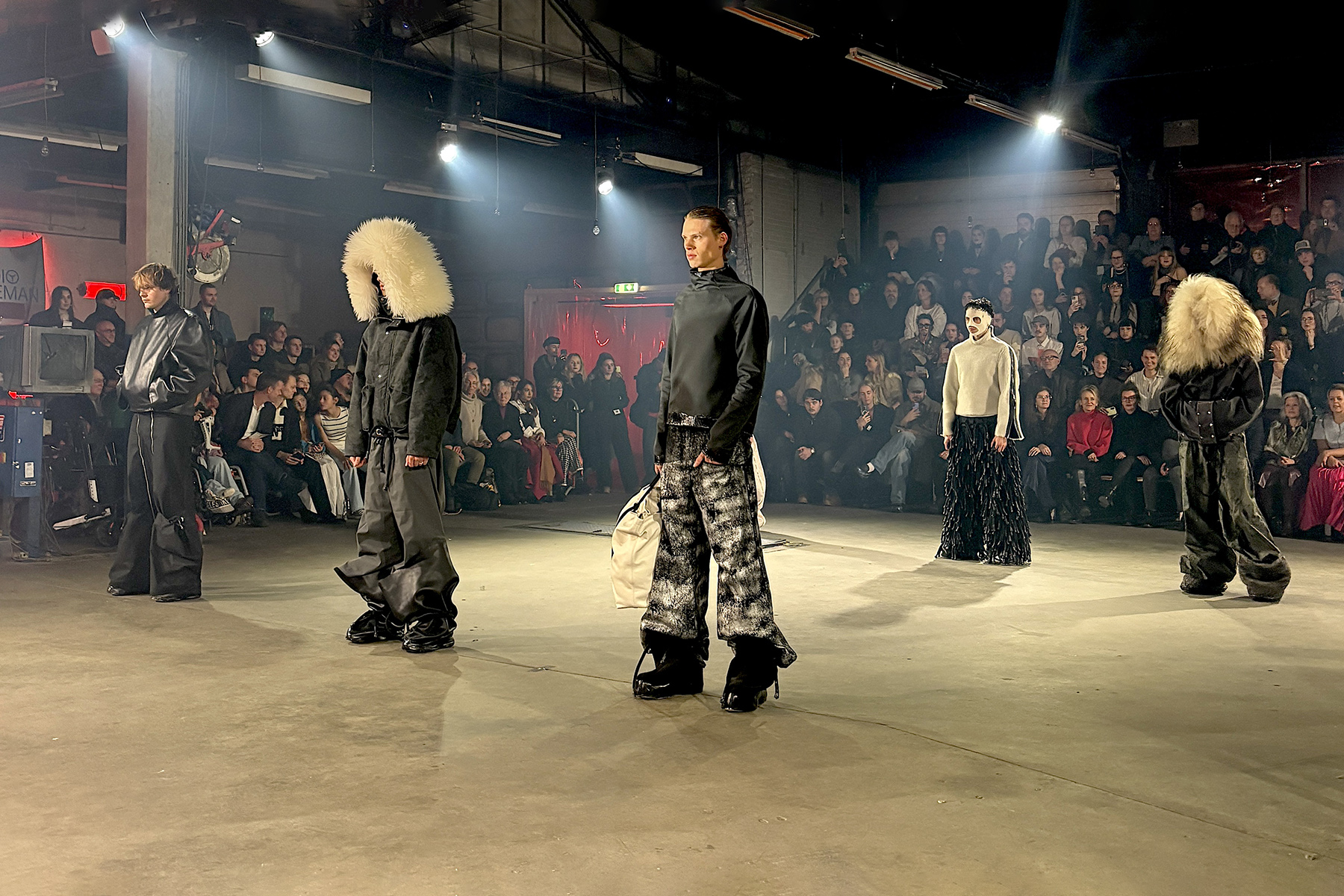
On January 22nd, Amsterdam Fashion Institute (AMFI) presented its January 2026 graduation show at Studio Wieman, showcasing approximately 30 graduating students. The biannual event revealed a generation grappling with contemporary anxieties while reaching back to craft, heritage, and personal history as anchors in an uncertain world.
Emerging Themes: Between Resistance and Reconnection
The selected fifteen collections reveal designers navigating multiple crises simultaneously. Dehumanization and digital identity emerge as urgent concerns—designers questioning how online perfection and artificial optimization erode authenticity. Systems of control—military, corporate, societal—are dissected and subverted, their functionality twisted into dysfunction as critique.
Body politics and reclamation run powerfully through the work, particularly around feminine bodies refusing to conform: hairy, unapologetic, breaking free from historical garments designed to control. Several collections draw from subcultural rebellion—punk, club kids, ballroom culture—celebrating communities that used fashion as survival and resistance.


Simultaneously, there’s a marked turn toward heritage, ritual, and belonging. Designers mine traditional garments—Surinamese koto, Limburg costume, fisherman’s sweaters, nomadic clothing—as living sources of identity and connection. Sustainability and craft appear as fundamental values, whether through deadstock denim, democratized making, or transforming waste into couture.
Multiple collections express longing to escape modern adulthood’s digital imprisonment and reclaim imagination, play, and authentic self-expression. These are designers refusing to optimize themselves into oblivion, instead choosing chaos, emotion, and messy humanity.
Julian Marcus Roman‘s ‘Dysfunctional Function’ transforms military clothing into expressions of powerlessness, deliberately removing functionality to critique systems of control. Floor Stuive‘s ‘DISCONNECT’ interrogates digital dehumanization, questioning whether adapting to beauty standards through filters and plastic surgery protects us or erodes humanity further. Milou Schreuder‘s ‘Stop Making Sense’ celebrates chaos through punk-inspired handwork, while Noa Schraven’s ‘COMMAND / OPTION / ESCAPE!!!’ bends work culture’s rigid language into playful rebellion, insisting imagination must be protected. The child who once got lost in Neverland refuses to stay trapped behind a laptop.


The body becomes a site of rebellion. Anna Strengers‘ ‘Deconstructing the Appropriate’ reclaims words used to shame hairy feminine bodies—dirty, animal-like, witch—as creatures break free from historical garments. Jameyne Tol‘s ‘She Said: MI DJASO’ (“I am here”) reinterprets the Surinamese koto, whose volume once signified both oppression and pride, evolving from corseted restriction into bold silhouettes where a red line intensifies as voices get louder—rooted in generations of liberation.


Susanna Abelyan‘s ‘PLEASURE SYNDROME’ honors 1970s ballroom and club kid culture, particularly creatives lost to HIV/AIDS. Using performers’ materials—wigs, hip pads, costume remnants—the collection follows a life cycle from DIY beginnings through decay to resilient resurgence, turning shame into strength.


Alongside rebellion runs reconnection. Thirza de Bruin‘s ‘Nail Pants’ creates denim for female denimheads in a culture built mostly for men. Emma Magermans‘ ‘Raveille’ reinterprets Limburg’s centuries-old Bronk ritual into modern silhouettes, while Milou Mensink‘s ‘Nautical Sails’ reimagines Dutch fisherman’s sweaters through a feminine lens. Boris Boyer‘s ‘&TT’ speaks to outcasts searching for authenticity, combining nomadic garments with techwear where clothing becomes both shield and identity.


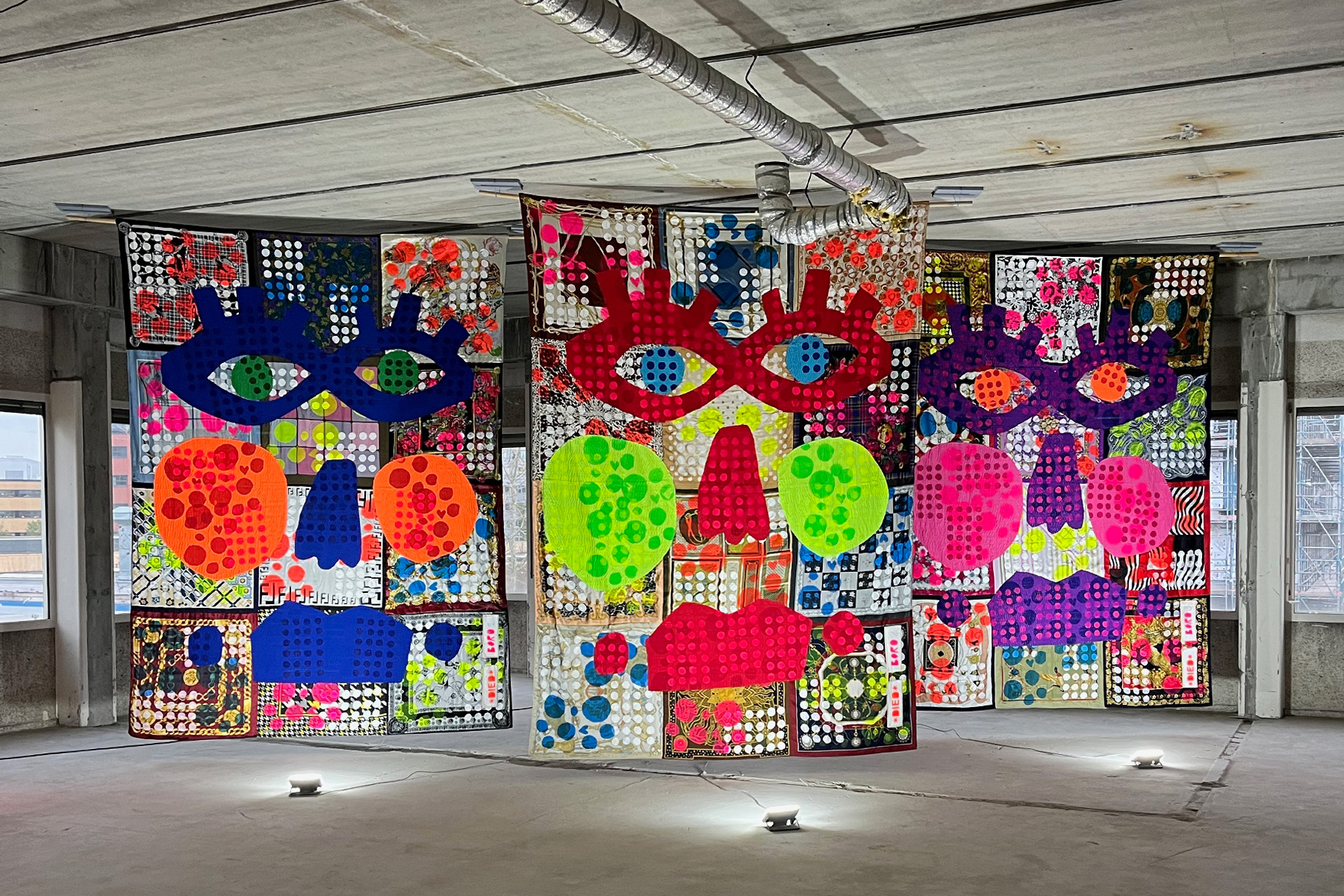
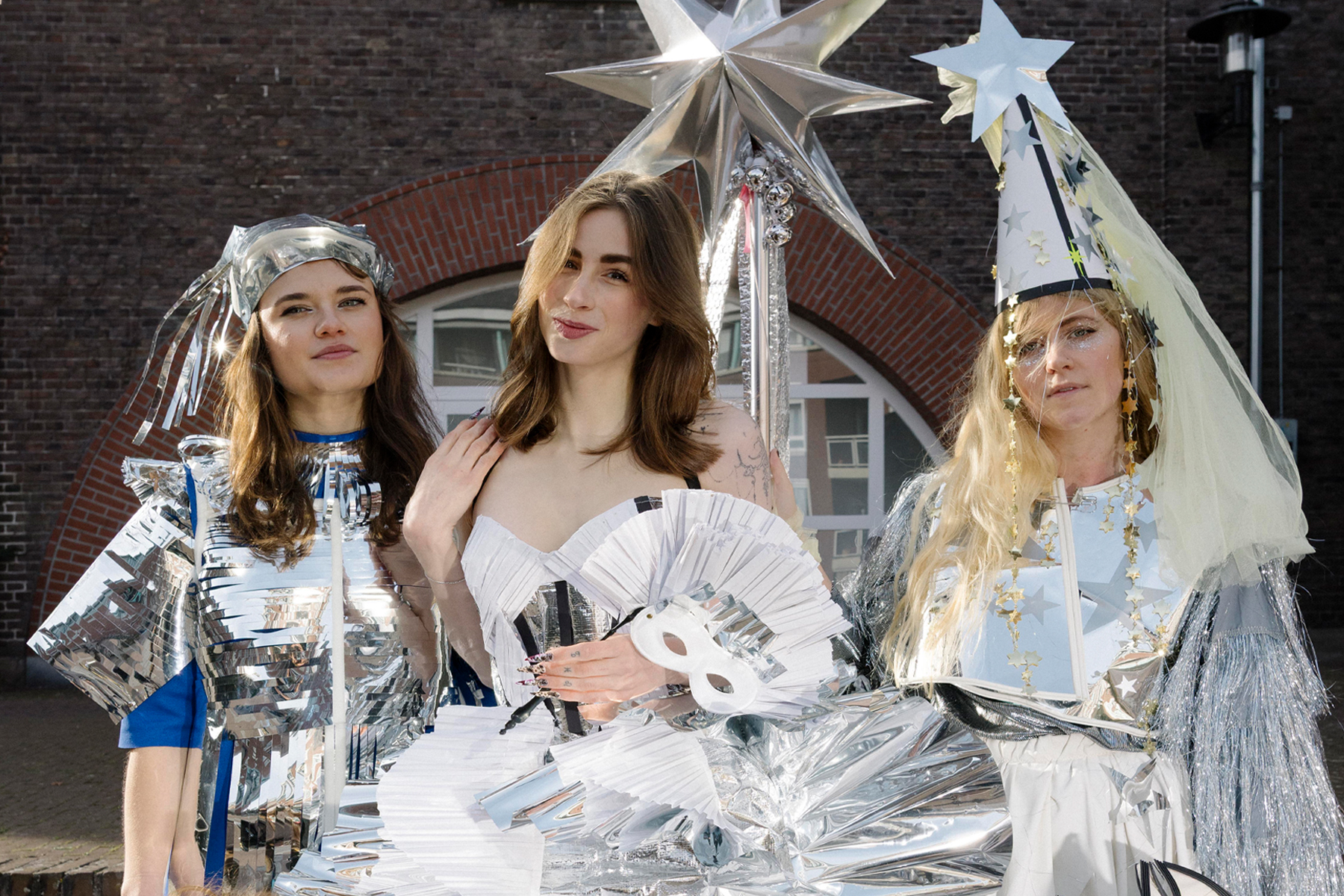
Environmental consciousness appears as fundamental value: Jesse Willem Groenenboom‘s ‘Monsieur et Madame Plastique’ transforms harbor waste into couture-inspired silhouettes, while Giovanna Slompo‘s ‘Put it in Your Buttonhole’ uses laser-cut puzzle pieces requiring little skill, democratizing fashion creation. Anna Goelema de Coo‘s ‘Entre Mundos’ tells a personal story of adoption from Colombia to the Netherlands, learning that home is more than where you come from.


Together, these designers refuse false choices between rebellion and connection, critique and care. They build fashion that is simultaneously resistant and tender—clothing as language for asserting identity and insisting on authentic human connection in an increasingly dehumanizing world.
Photography: Branko Popovic