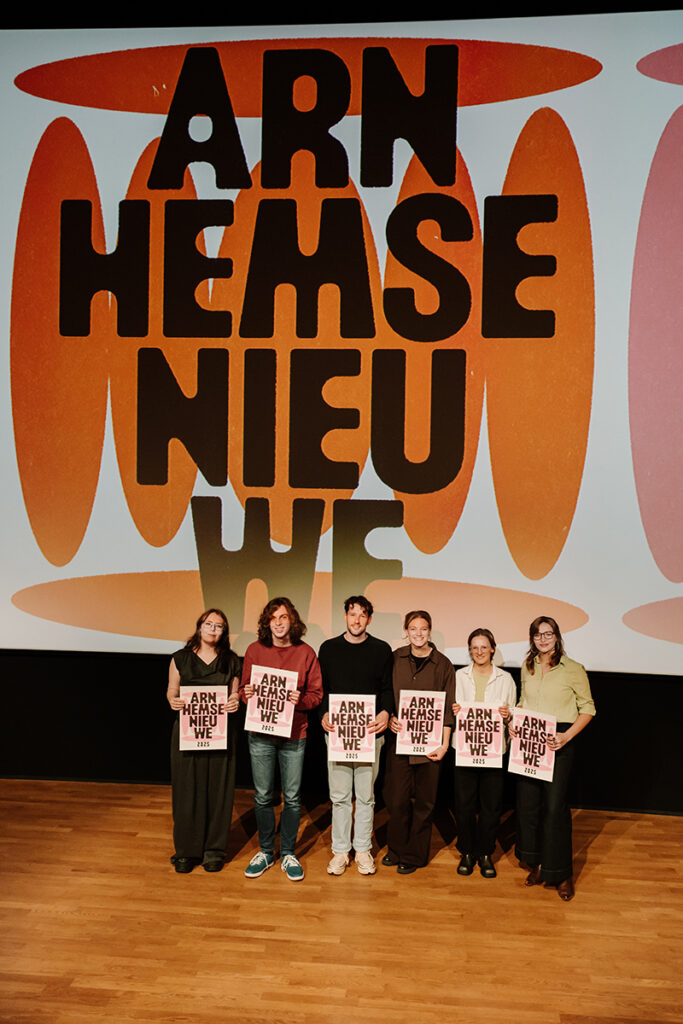
‘Arnhemse Nieuwe’ has been a jumpstart since 2006 for newly graduated designers from the ArtEZ Academy of Art & Design. This initiative by Ontwerp Platform Arnhem (OPA) gives young designers a flying start in the creative industry. Meet the Arnhemse Nieuwen 2025!
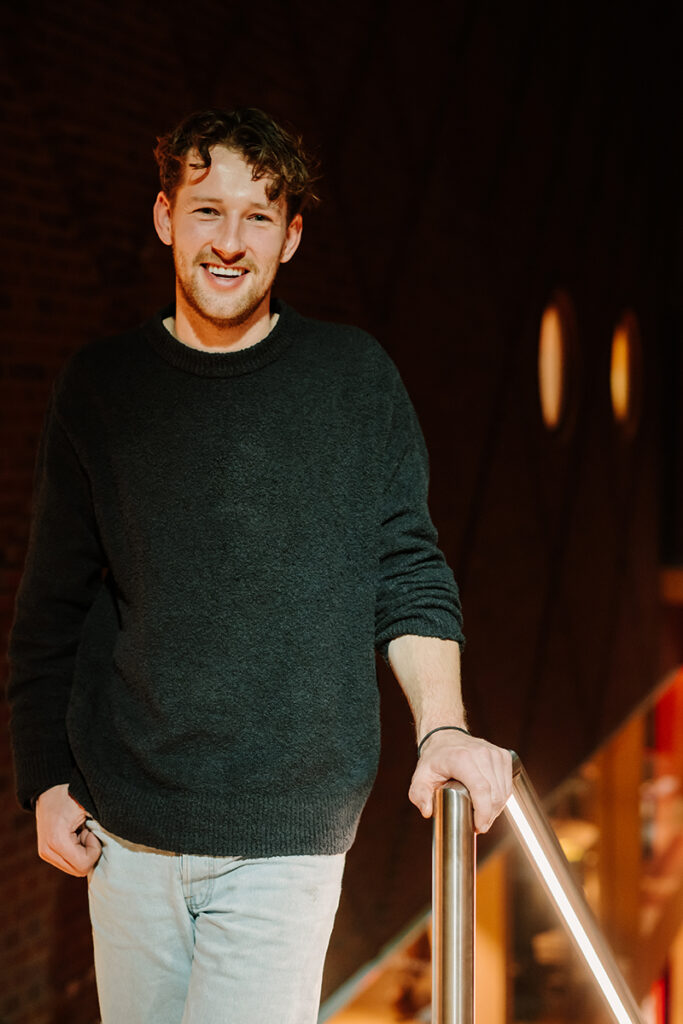
One of the six Arnhemse Nieuwen is Wout van Slagmaat. Four years ago he moved from North Holland to Arnhem to study Product Design at ArtEZ University of the Arts. “I had actually enrolled at the Willem de Kooning Academy in Rotterdam. But during my internship a supervisor said: take a look at Arnhem as well. The Rotterdam program turned out to be much more conceptual, while I’m more focused on making and doing. And that happens much more here in Arnhem.”
Treehouse
The admissions process took place online during the Covid period, which made it harder to get a good impression. But choosing Arnhem immediately felt right. Wout sees himself as an old-school product designer who both designs and produces. “I’ve always been a bit of a tinkerer. My brother is a cabinetmaker, so I know that world a little. As a kid I often went on Friday afternoons to ‘hobby farms,’ where you could work with hand tools and wood. And at home we always had wood lying around in the shed. Then we’d build a treehouse in the garden.”
Sea-level rise
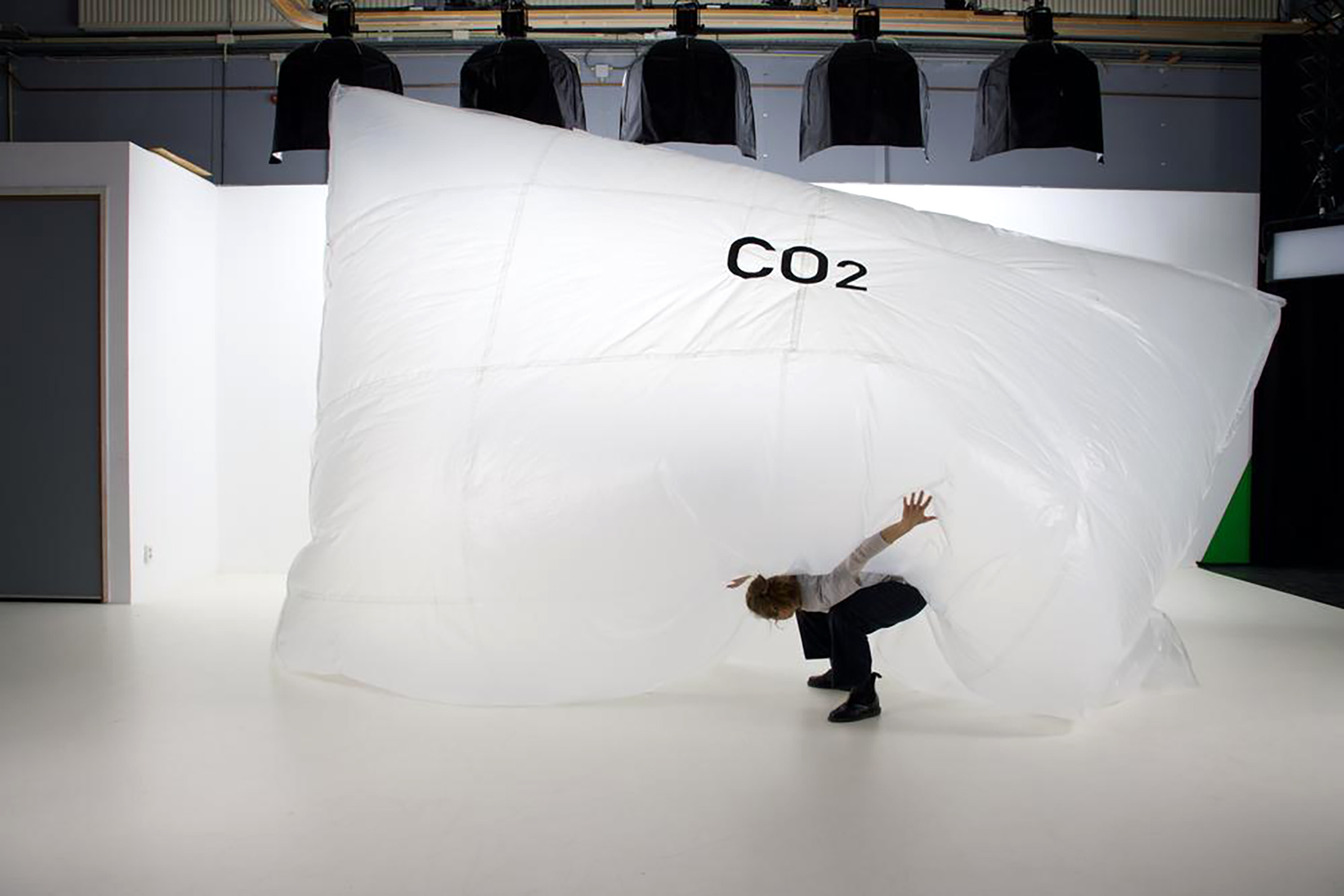
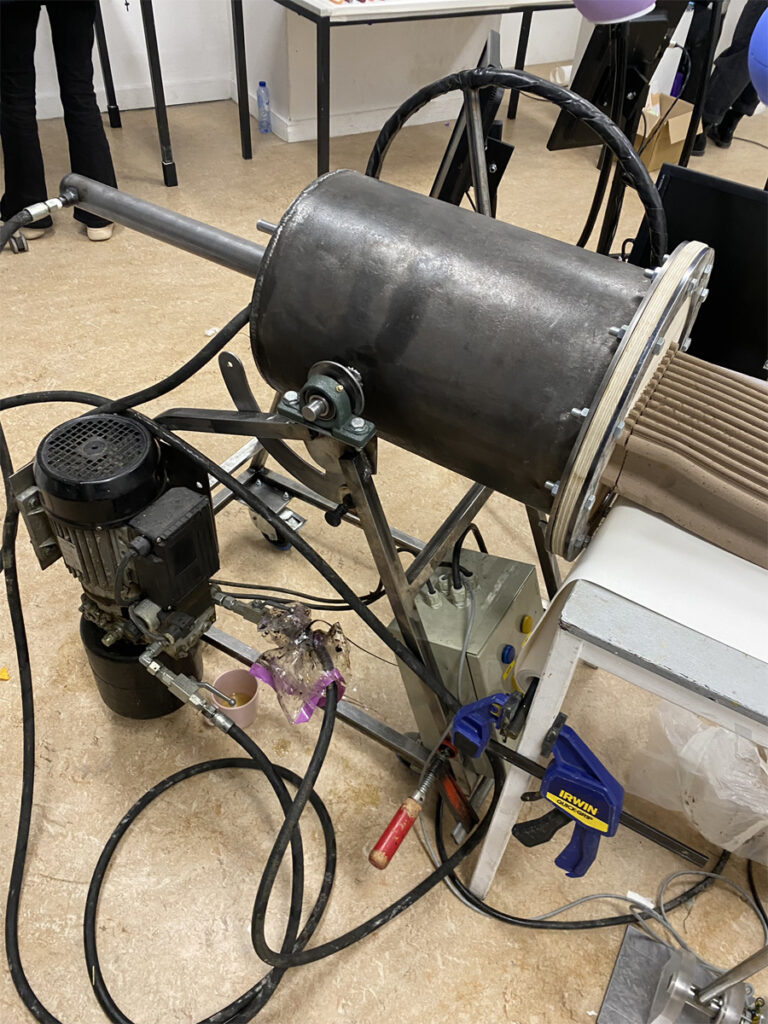
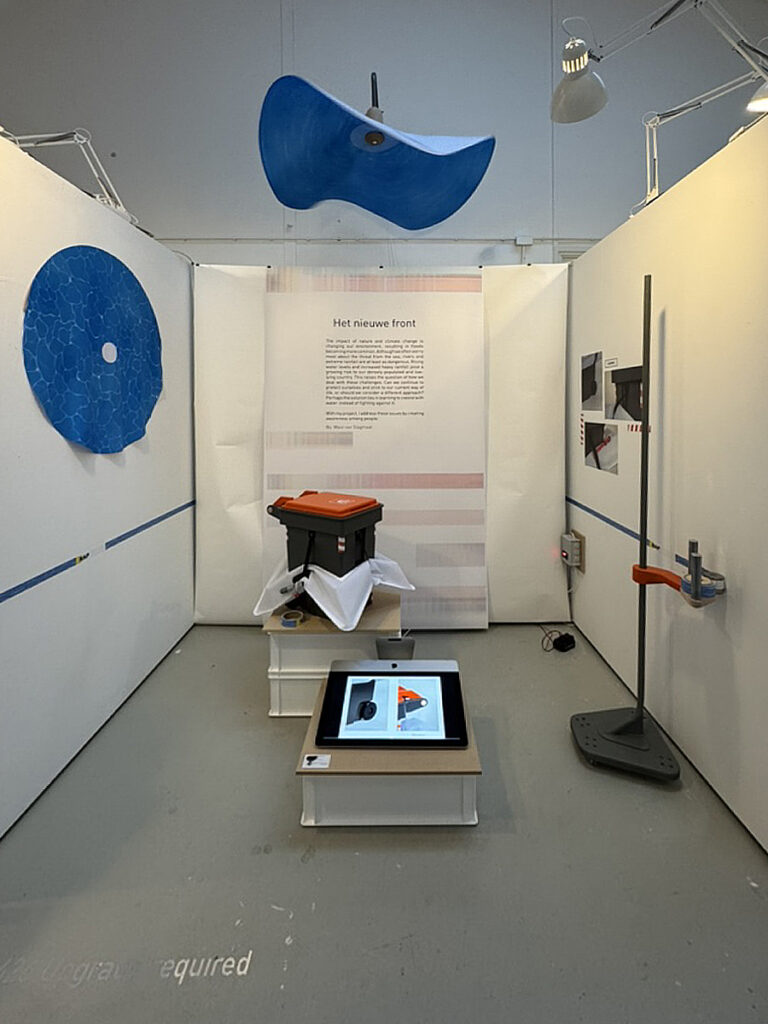
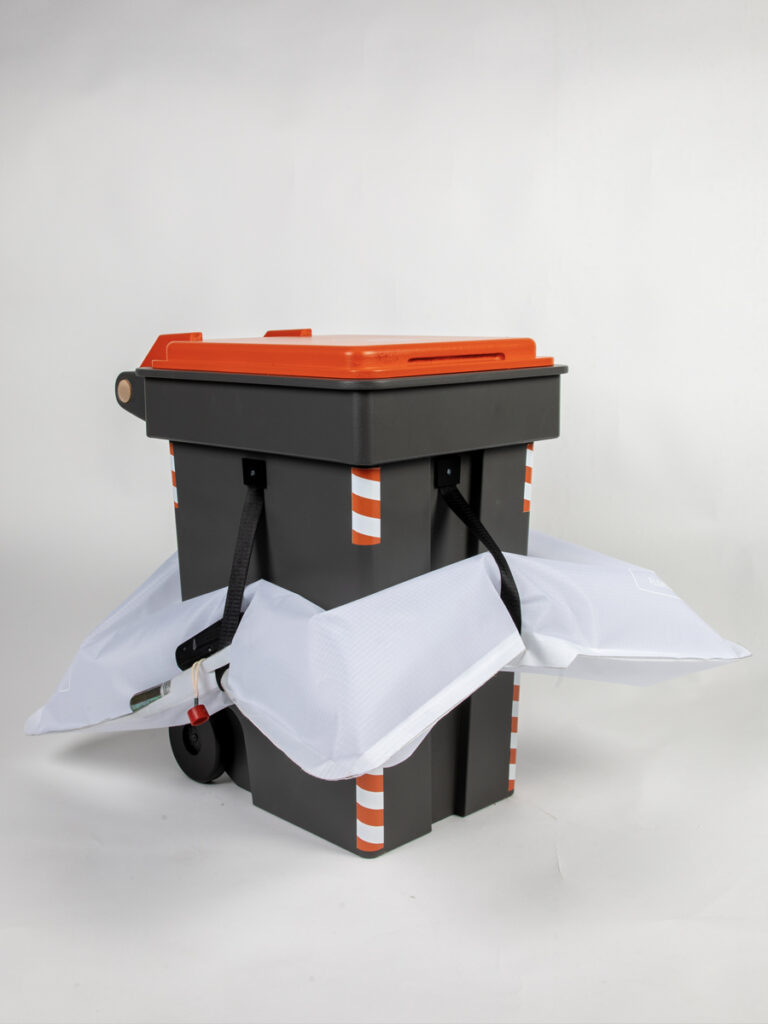
In his third year at ArtEZ, he began research into the relationship between water and people. He built an extruder, a clay press. With this machine, Wout can press modular building blocks for strengthening dikes. He also came up with the “floatbin”: a converted wheelie bin that can serve as a liferaft if sea levels rise further. Wout’s fascination with water doesn’t come out of nowhere: he grew up in Heiloo, close to the sea. “Climate scientists don’t agree on how much sea levels will rise in the near future. What they do agree on is that there will definitely be rise, and that it will accelerate if no drastic measures are taken. People often think coastal defense is the weakest point, but river dikes are actually the most vulnerable. Much less energy and money goes into them than into coastal protection. According to the ‘Netherlands under water’ map, they’ll keep the big cities dry, but those too will end up under water. It’s mainly the polders and the Randstad that will flood.”

Two labels
Wout deliberately divides his work across two labels. On the one hand, there is his “free work,” such as the water project: “With that research I hope to end up at an organization like Rijkswaterstaat. An Artist in Residence type of assignment, like Rosalie Apitulay had at Alliander. I would really enjoy that: thinking creatively about solutions to societal problems.”
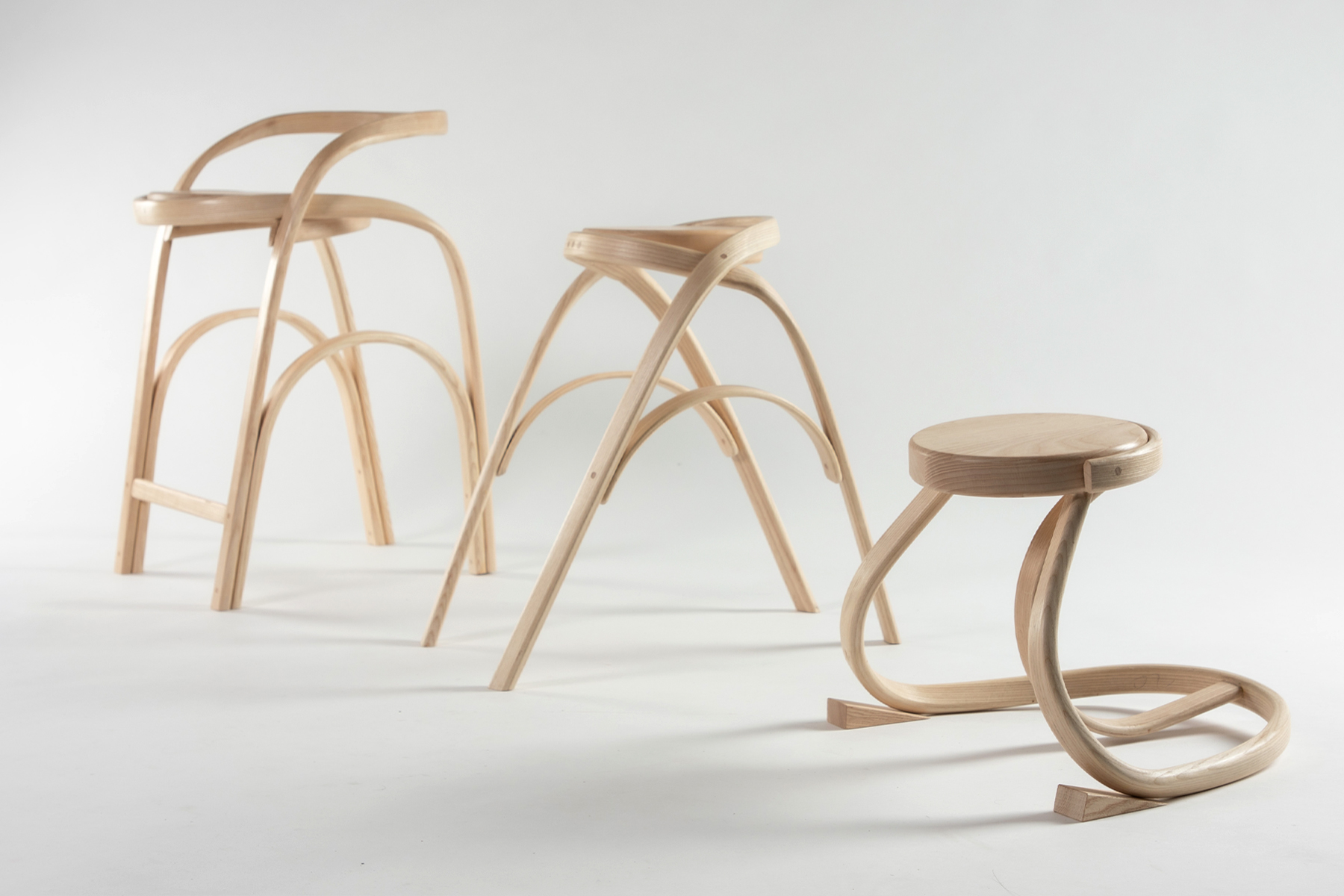
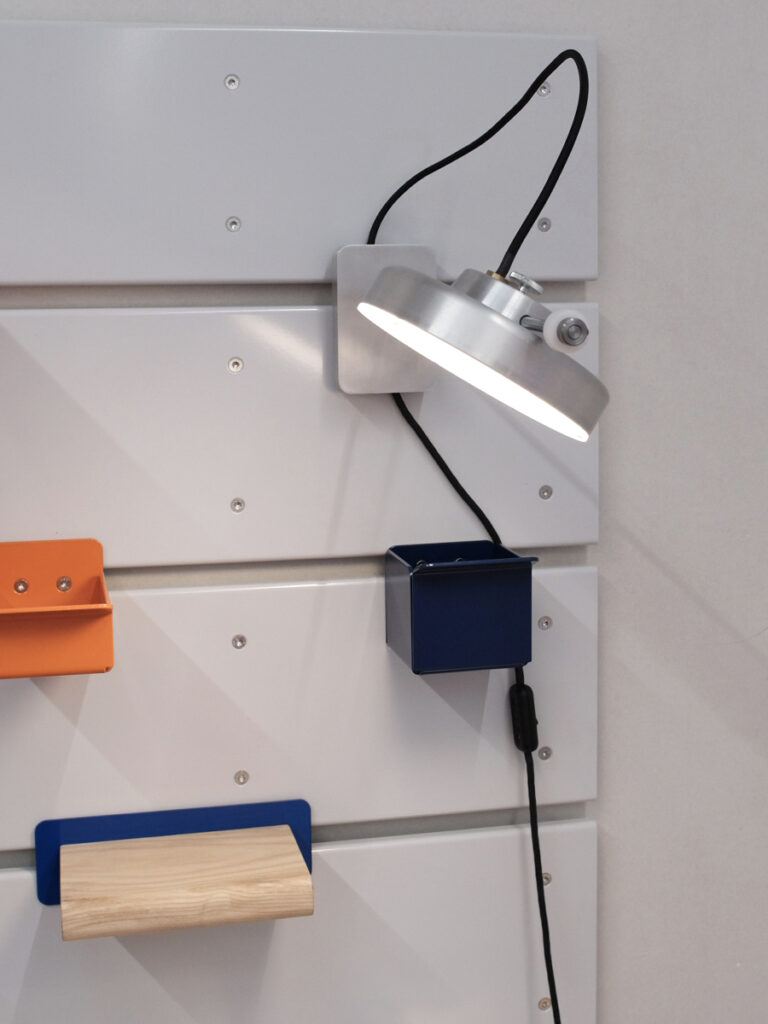
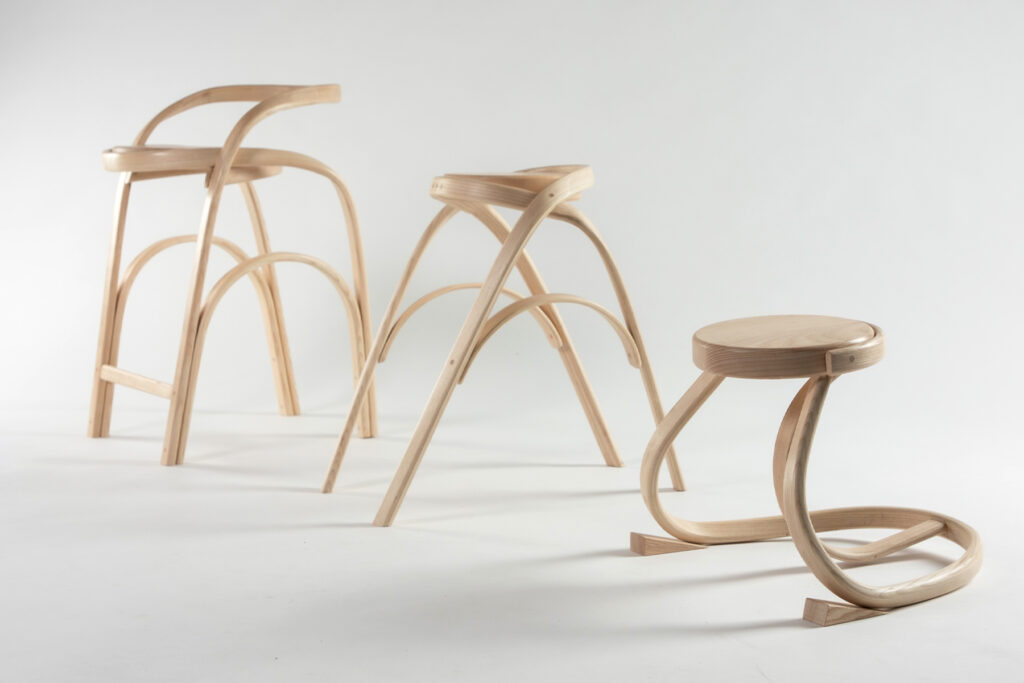
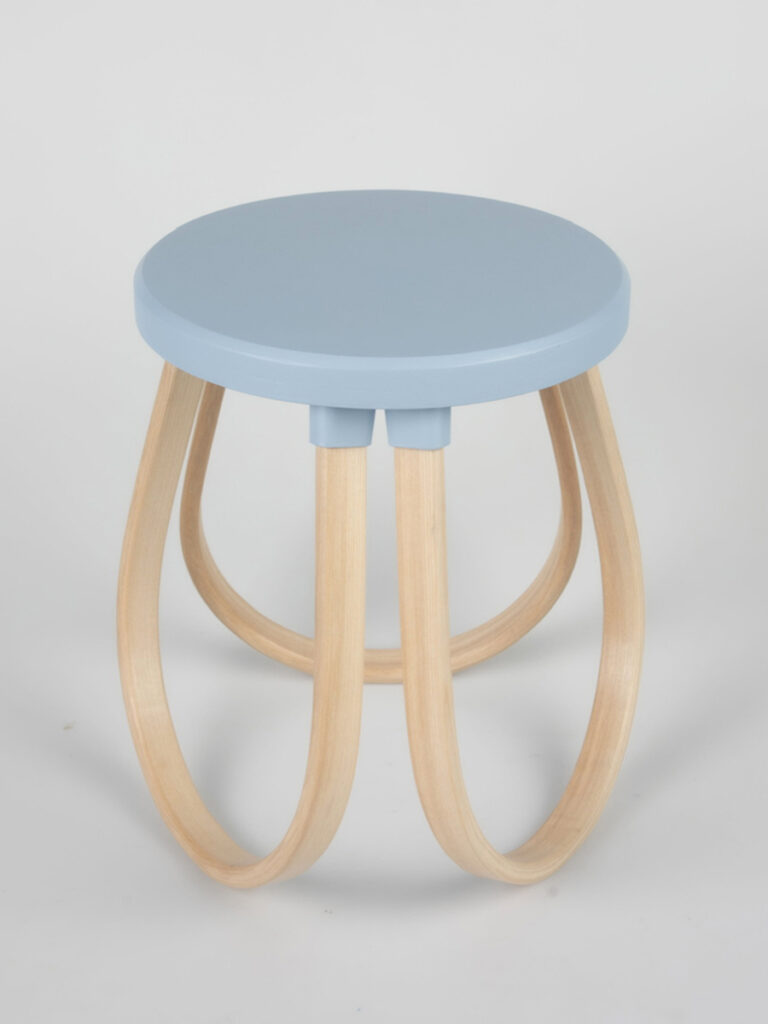
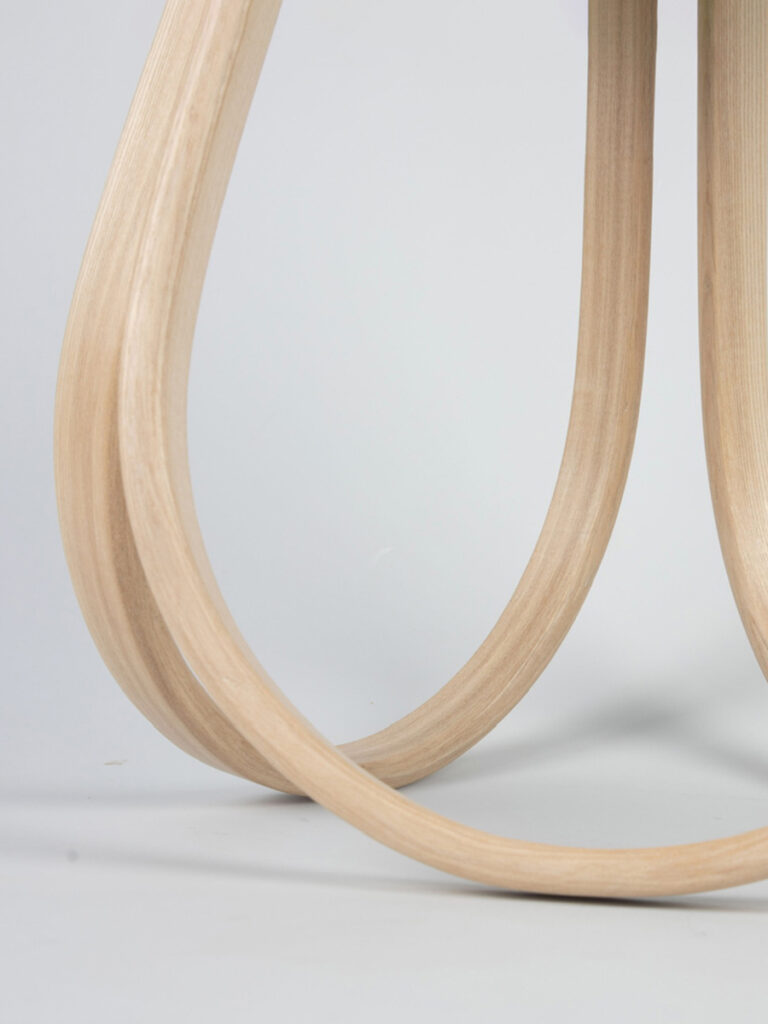
For these kinds of research projects, Wout set up Studio NA+AAN. And together with classmate Peter, he develops commercial products under the name 2×2: “We make steam-bent furniture. The Flux Stool, for example, a stool with blue details that can be flat-packed, just like an IKEA kit. With this kind of work we can subsidize our research projects.”



Object Rotterdam
In February, Wout and Peter want to present the Flux Stool at Object Rotterdam, a design fair that takes place every year during Art Rotterdam Week. Unlike Dutch Design Week in Eindhoven (more focused on presentation and publicity), Object Rotterdam is explicitly set up as a commercial event: visitors can buy objects on the spot.
Want to become a member of OPA too?
Ontwerp Platform Arnhem has been offering a program for 20 years that identifies, presents, and discusses key developments within the (design) world. We are here for the individual designer/studio at every stage of their design practice. We are also here for policymakers, companies, innovators, and anyone else who is interested.
This Article was originally written in dutch by Nicole Beaujean