The Biophilic Design Awards celebrate inspiring Dutch projects in Architecture, Interior and Product. From 40 entries, 9 projects have been nominated. The winners will be announced on 22 October 2026 during Dutch Design Week in Eindhoven.
What is biophilic design?
Humans are made for nature. For thousands of generations, we lived outdoors, with daylight setting the rhythm of the day and with water, wind, greenery, and the seasons all around us. These days, we spend most of our lives indoors. Biophilic design brings that ancient connection back into the built environment. The term comes from “biophilia,” the innate desire for contact with all living things, a concept popularized by the American biologist Edward O. Wilson in the 1980s.
Biophilic design appeals to all your senses. It’s about daylight and views of the landscape, about natural materials you want to touch, about the sound of water, fresh air, and shapes you subconsciously recognize from nature. It’s also about spatial experiences that nature has taught us: the panoramic view from a higher vantage point, the sense of security in a sheltered spot, and the curiosity aroused by a bend in the path.
Research shows that such environments reduce stress, enhance concentration and creativity, and promote recovery. Now that ecosystems are under pressure and biodiversity is declining, biophilic design takes on a deeper meaning: designing as part of nature, with care for both people and the planet.
The Biophilic Design Awards
The Biophilic Design Awards are the first Dutch award program for biophilic design, an initiative of the Biophilic Design Academy (BDA), the knowledge institute for biophilic design in the Netherlands. The awards highlight projects that apply biophilic design in an integrated, well-thought-out manner with demonstrable impact, across three categories: Architecture, Interior, and Product. In addition, the jury presents an Overall Award to the most comprehensive biophilic design of the year.
An independent panel of experts, chaired by Oliver Heath (UK), with Gijs Bruggink (ORGA Architect), Odette Ex (Ex Interiors), Simone van Es (Roots Foundation), and Emmanuel Laugs (Bouwgroen), evaluated forty entries based on five criteria: connection to nature, well-being and experience, sustainability and use of materials, impact and inspiration, and creativity and the senses. Three projects were nominated in each category.
Architecture
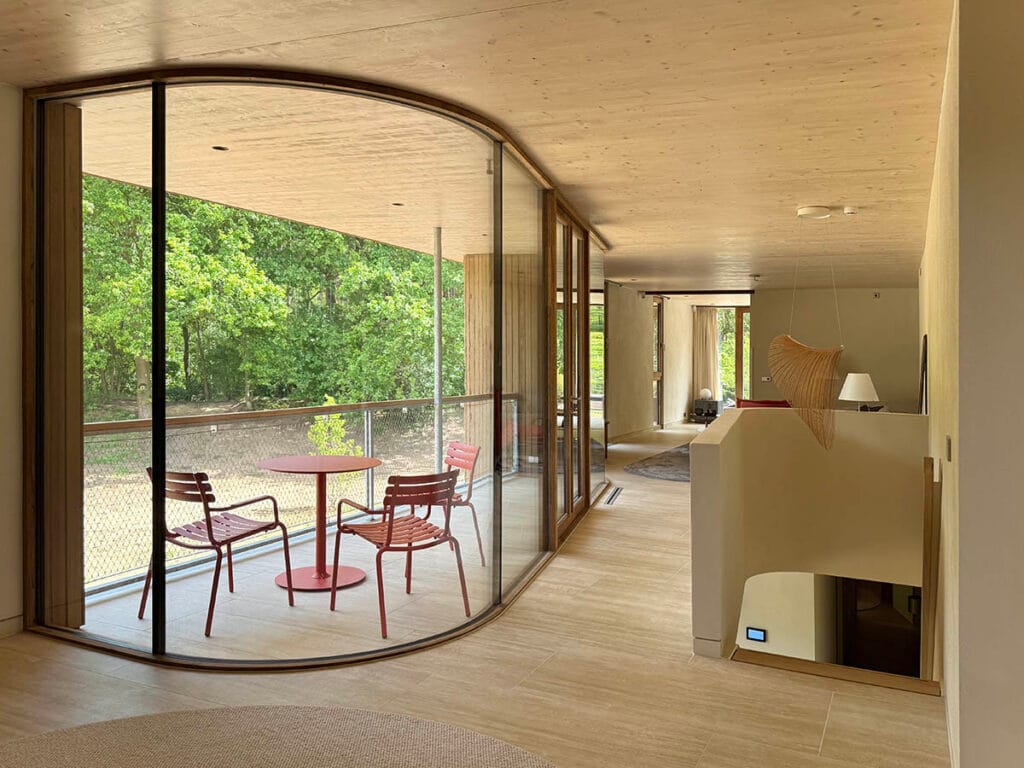
Bosvilla Doetinchem | Studio Natuurlijk Bouwen
Audience Award Architecture – Biophilic Design Awards 2026
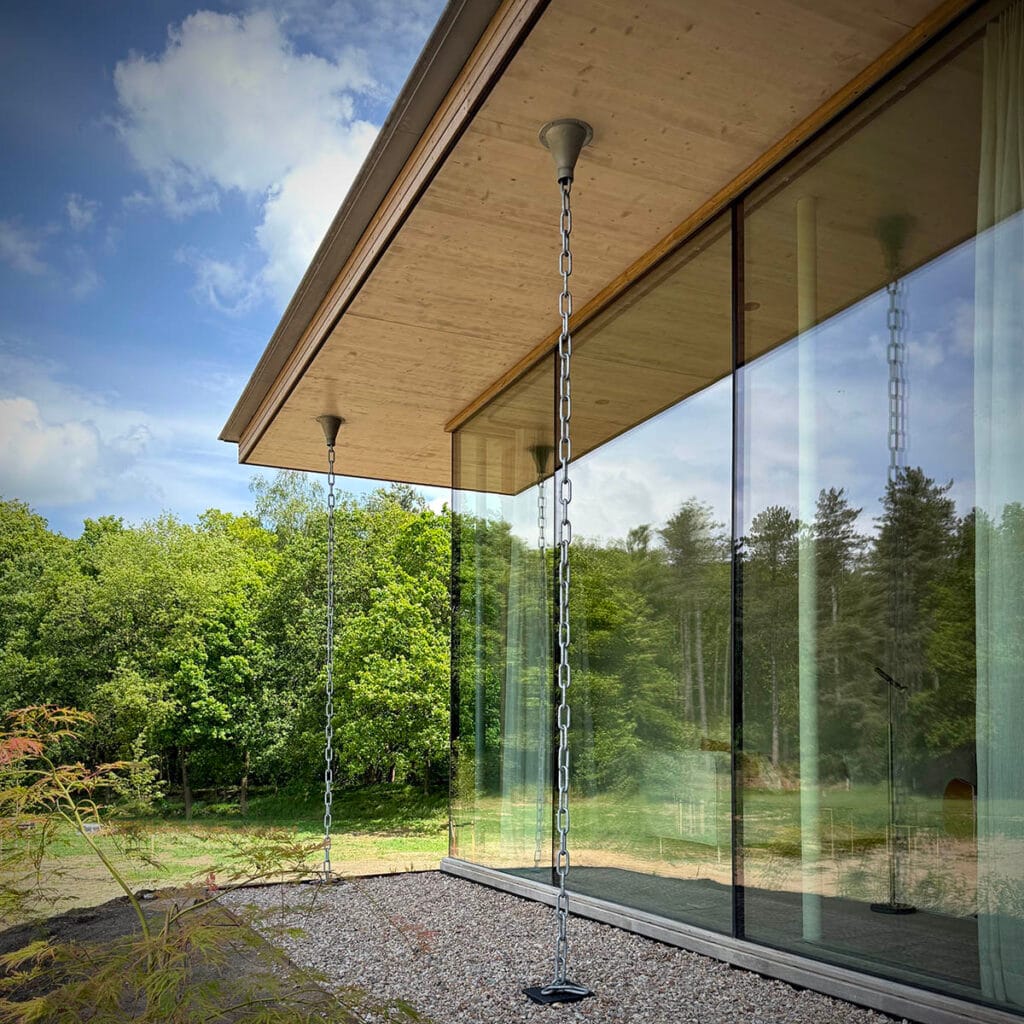
In this home, you can feel the landscape all day long. The living areas are upstairs, bathed in light, with large glass surfaces that generously let in daylight and views. Wide overhangs made of solid wood blur the line between inside and outside and provide shade on sunny days. You sleep in the basement, where the earth provides a cool and secure environment. The building envelope, made of wood, straw, and clay, is constructed according to the passive house concept, featuring low energy consumption and minimal visible technology. Orientation, materials, and indoor climate all stem from the site itself.
Forest Ranger’s House | SA DESIGN architecture
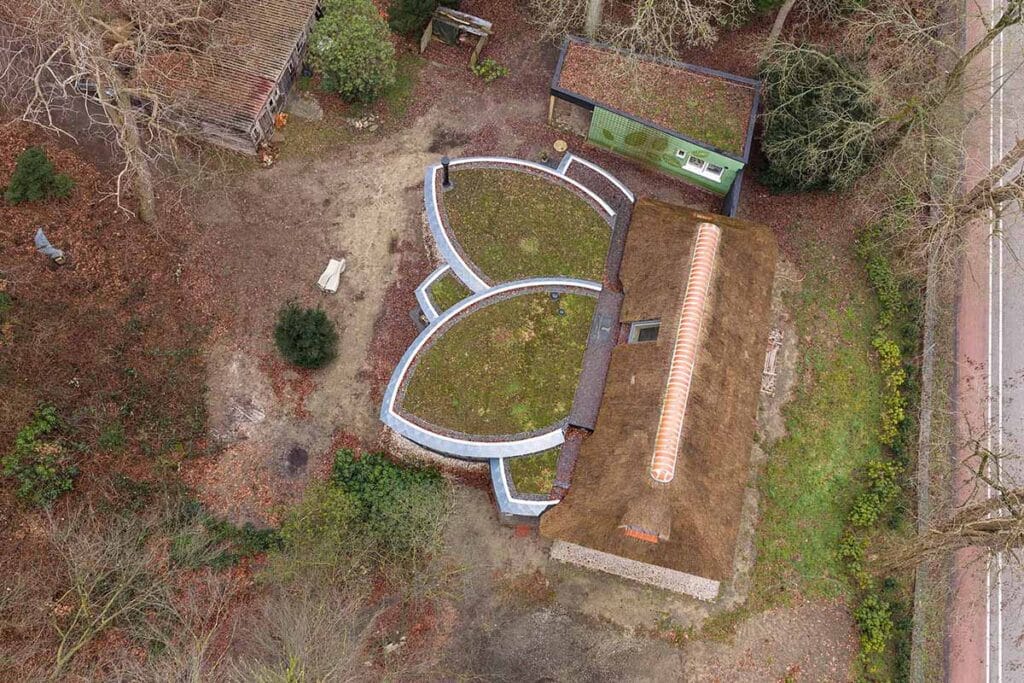
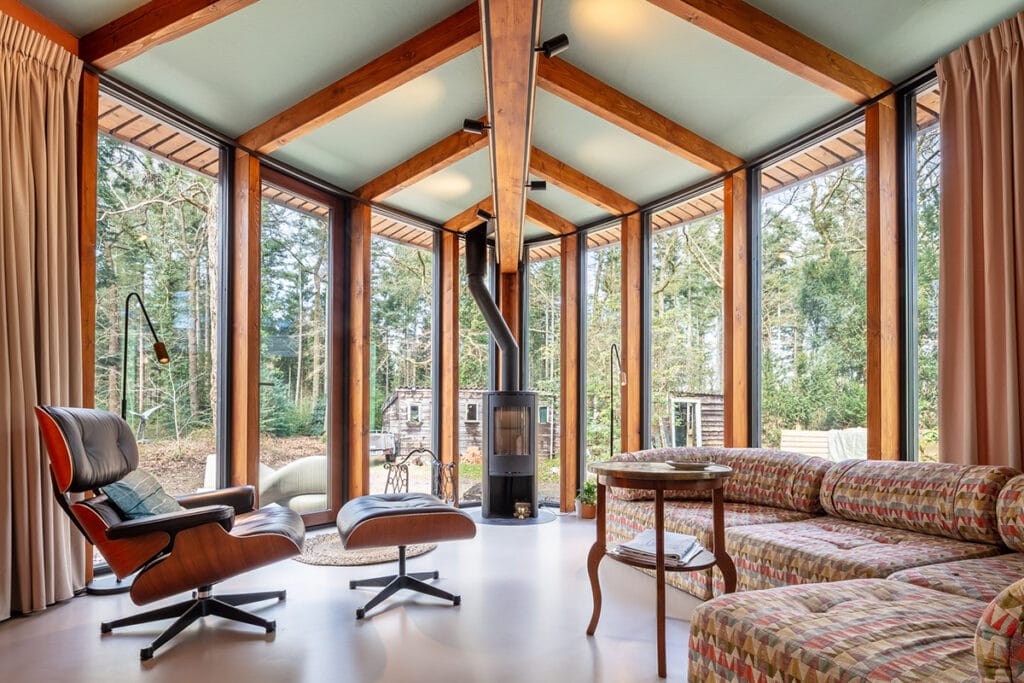
At less than 150 square meters, this renovated forest ranger’s house in the Veluwe proves that biophilic design is not limited to any particular scale. A new, leaf-shaped addition turns the house toward the forest, so that you can see greenery from almost every room—even the bathrooms. Old doors, window frames, floor joists, and the kitchen were given a new lease on life, complemented by a plastic-free sedum roof and sprayed cork. The painting was done in collaboration with the social workshop Stichting ‘t Kan, with the visible handiwork of the creators deliberately preserved. Ecological, social, and architectural quality come together here in one small, well-thought-out design.
Krimpenerwaard Town Hall | DOOR Architects & Ector Hoogstad Architects
Winner Architecture – Biophilic Design Awards 2026
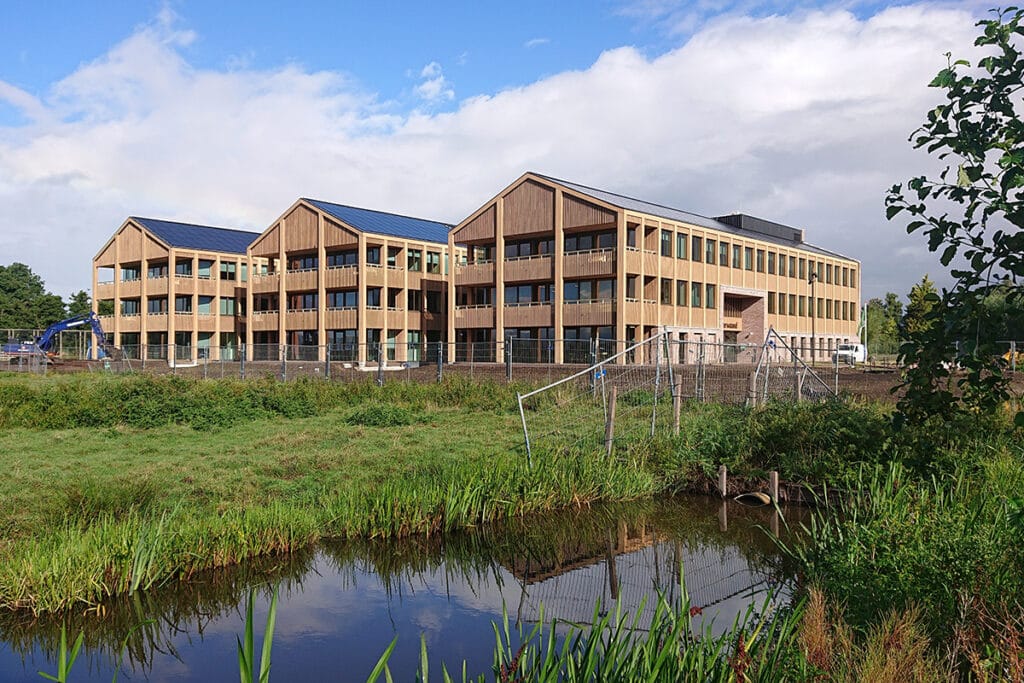
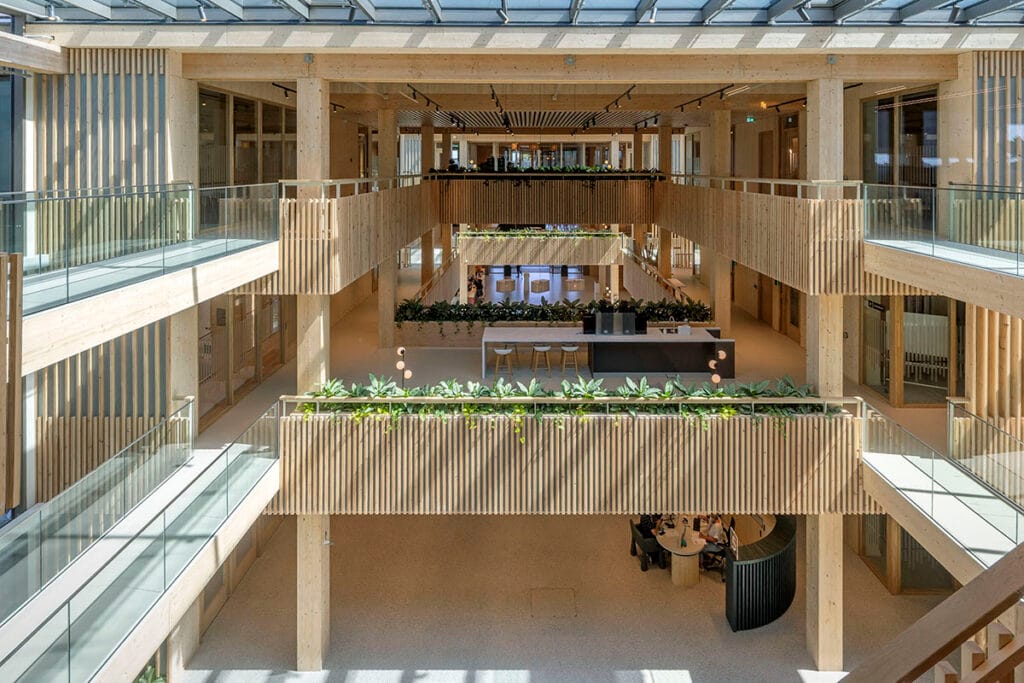
Three wooden volumes sit as separate units within the polder landscape of the Krimpenerwaard, connected by an atrium and landscaped spaces that draw light, air, and greenery deep into the building. From virtually every workspace, you look out over ditches, reeds, and the polder. In collaboration with a landscape architect and a local ecologist, new habitats were created for birds and other animals. Residents themselves contributed scrap wood, which was reused in floors and fixtures, so the community literally helped build the structure. The building sequesters more CO2 than it emits, generates more energy than it consumes, and consists of 32 percent bio-based, reused, or recycled materials.
Interior
Bever Basecamp | KuóStudio
Overall winner Biophilic Design Award 2026
Audience Award Interior – Biophilic Design Awards 2026
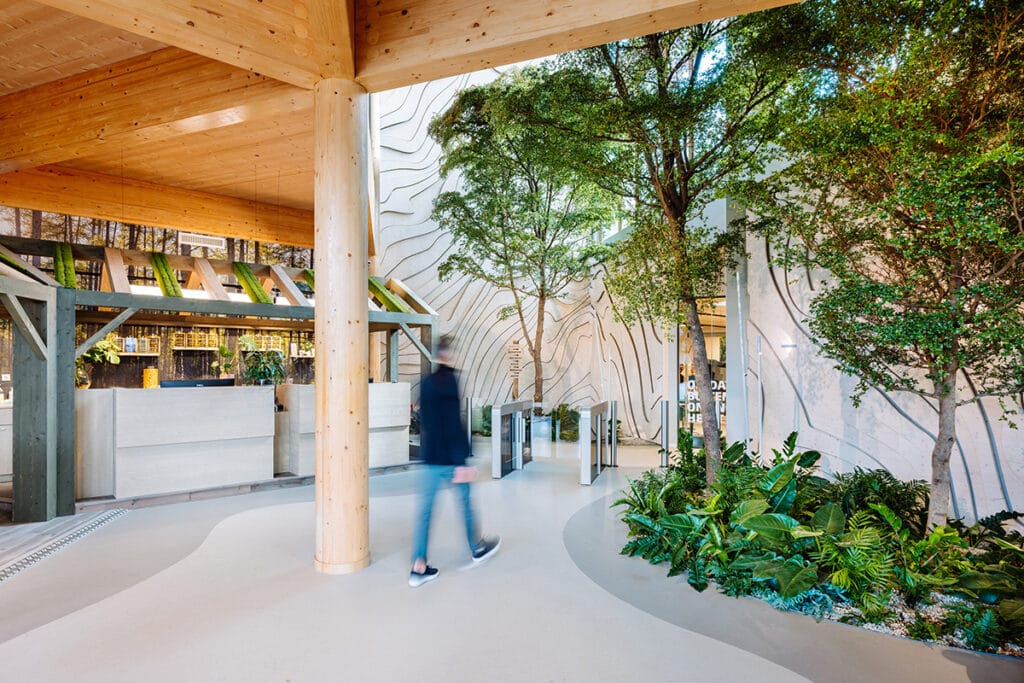
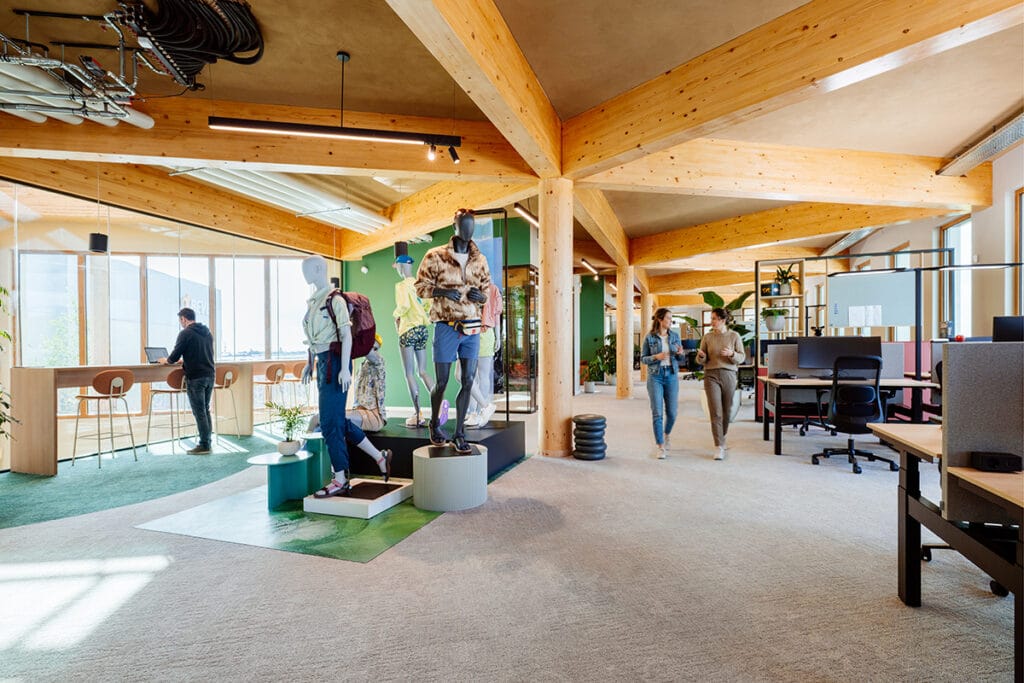
At Bever’s headquarters in Pijnacker, trees grow right through the entrance, and a wooden “Buitenhuis” forms the beating heart of the building. In the center are a shoe-cleaning station and a repair workshop, where shoes and clothing are prepared for the next outdoor adventure. The “Rest, Noise, and Activity” concept lets employees choose for themselves how to balance their energy, supported by biodynamic lighting that follows the rhythm of the day. A climbing rope used as a stair railing and leaf-vein patterns in the balustrades make nature tangible to the touch. The building earned a BREEAM Excellent rating and an honorable mention at the Architecture MasterPrize 2025.
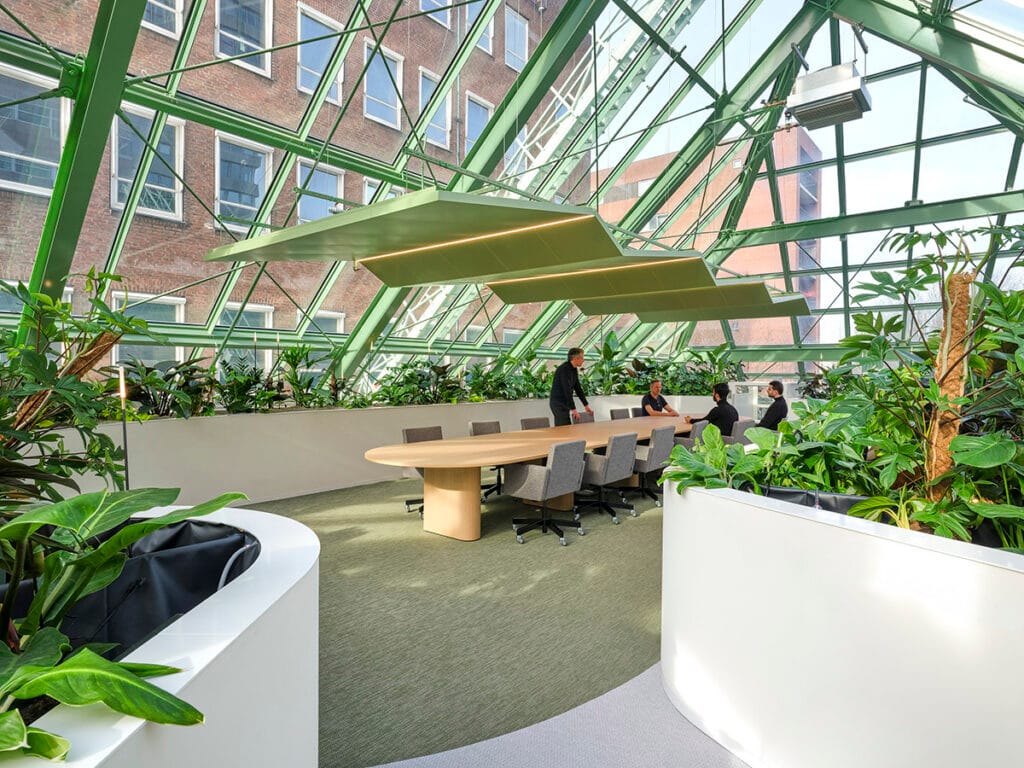
Rijkskantoor B73 | Moss Amsterdam
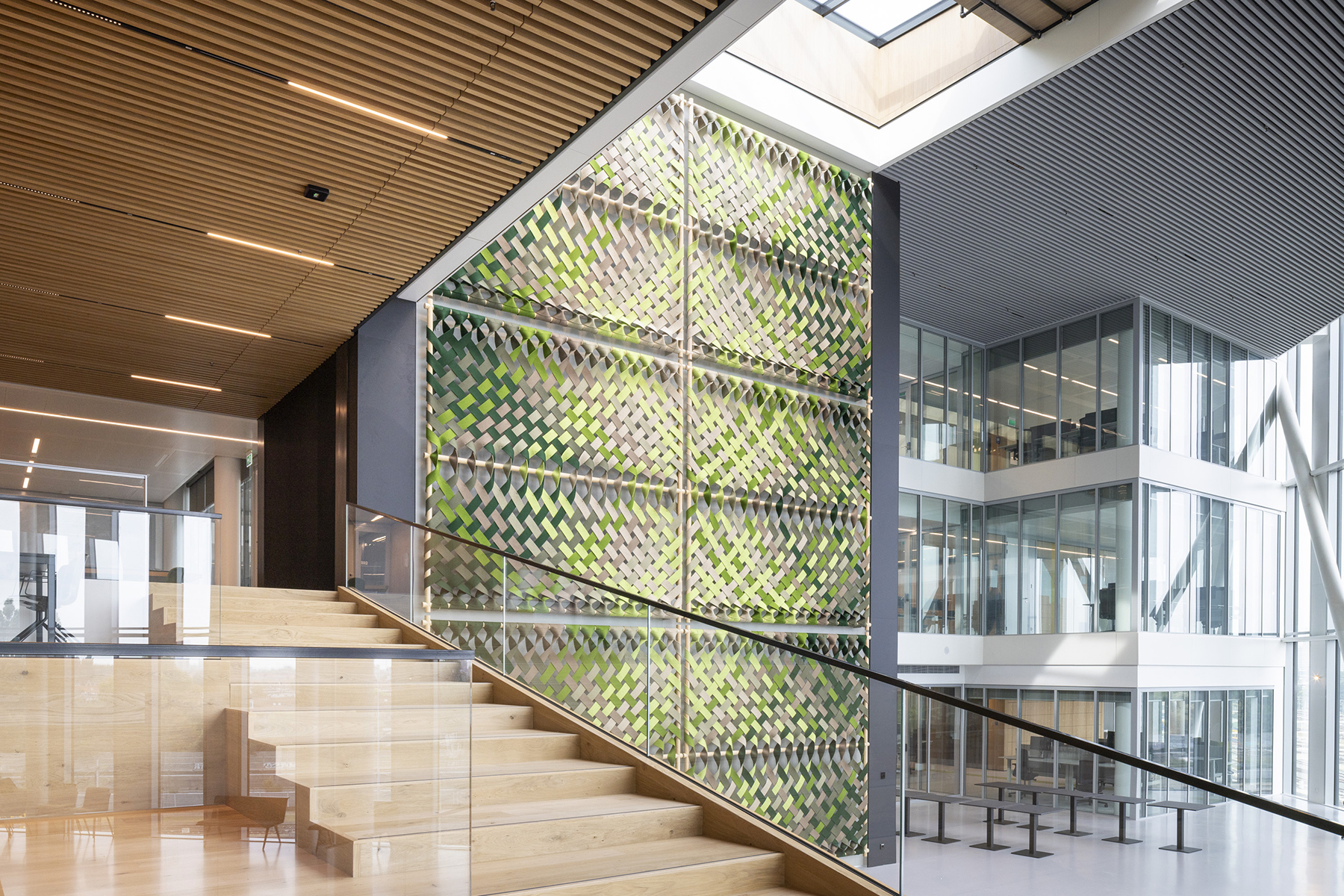
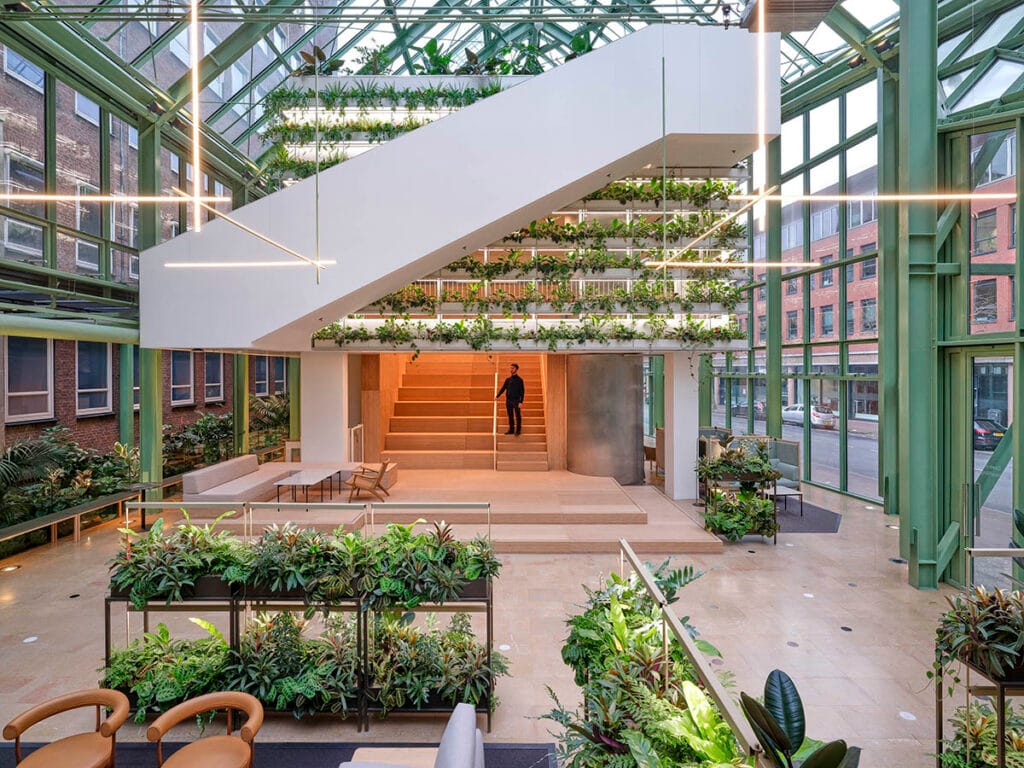
MOSS transformed the Rijkskantoor B73 in The Hague into a green office for three ministries. The Orangerie serves as the complex’s “green lung,” bringing some 3,500 plants into the heart of the building. This greenery improves air quality as well as acoustic and thermal comfort, in line with the WELL Building Standard for healthy workplaces. The historic structure of the pavilions was preserved and complemented with biobased brainstorming pods as a testing ground for sustainable construction. A stacked plant system allows a vertical garden to grow up along the staircase and across the atrium. The design won an Architizer A+ Award in 2026.
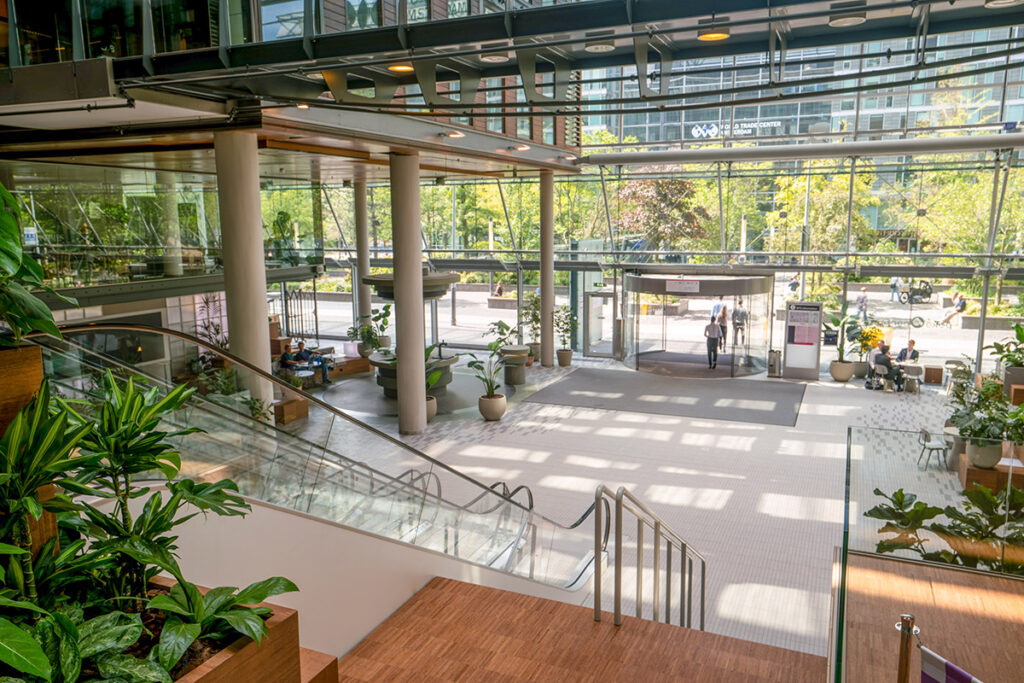
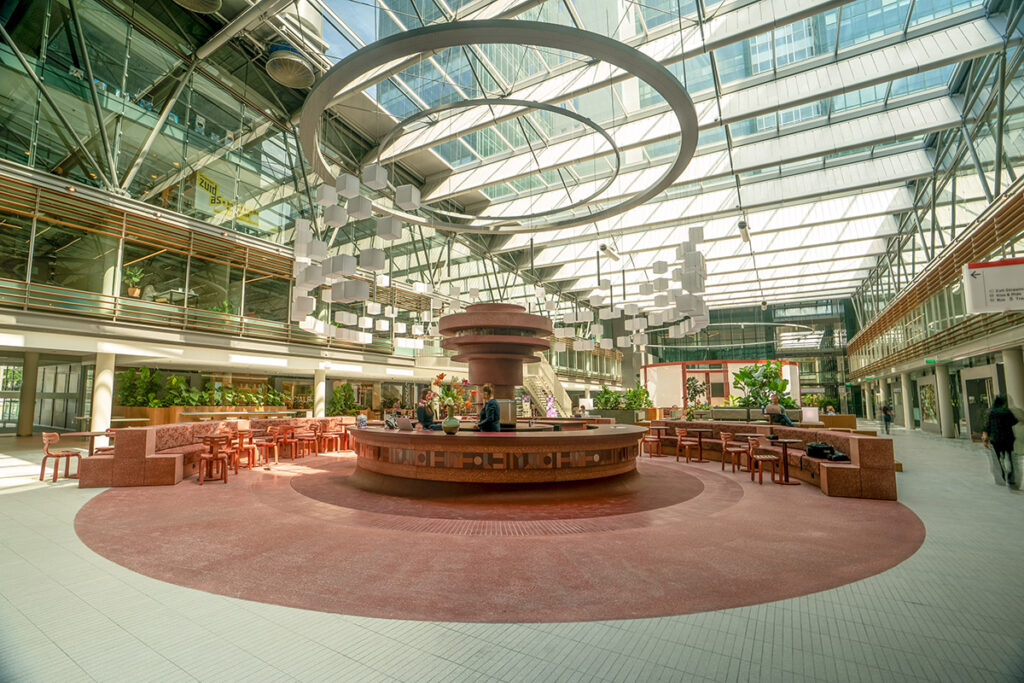
WTC Amsterdam Lobby | TANK
Winner Interior – Biophilic Design Awards 2026
TANK transformed the lobby of WTC Amsterdam into a vibrant gathering place, based on the concept “People are the Building Blocks.” Modular furniture units can be arranged as a bar, a bench, or an information panel, allowing the space to constantly change its appearance. Abundant greenery and natural light invite visitors to linger. Cooloo repurposed leftover material from the original floor into a new circular floor, and existing furniture, stairs, and handrails were reused as much as possible. New furniture was created in collaboration with Dutch designers such as Dirk van der Kooij and Planq. The results: 430 kilograms of reused material, 21 reused pieces of furniture, and over 7,500 kilograms less CO2 emissions.
Product
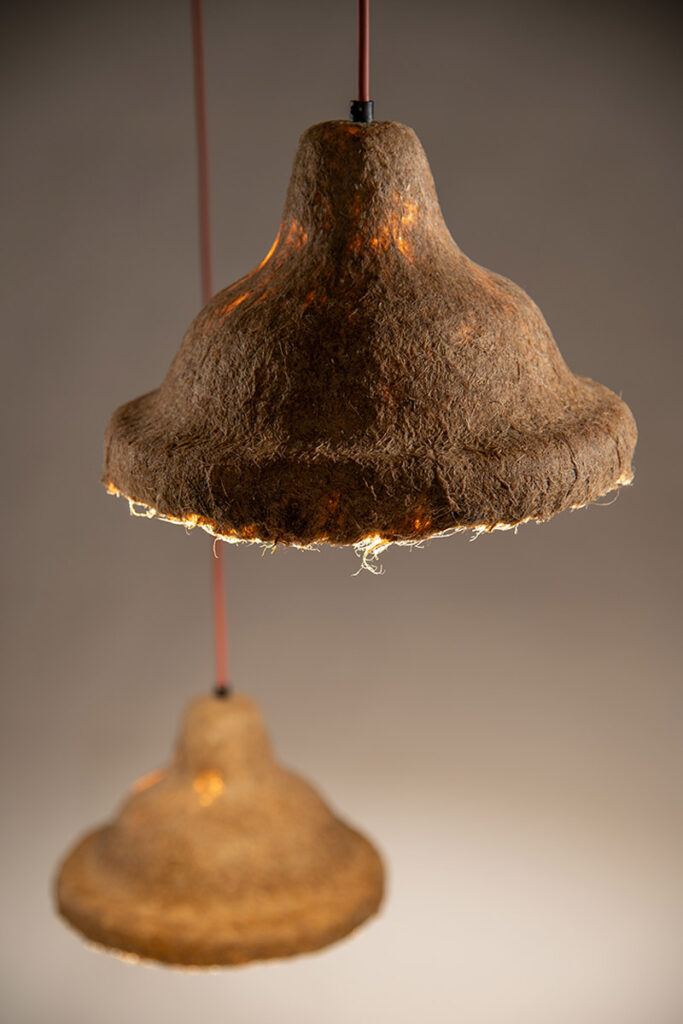
Fibre Fever! | Jack Brandsma
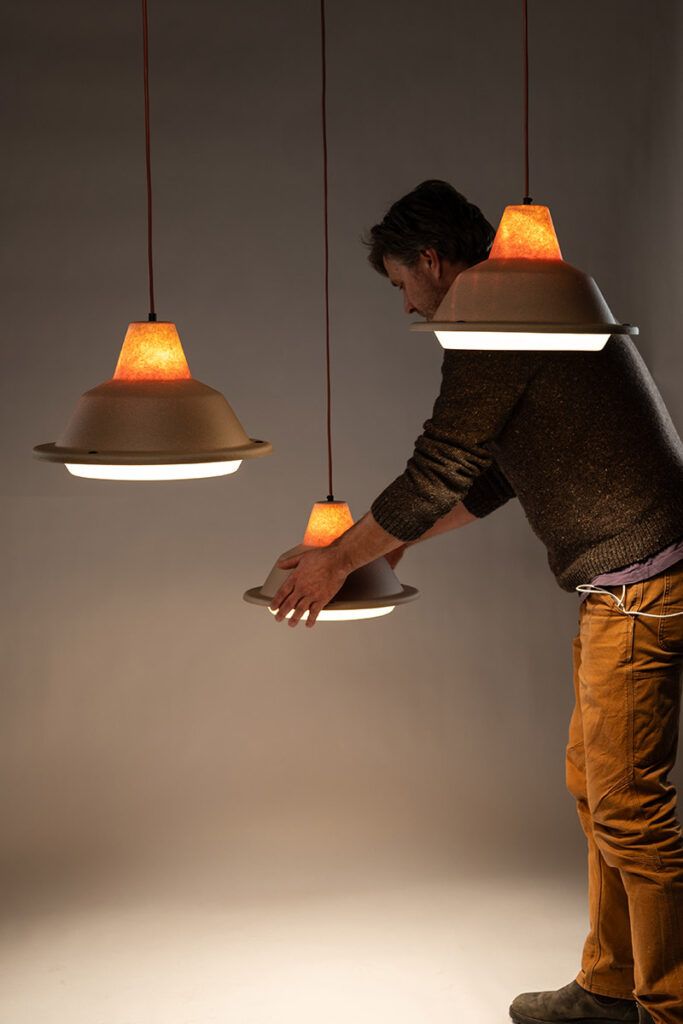
With Fibre Fever!, designer Jack Brandsma explores how local, bio-based materials such as hemp and potato starch can replace fossil-based plastic in his lamps. He soaks hemp felt in a natural potato starch adhesive and shapes it by hand into a lampshade over the course of three weeks. The result is completely biodegradable: if the shade gets wet, the fibers and binder naturally break down. The lamps have been used, among other places, in the interior design of Spring Studio for the World Heritage Center in Lauwersoog. Currently, about 70 percent of the lamps Brandsma sells are biobased.
WaterLand | Natasja van der Meer
Winner Product – Biophilic Design Awards 2026
Audience Award Product – Biophilic Design Awards 2026
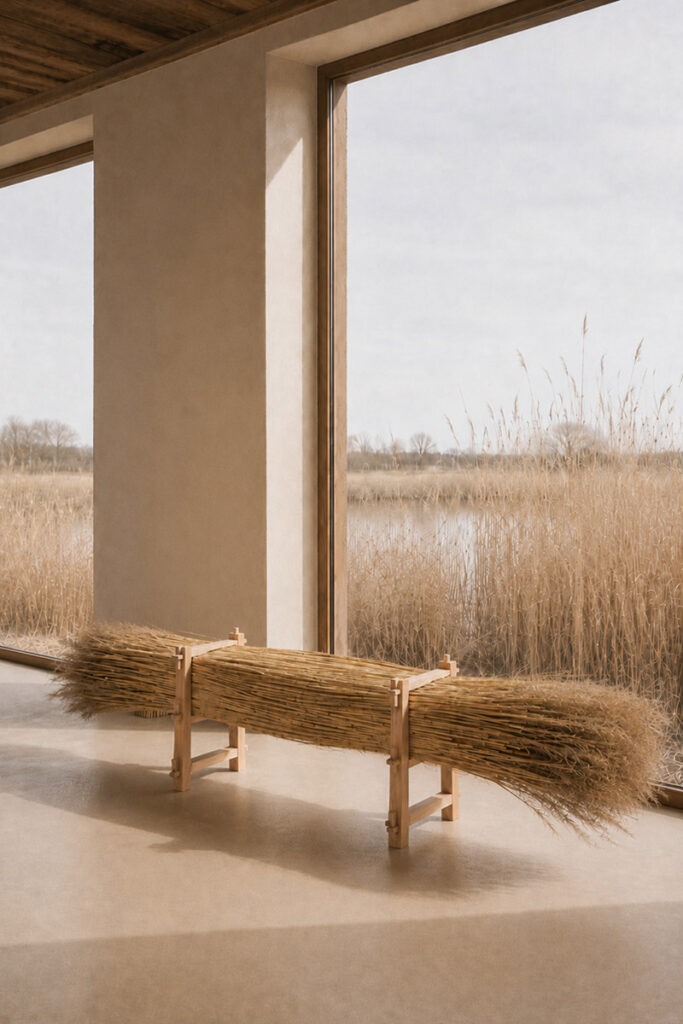
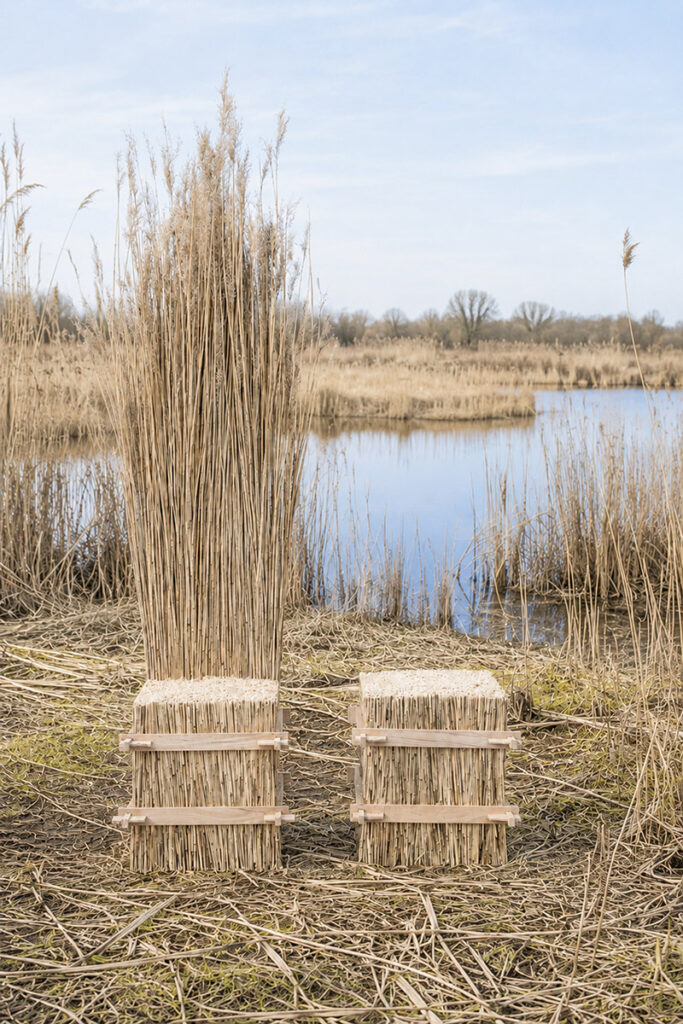
WaterLand is a furniture collection made of reed and wood—two materials that literally come from water and land, both sourced from Dutch soil. The reed is hand-cut in the protected Naardermeer, and the wood comes from a fallen tree in the designer’s own city. The furniture is handcrafted without glue or screws, allowing the character and natural marks of both materials to remain visible. Entirely plant-based and compostable, they return to humus at the end of their life cycle. In this way, WaterLand completes a full biological cycle.
Wooden Stacking Pebbles | Balanced Company
Ten tactile objects, based on real sea stones from the Greek island of Lefkada. The stones were digitally scanned and then returned to the beach. Their shapes have been translated into solid beech wood and hand-finished to create a soft, warm surface that invites you to touch and stack them. Stacking requires focus and balance, making each composition temporary and constantly creating a new relationship between form and gravity. For every piece sold, Balanced Company plants a tree through Mama, Plant a Tree; the first hundred have been planted in the Carpathian Mountains in Ukraine since 2025.


Biophilic Design Awards 2026
The winners will be announced on Thursday, October 22, 2026, during Dutch Design Week, at Sweco in Strijp-S, Eindhoven. Tickets for the Award Show can be ordered here.
In addition, there is a People’s Choice Award, and voting is now open.
Dutch Design Week 2026
17–25 October
Eindhoven
ddw.nl