Report by Niek Schoenmakers
The Gerrit Rietveld Academy’s 2026 Graduation Show brings together 156 graduation projects and demonstrates how a new generation of creators is increasingly less constrained by discipline or medium. Within DesignLAB, Architectural Design, and Ceramics, the focus is shifting from the object as an end product to material, space, and research. Sculpture, architecture, design, and installation flow seamlessly into one another, resulting in presentations that form an environment rather than a collection of separate works.
Many projects draw inspiration from personal memories, family history, or the immediate surroundings. At the same time, there is a strong interest in craftsmanship, ecology, and the intelligence of materials. Ceramics evoke geological processes, textiles bear traces of labor and landscape, while architectural interventions reinterpret existing spaces. The material is never a neutral medium but tells a story of origin, time, and use.
It is precisely within these departments that a generation of designers and artists is emerging who no longer seem primarily interested in creating an autonomous object, but rather in crafting a spatial experience. Installations invite visitors to move, observe, and make connections. The object gains meaning through its relationship to the architecture, the visitor, and the context in which it is situated. In this way, the exhibition demonstrates how art, design, and architecture are increasingly beginning to speak the same language.
Nina Merk – DesignLAB
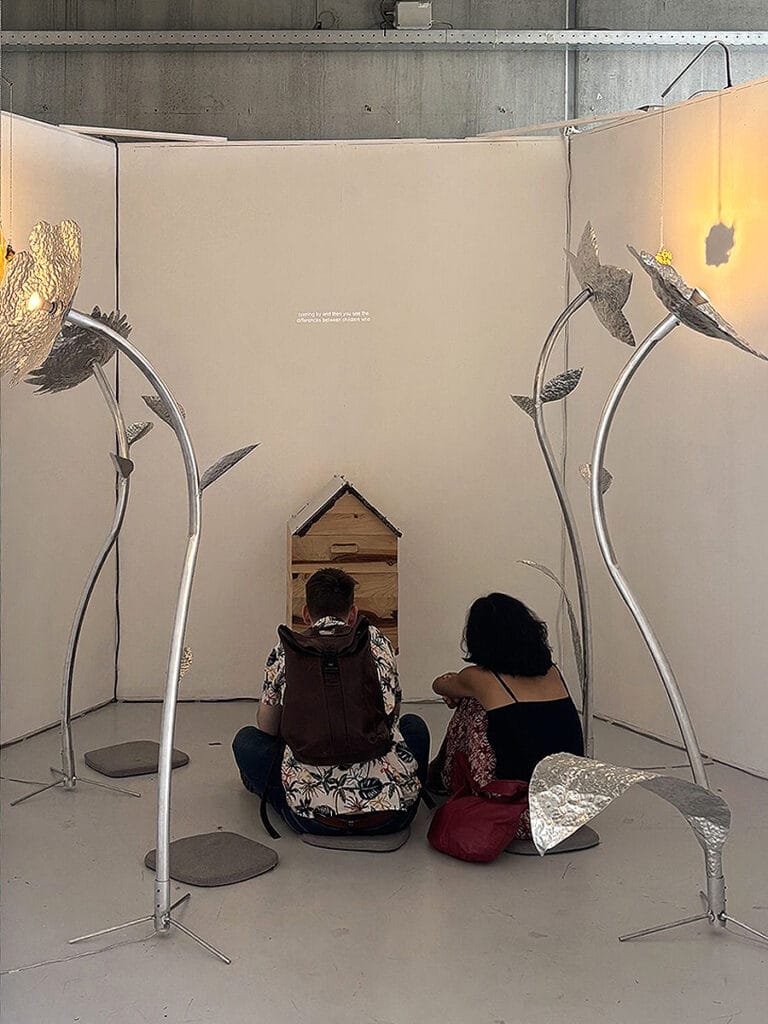
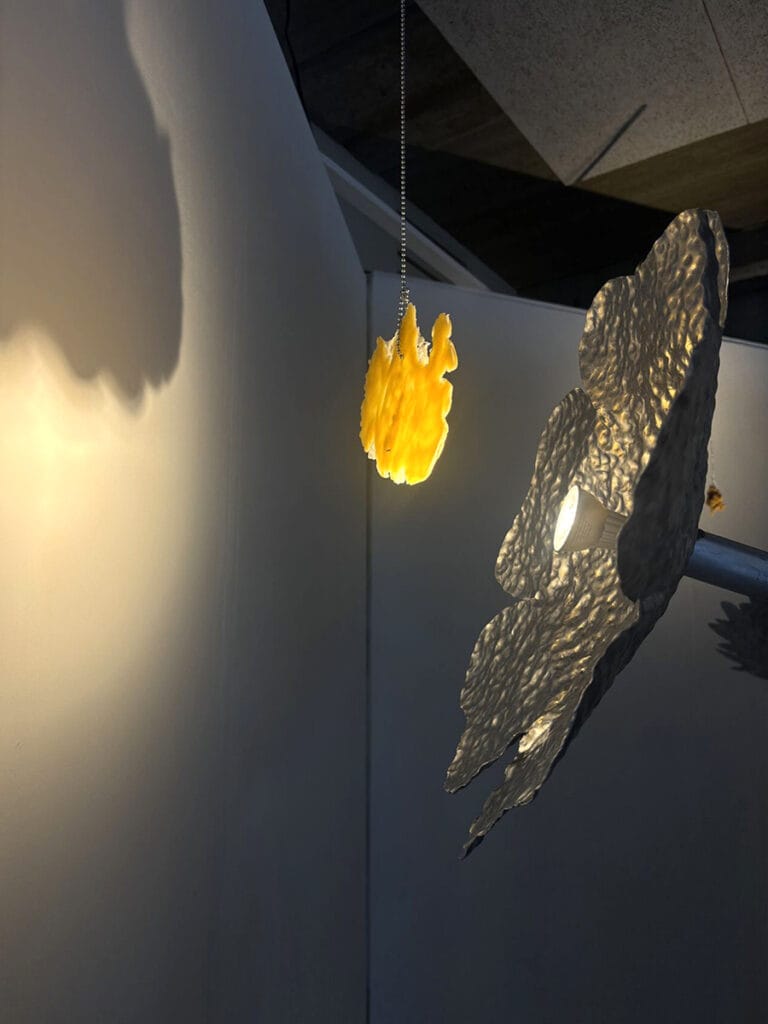
In What Will It Bee?, Nina Merk explores the millennia-old relationship between humans and honeybees, questioning whether we can truly call our homes nests. Inspired by a Polish beeswax divination tradition, her mixed-media installation presents the beekeeper as a prophet. Through a collaborative fortune-telling ritual with five beekeepers, she reveals their hopes, concerns, and visions for the future.
Karina Kalantajevska – DesignLAB
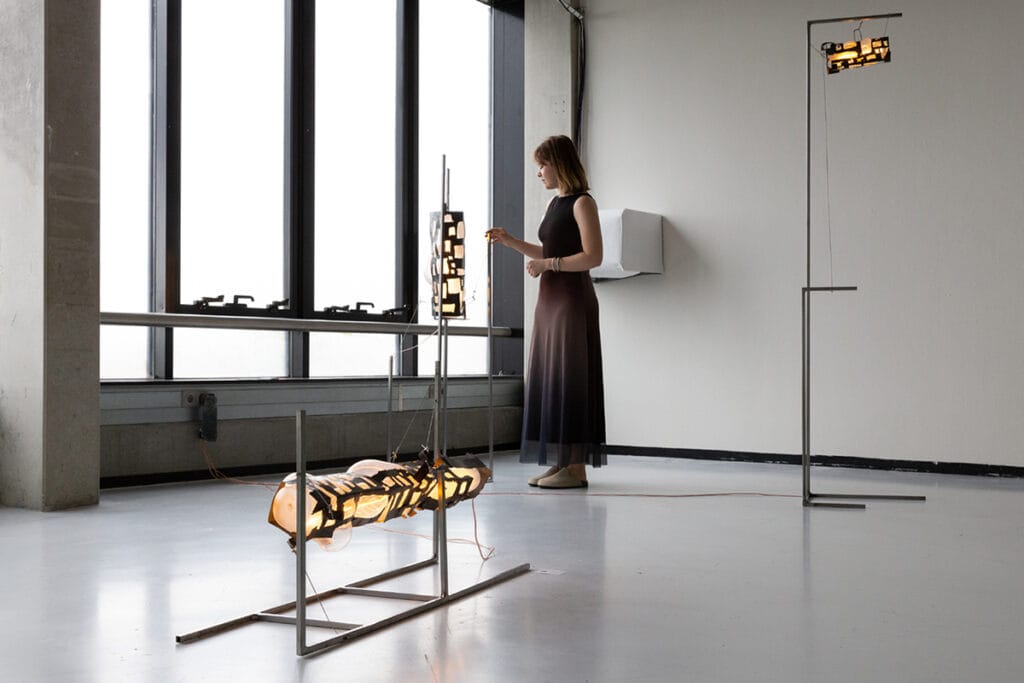
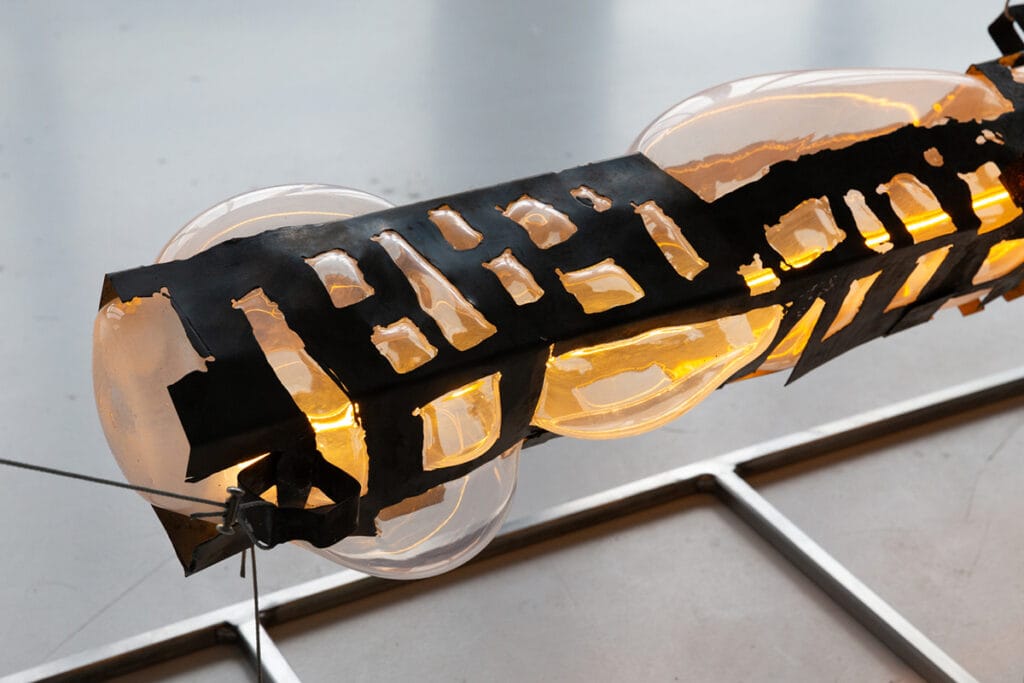
In Neon Threshold, Karina Kalantajevska explores the boundary between adaptation and the preservation of identity. Through sculptures of glass and metal, she captures the tension between restraint and resistance. A warm internal light creates an optical colour-spreading effect that evokes hope, suggesting that even under pressure, the self resists confinement and ultimately finds a way to emerge.
Jacob Olvik – DesignLAB
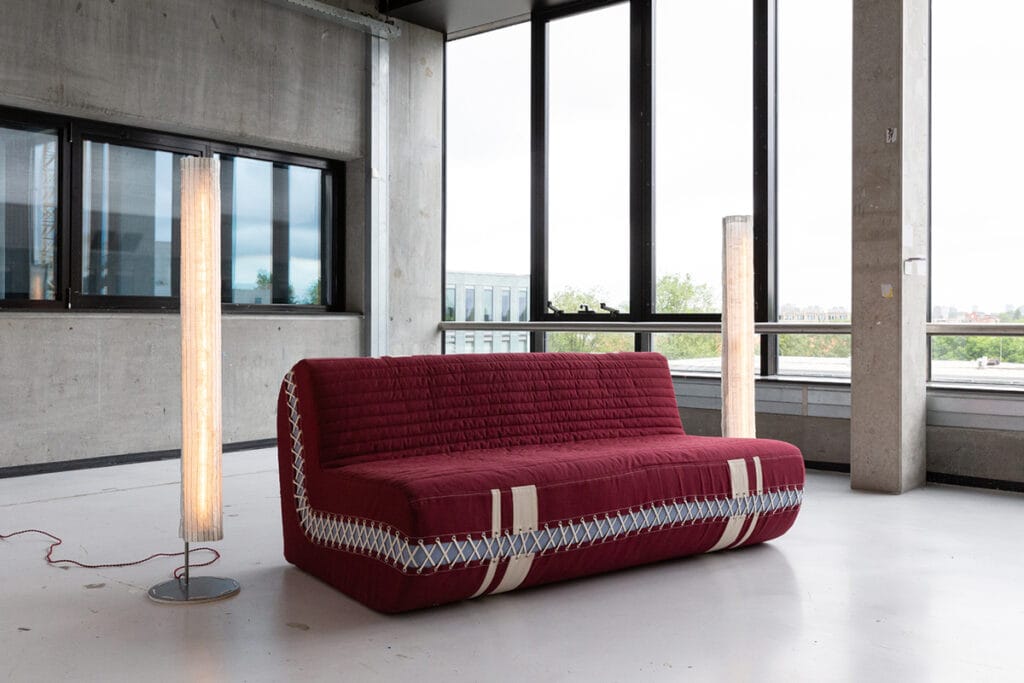
In 11 Prom King, Jacob Olvik explores how traditional masculinity and queer identity can intersect and challenge one another. Drawing on personal experiences of team sports culture, he reclaims familiar gender codes and reshapes them on his own terms. His work examines the tension between conformity and subversion, revealing how ambiguity can disrupt expectations.
Lou Fernandes Coste – DesignLAB
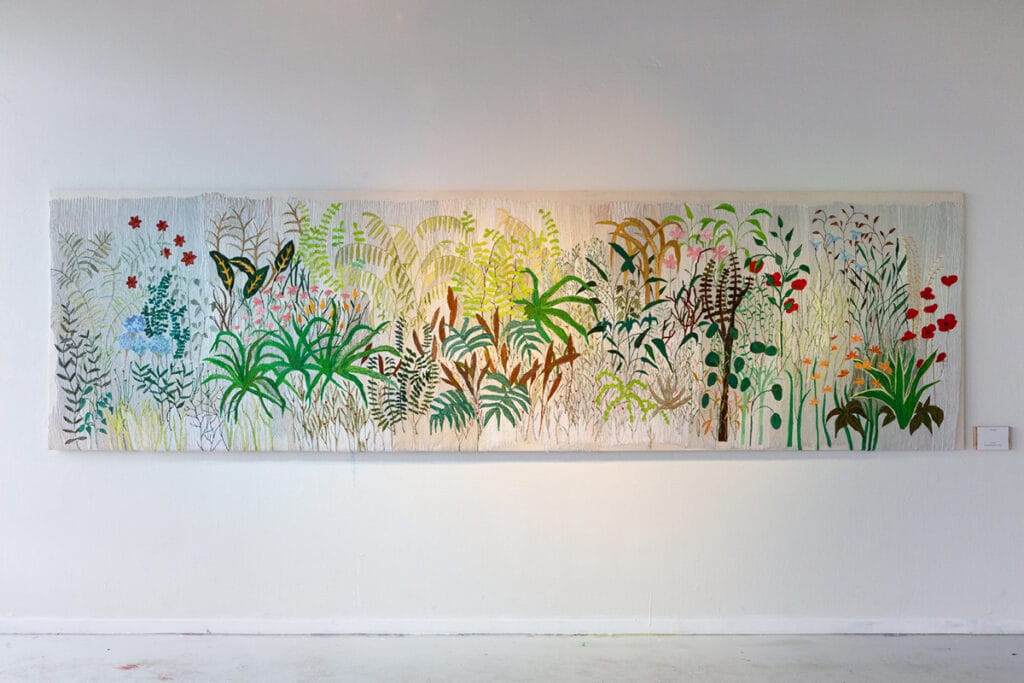
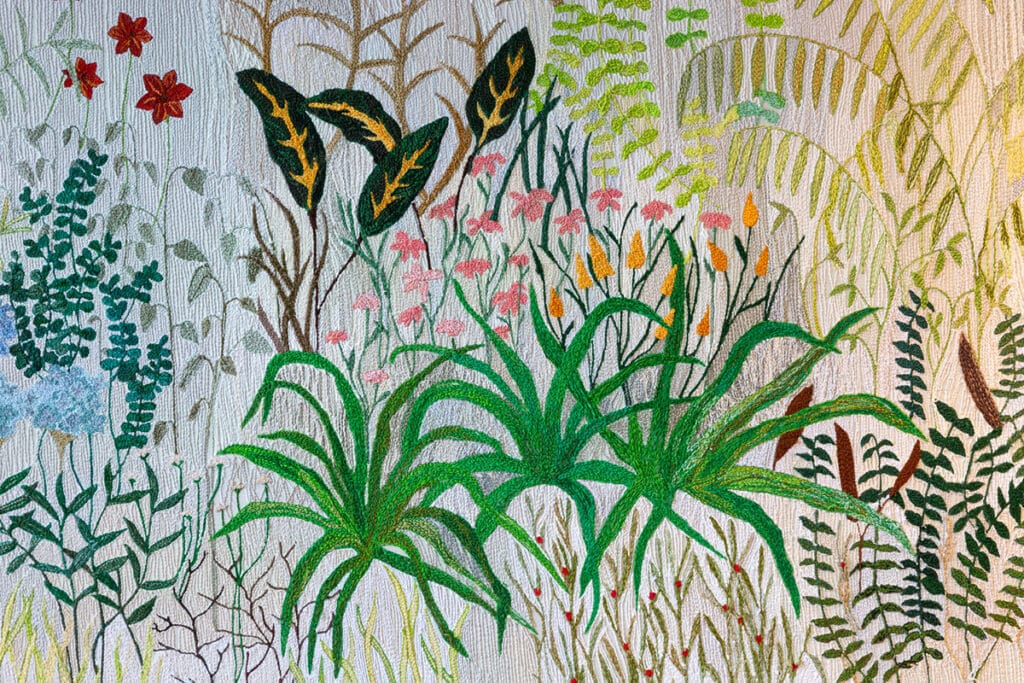
Lou Fernandes Coste transforms memories of their parents’ plant shop into a five-metre embroidered landscape. Stitch by stitch, an imagined garden emerges where diverse plant species coexist. The work makes time, care, and physical dedication visible through its making, offering a quiet response to a culture driven by speed and instant production.
Fynn Aubine de Jong – DesignLAB
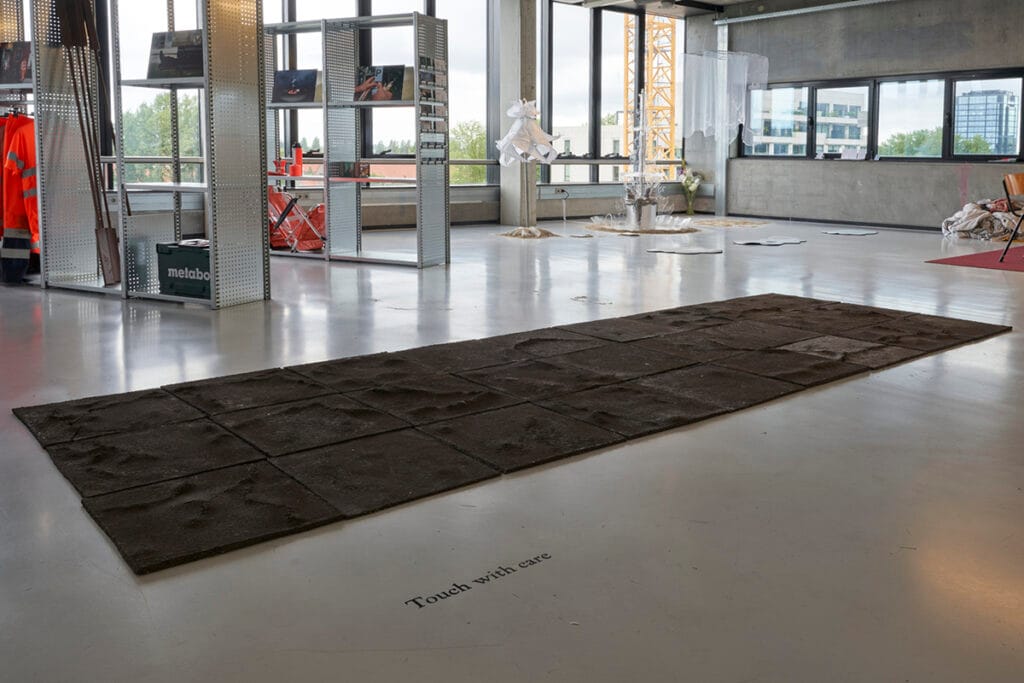
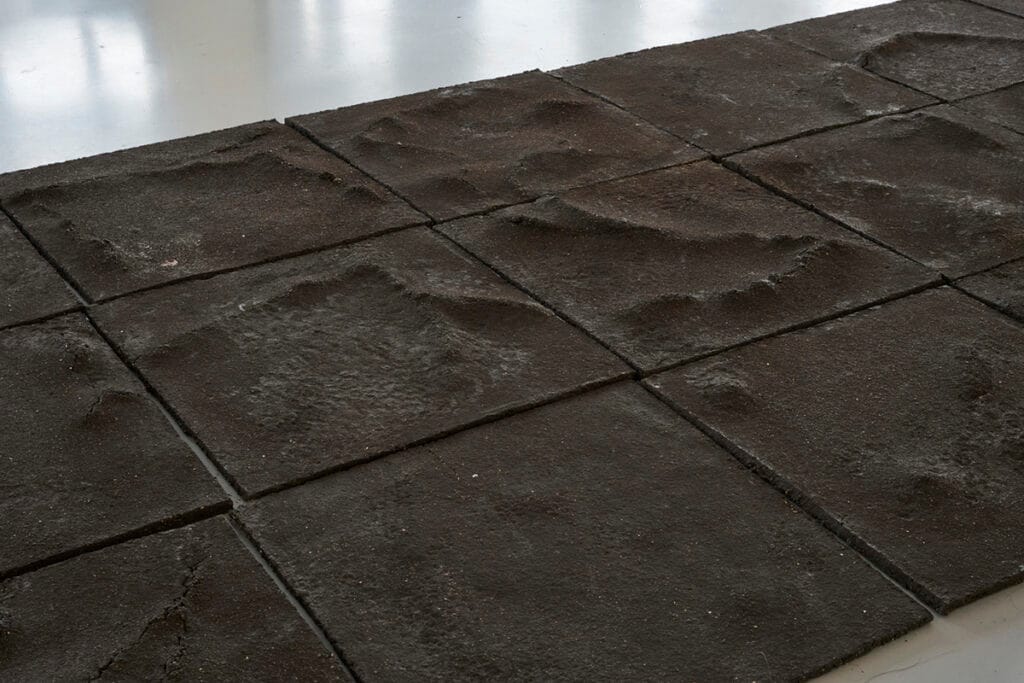
In What Lives Beneath, Fynn Aubine de Jong draws attention to the hidden life beneath the asphalt. Through a ceramic installation, they show how tree roots push through a human-made landscape, disrupting what appears fixed and immovable. The work reflects on nature’s resilience while questioning ideas of space, efficiency, and the relationship between humans and other forms of life.
Anka Loladze – Architectural Design
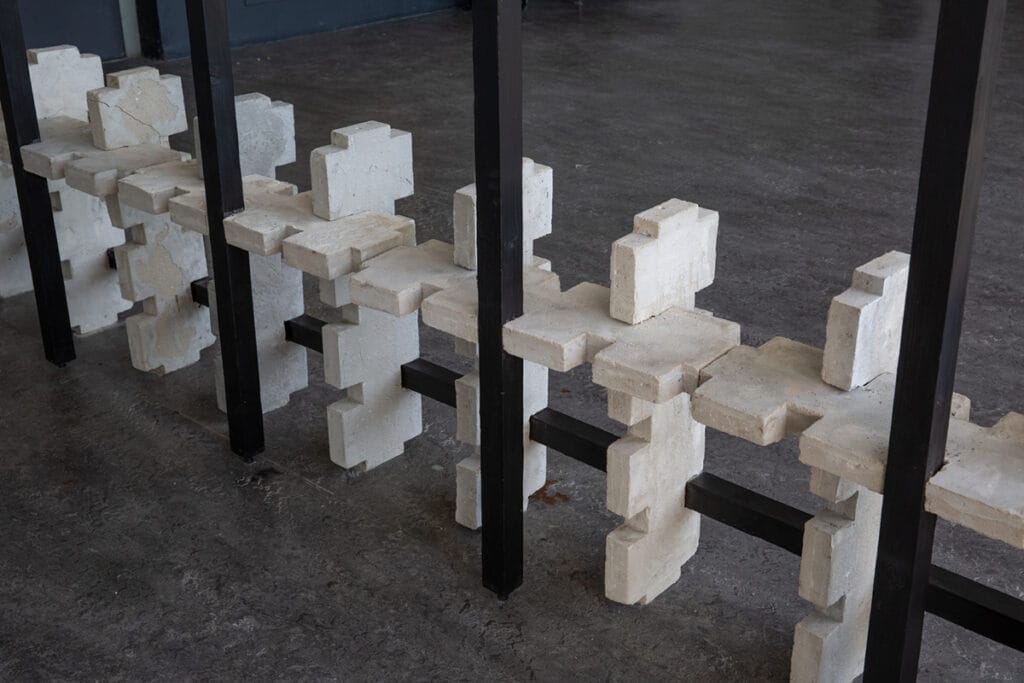
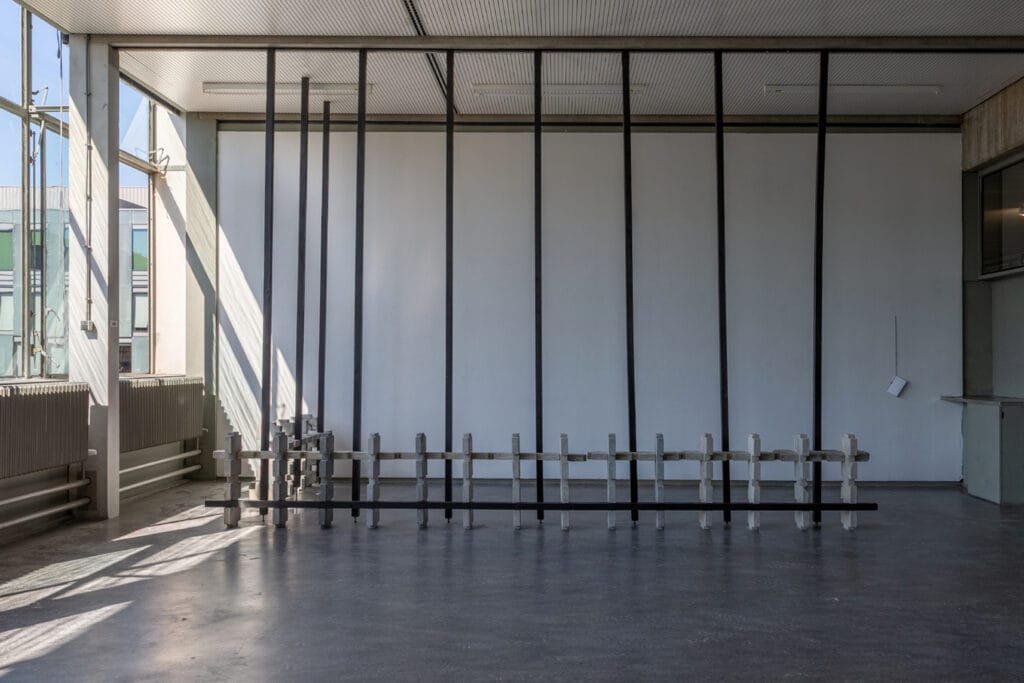
In Elevation, Anka Loladze explores the relationship between Georgian vernacular architecture and the legacy of Soviet construction. Combining the traditional Darbazi typology with industrial building methods, she creates a self-supporting installation in which concrete and charred timber remain in a fragile balance. The work examines how architecture embodies memory, ideology, and the political history of the built environment.
Domitille Marchiol – Architectural Design
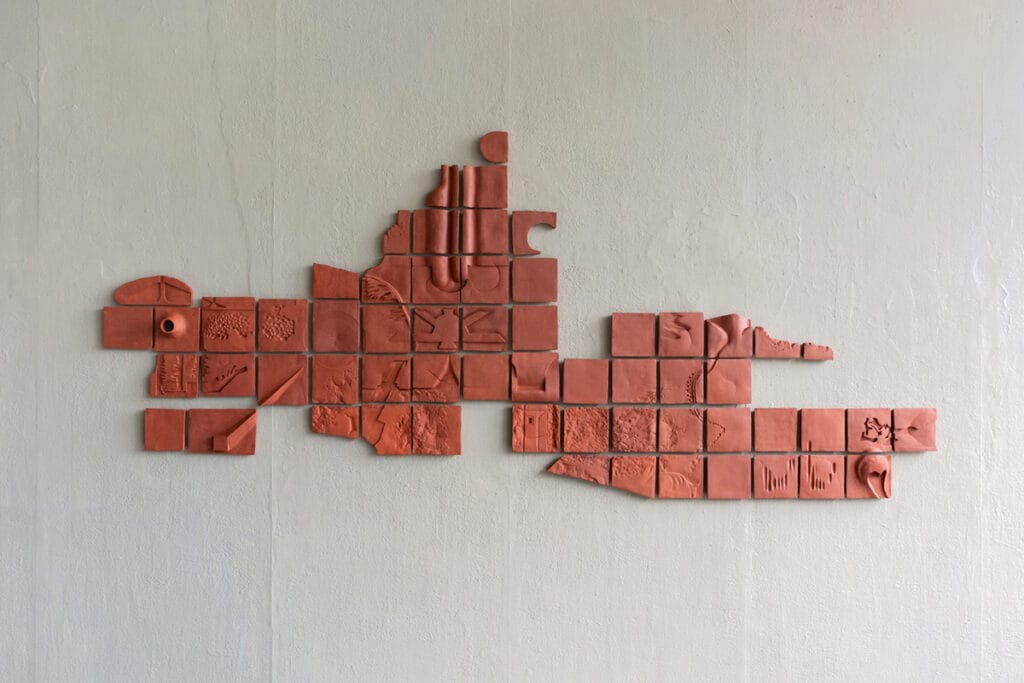
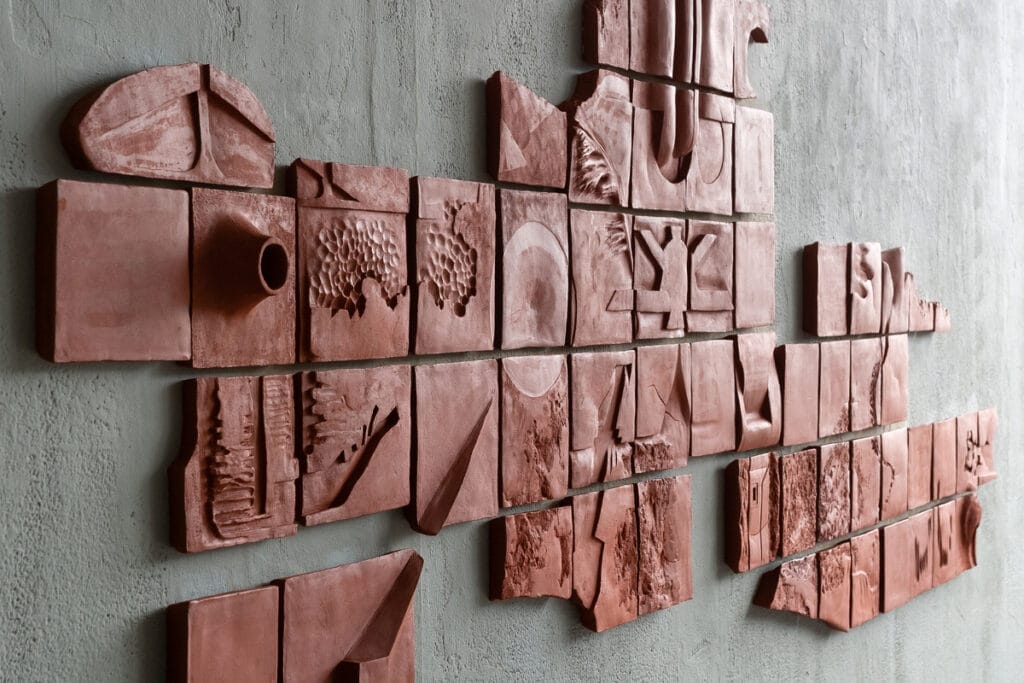
In Terranova (detail), Domitille Marchiol explores the relationship between memory, writing, and architecture. Drawing on childhood places and family history, she revisits the landscapes that shaped her identity. Inspired by her great-grandmother, whose family came from Calabria, Italy, the work reveals how personal memories become embedded in place and endure across generations.
Linda Zimmermann – Ceramics
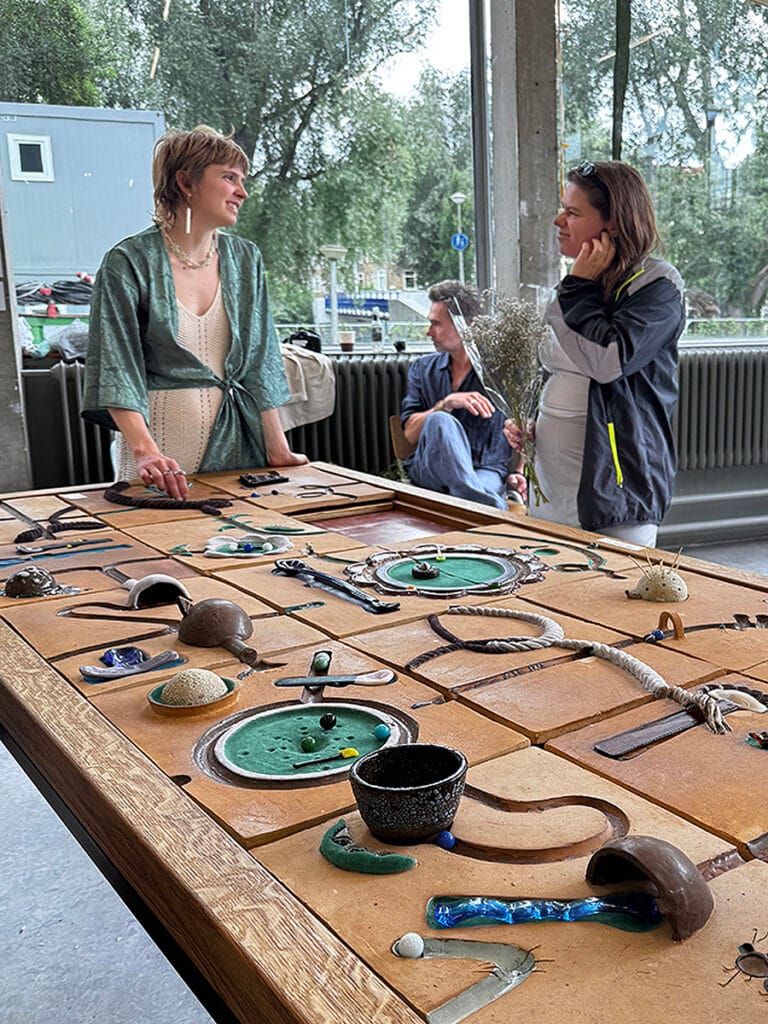
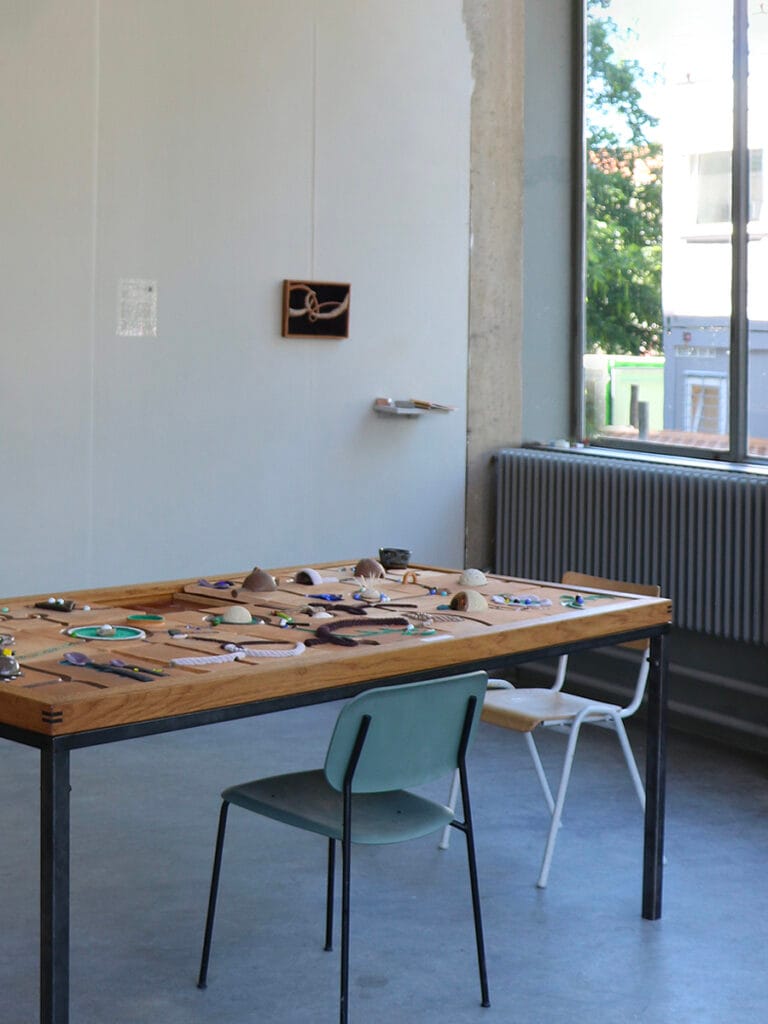
In UN_TILED, Linda Zimmermann explores how objects can shape social interaction. Her installation centres on a dining table made of movable ceramic tiles, whose carved surfaces guide marbles across the tabletop. By bringing play and gathering together, the work invites visitors to rethink familiar table conventions and reflect on the relationships between people, materials, and shared experience.
Anne-Sophie de Lange – Jewellery – Linking Bodies
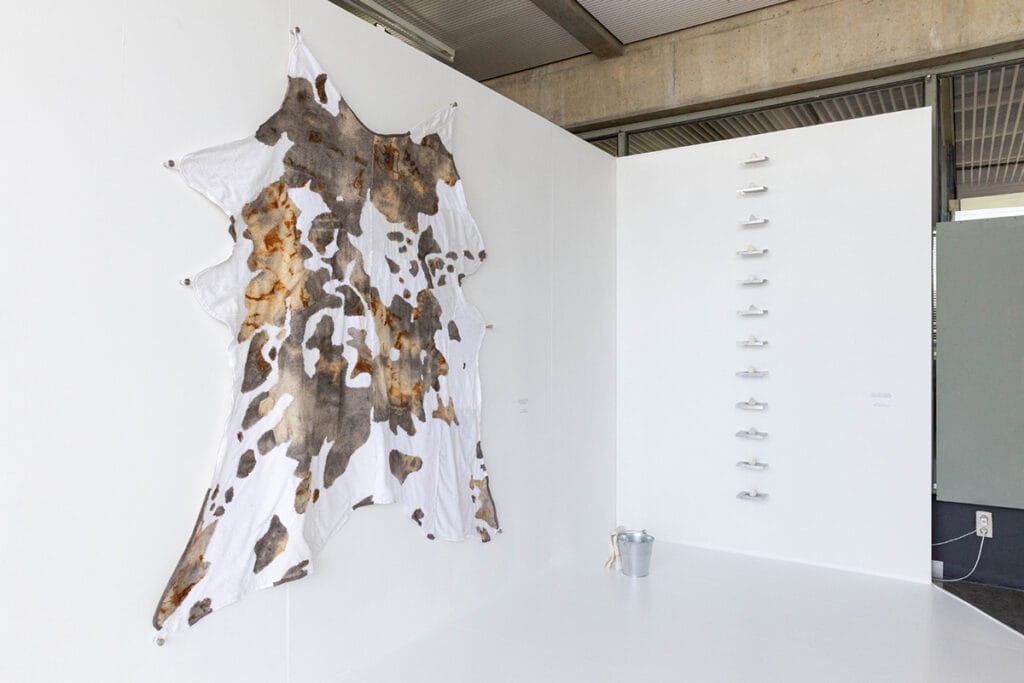
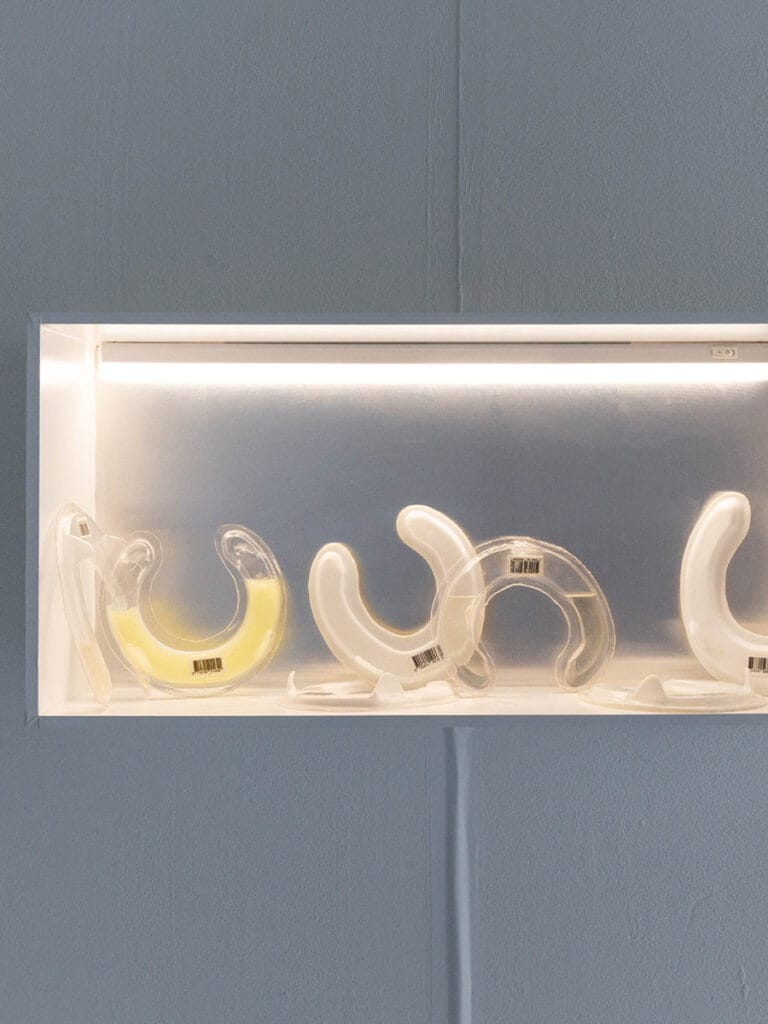
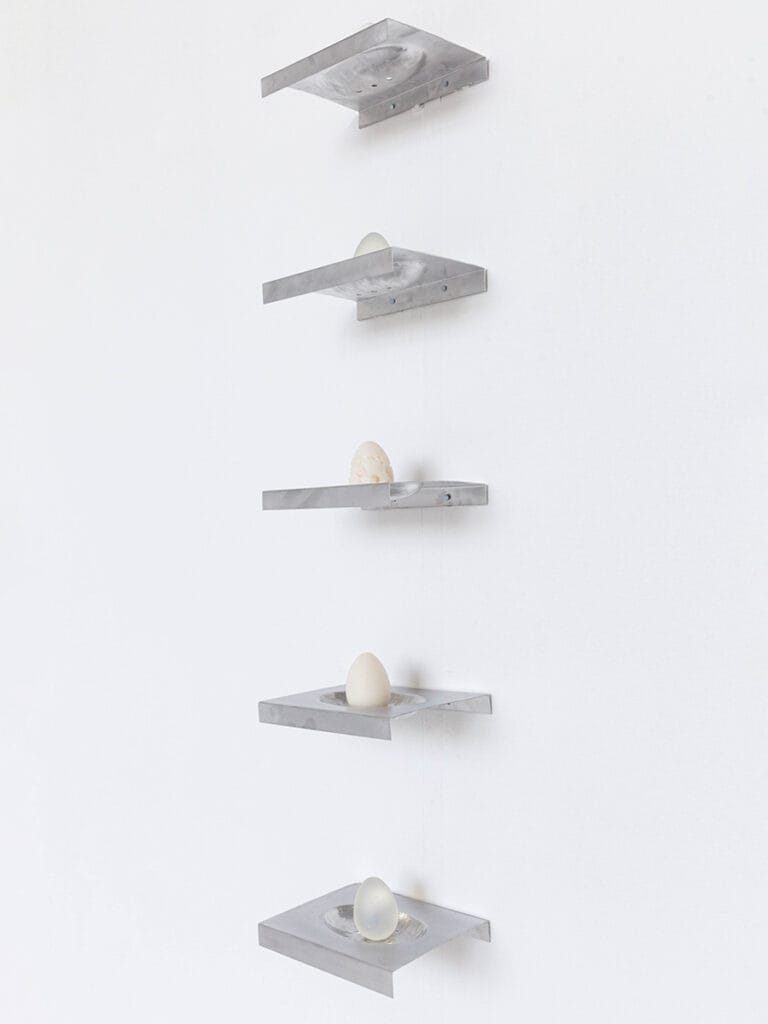
In her work, Anne-Sophie de Lange examines how ideas of cleanliness, order, and morality shape everyday life. By combining materials associated with bodily care with objects derived from other animals, she estranges familiar domestic elements. Her installation questions what is considered clean or appropriate, revealing how these conventions influence our relationship to objects, bodies, and the home.
Emma Leu – The Large Glass
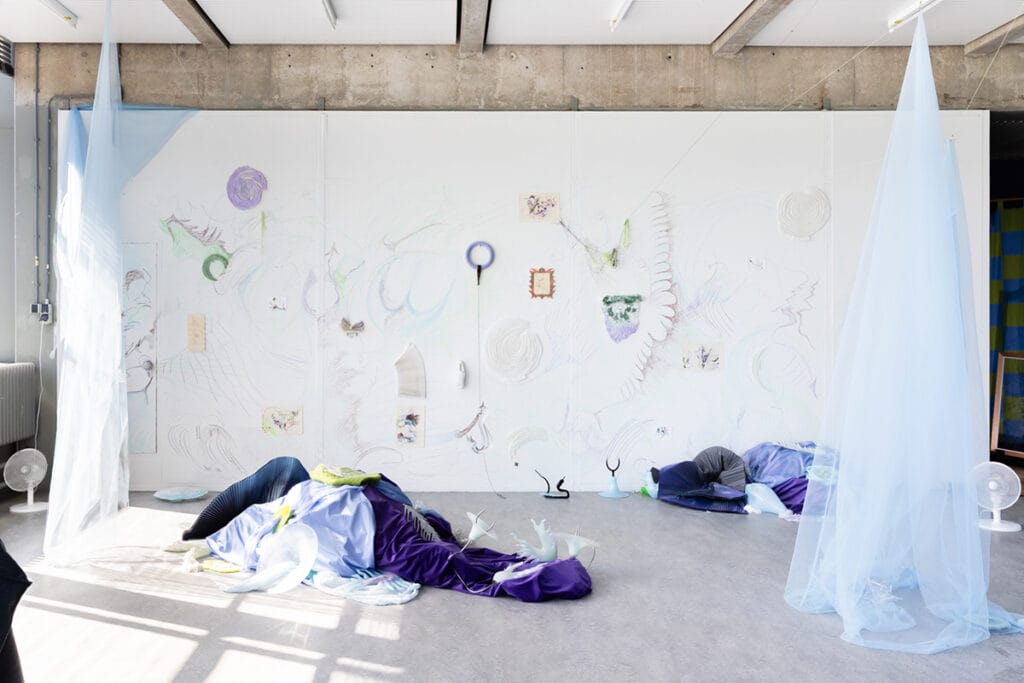
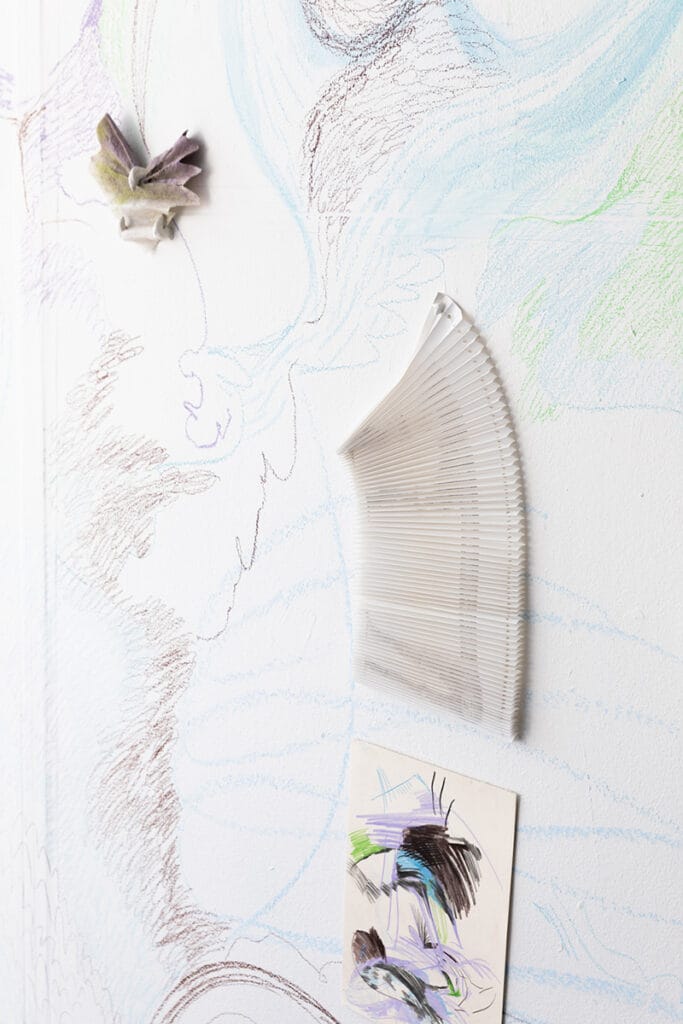
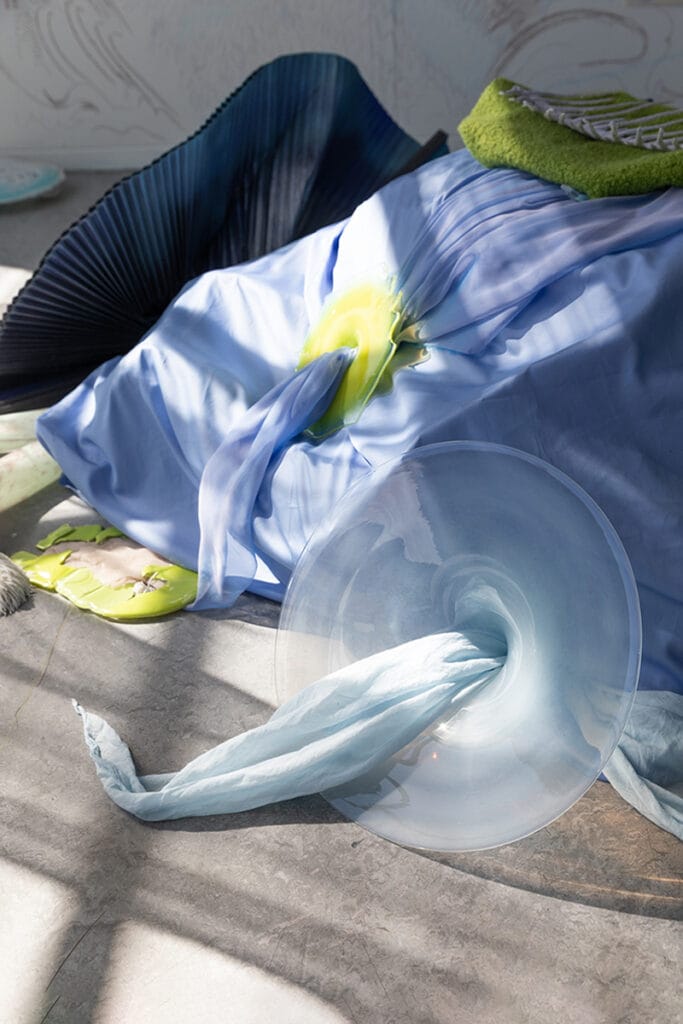
In I’m a Mermaid on Dry Land, Emma Leu creates speculative ecosystems inhabited by hybrid creatures, found objects, and tactile materials. Drawing on queer theory, underwater mythologies, and the plush toy as a method, she explores transformation, attraction, and vulnerability. Glass, textiles, metal, and soft forms evoke sensory memories, inviting playful, embodied encounters with the installation.