Opinion | Bob Verheijden, Director Art & Design ArtEZ University of the Arts
This article is in response to Lucas Verweij’s opinion piece The ‘normalization’ of art school.
In his article, Lucas Verweij denounces the blurring of boundaries between Artists and Designers by the new Fine Art & Design professional profile. While he has a point therein that deserves debate, his argument conflates two different discussions: the fusion of art and design on the one hand, and the bureaucratic containment of art education on the other. This confusion is problematic, because both phenomena deserve their own analysis – and especially their own critique.
Let me begin with where I agree with Verweij. The introduction of the Bologna Process, and more specifically the placement of art schools within the higher education system, has led to a stifling culture of accountability. What was once a sanctuary for experimentation, doubt and search is now increasingly forced into formats of learning outcomes, test matrices and other legal frameworks. The artistic space in which “not-knowing” and critical questioning are central is being crushed by an educational language that barely understands creativity. This bureaucratization is indeed a form of “entrenchment” that provokes imitation in education-and, in the end, students themselves-and threatens the autonomy of art education.
But that is separate from the discussion of the distinction between art and design. This is where I lose Verweij. The fusion of the two domains is not a problem – indeed, it is a necessary and logical development. After all, the traditional separation between art and design is a construct that goes back to a modernist worldview: design as functional servitude, born of industrialization, colonialism and the myth of social engineering. That design not only improved the world but also shared responsibility for exhaustion, pollution and social inequality.
This is precisely why it is valuable that Design is seeking to reconnect with the arts – with the critical, the poetic, the disruptive. Design that does not primarily want to solve, but wants to question. Not filling, but daring to leave emptiness. In this sense, the decision of the Consultative Body for Art Education (OBK) to no longer rigidly separate art and design is not a capitulation, but an opportunity. An invitation to be able to reframe design from an artistic, investigative perspective within the very space that the proposed professional profile Art & Design gives. In addition, the new set-up actually gives room for “autonomous” interpretation of the profiles of the various disciplines within art and design.
This does not mean that differences no longer matter. Of course there are differences between Design (applied art) and autonomous art. Between interdisciplinary practices and specialized disciplines. Between commercial (gallery) circuits and committed collectives. But precisely this richness is what makes art education vital. It is a fallacy to think that this complexity becomes manageable by categorizing between Art and Design. What we need is an embrace of the hybrid, the ambiguous and the experimental.
The real threat to arts education is not in the amalgamation of disciplines, but in the systematic management drift that puts pressure on higher education. Specific to the arts sector, there are the political prejudices that put pressure on the arts. That is where the battle lies. Let us fight it clearly.
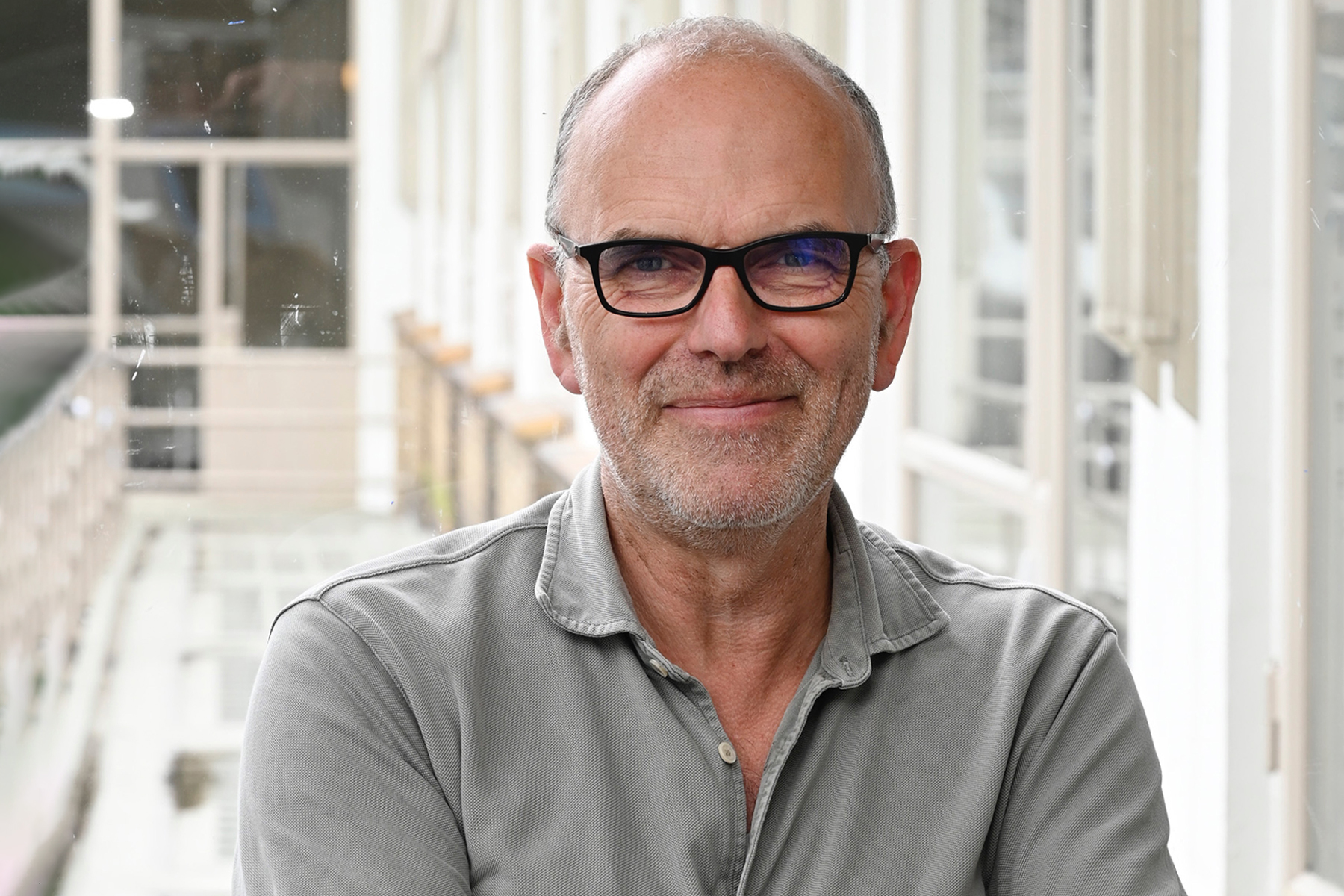
Portrait photo: Nico van Manen