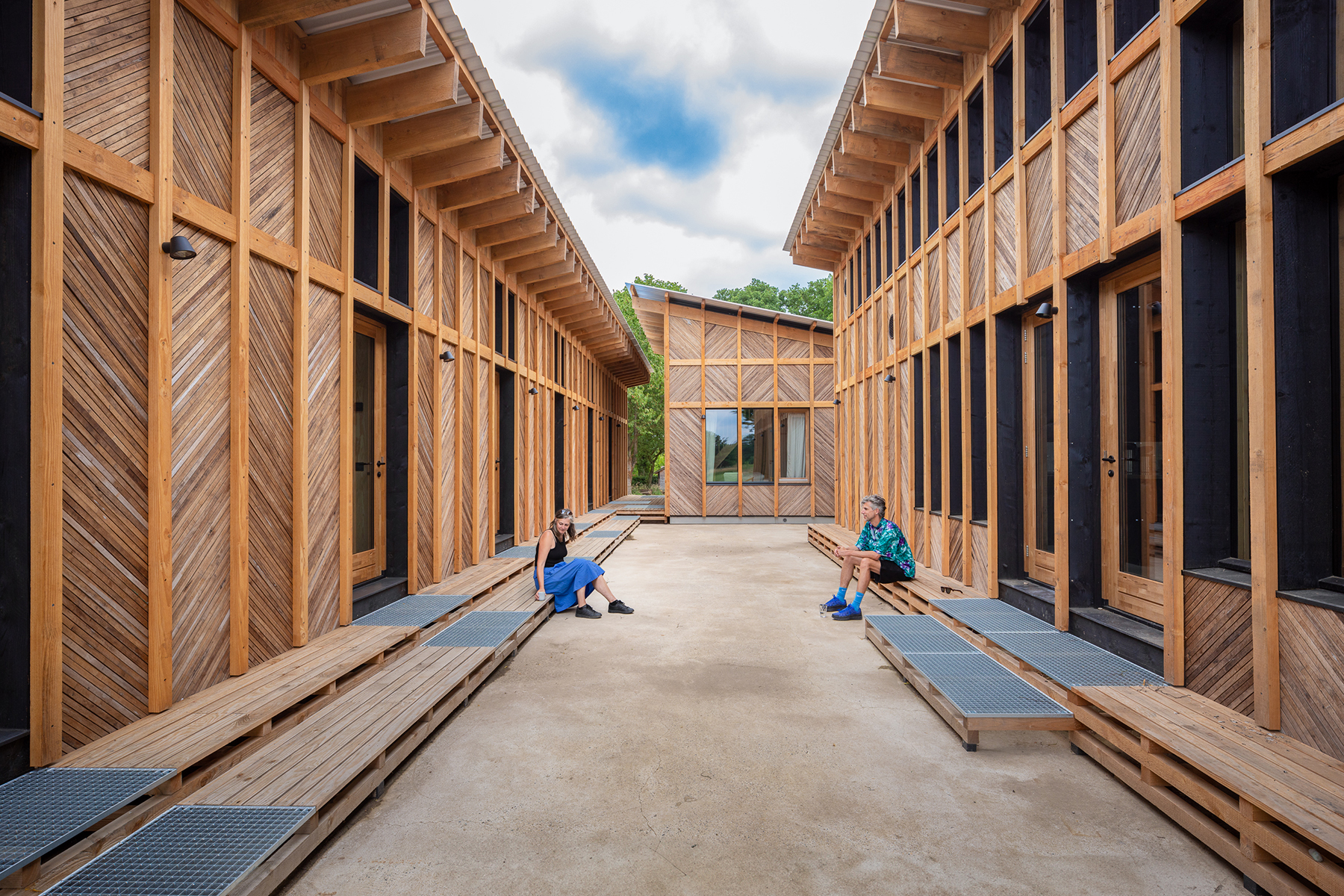
For The Place to Be, a retreat center in the Dutch region of the Achterhoek, Overtreders W designed two accommodation buildings and a dining hall, constructed entirely from biobased and locally sourced materials.
The new development was made possible through the Dutch red-for-red scheme, which allows the replacement of agricultural buildings in rural areas by reusing up to half of their original footprint for a new function. On the site of a derelict cowshed, Overtreders W created a contemporary ensemble that merges circular construction principles with refined detailing and a clear, calm aesthetic.
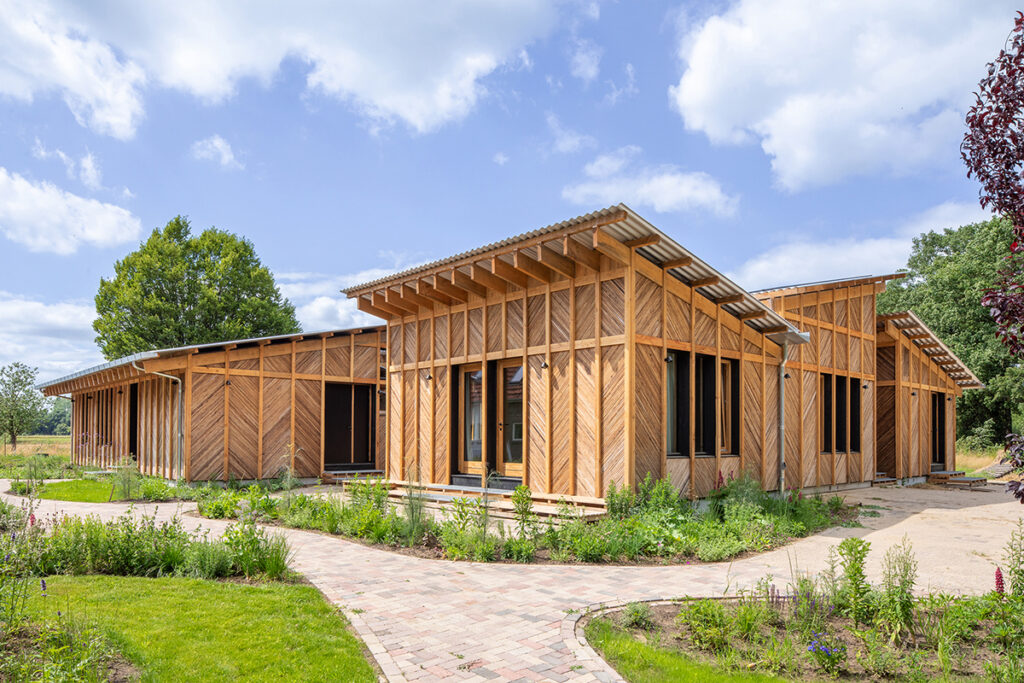
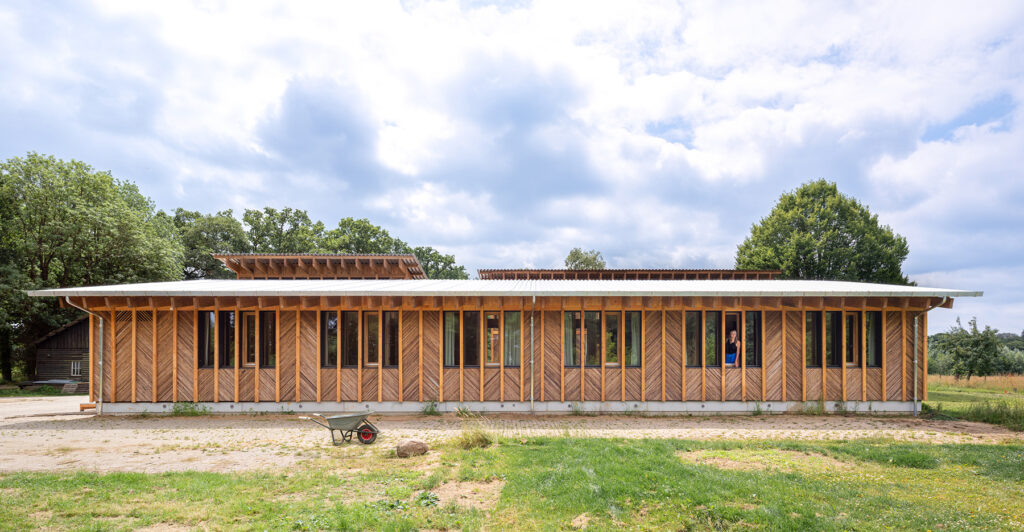

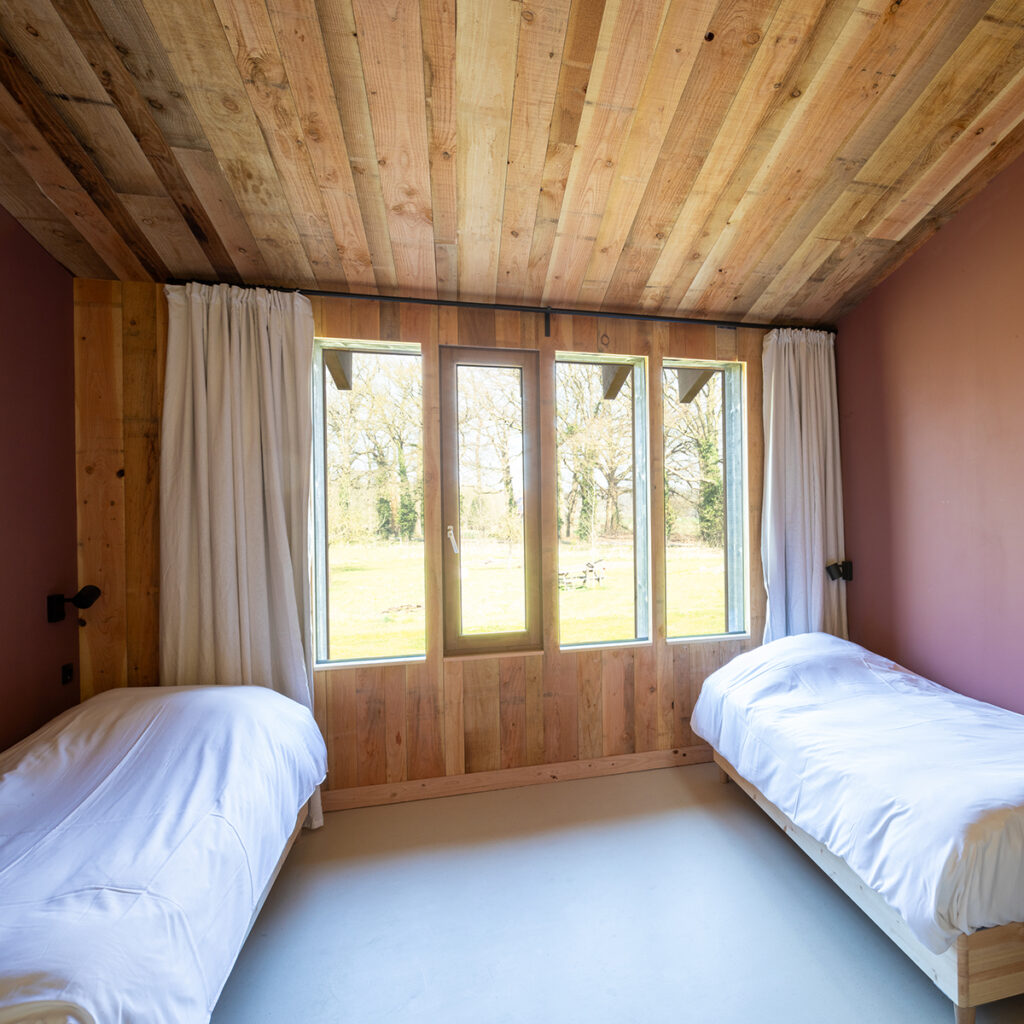
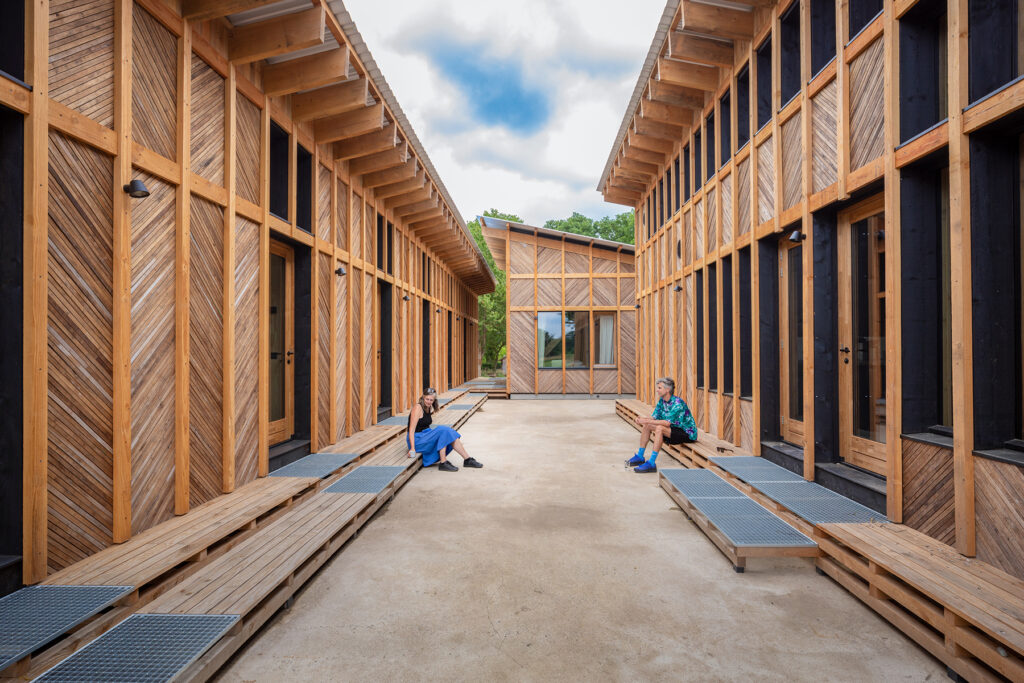
The three freestanding volumes — housing ten guest rooms for two or four people and a spacious dining hall — rest on the original foundations and follow the footprint of the old barn. By dividing the program across three distinct buildings, the architects introduced a playful spatial composition, offering panoramic views of the surrounding landscape and an intimate courtyard at its center.
In total, 160 cubic meters of Douglas fir were used, harvested locally from Staatsbosbeheer’s Slangenburg Estate, where the retreat itself is located. The trees, already scheduled for felling, were processed in a nearby sawmill into the structural frame and interior wall cladding.
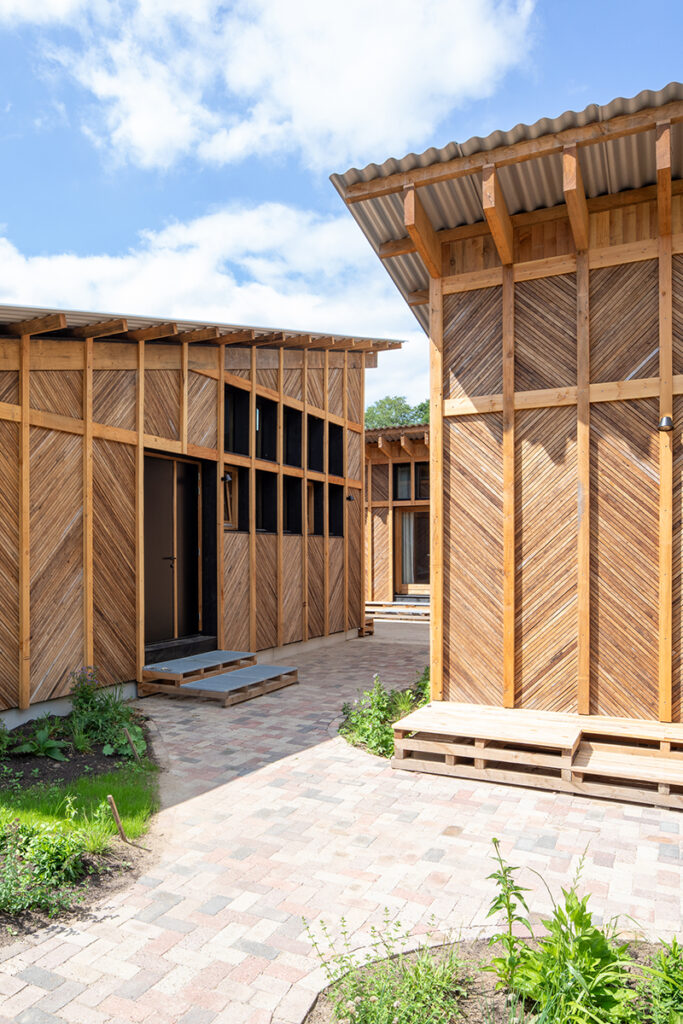
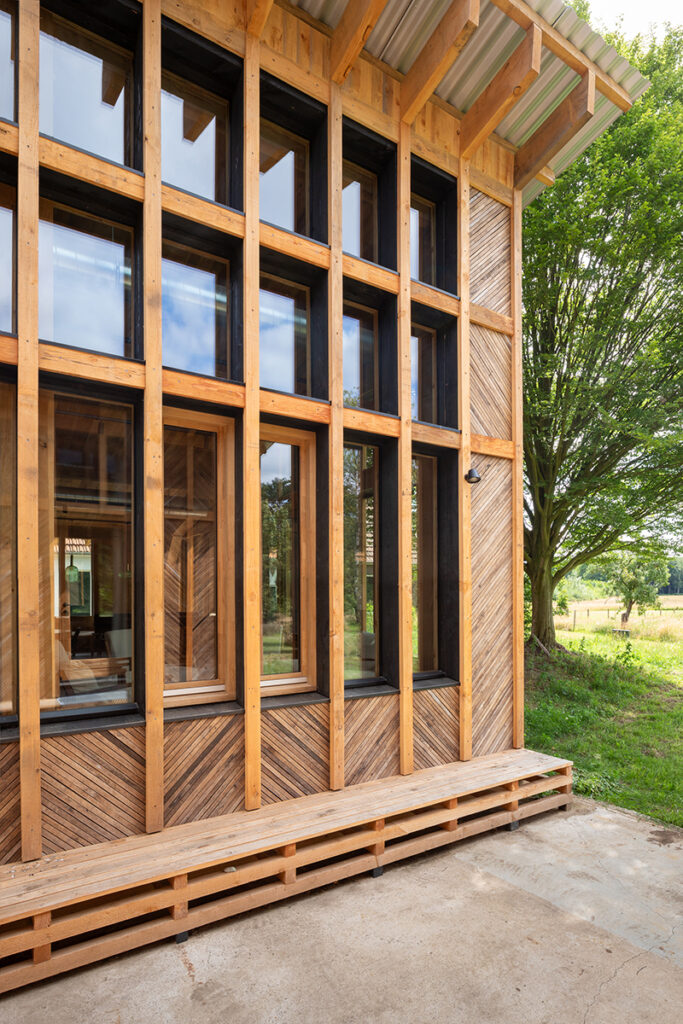

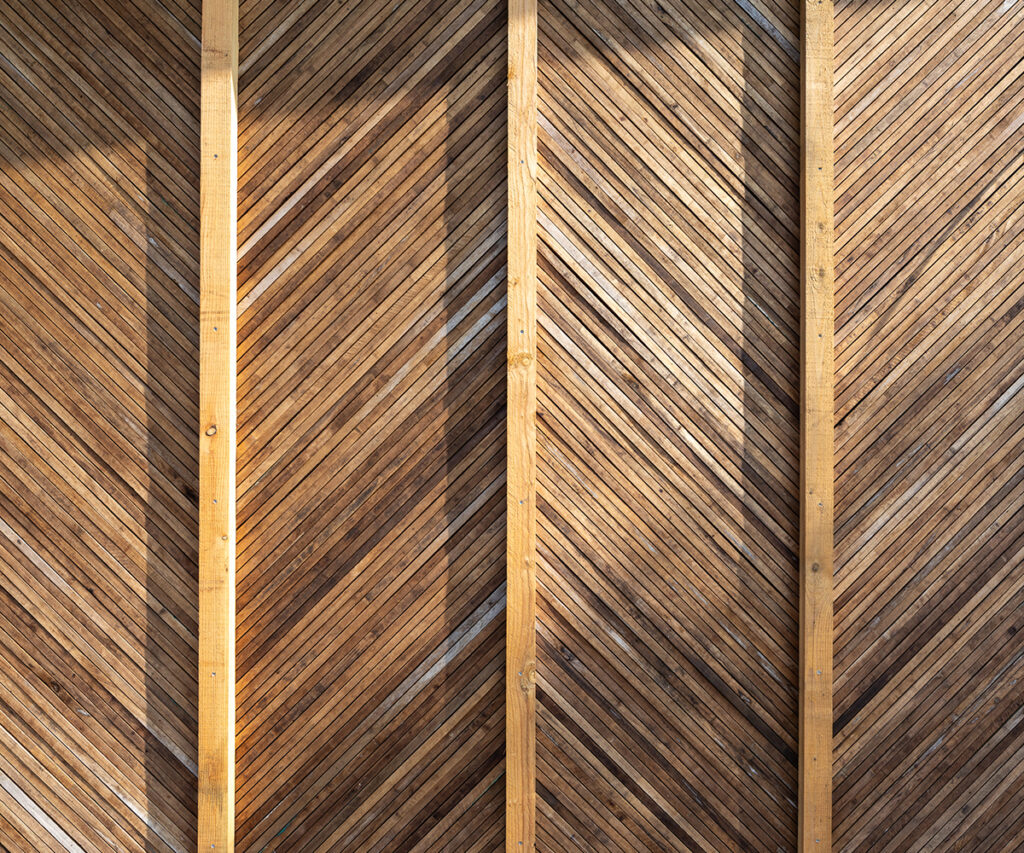
The façades are clad with 14,500 reused fraké slats sourced from Stadsmijn Achterhoek, a residual material stream from Platowood. Previously used as spacers in the timber treatment process, the slats have been given a second life as a refined, tactile exterior finish. The floors, roofs, and walls are insulated with nearly 15,000 kilograms of straw and miscanthus, cultivated by a cooperative of six local farmers. The project thus serves as a pilot for the region’s fiber cooperative, showcasing the potential of a fully local, circular construction chain.
By keeping material costs low and with the client acting as their own main contractor, the overall construction budget remained comparable to conventional building, demonstrating that sustainable, locally rooted and biobased architecture can be both economically and ecologically viable.
Photography: Jorn van Eck


