
Report by Jos Kranen
Downtown Schiedam. A short tram ride. Then a 10-minute walk through a (still) somewhat undefined harbor area (hey, is that the HAKA building over there?), past Joep van Lieshout, before I finally arrive at a building that does indeed resemble a beehive. It’s buzzing with recent graduates and students from the Willem de Kooning academy, who are staffing their final exam exhibition with unprecedented positivity and self-confidence: I’ve arrived at the Keilepand.
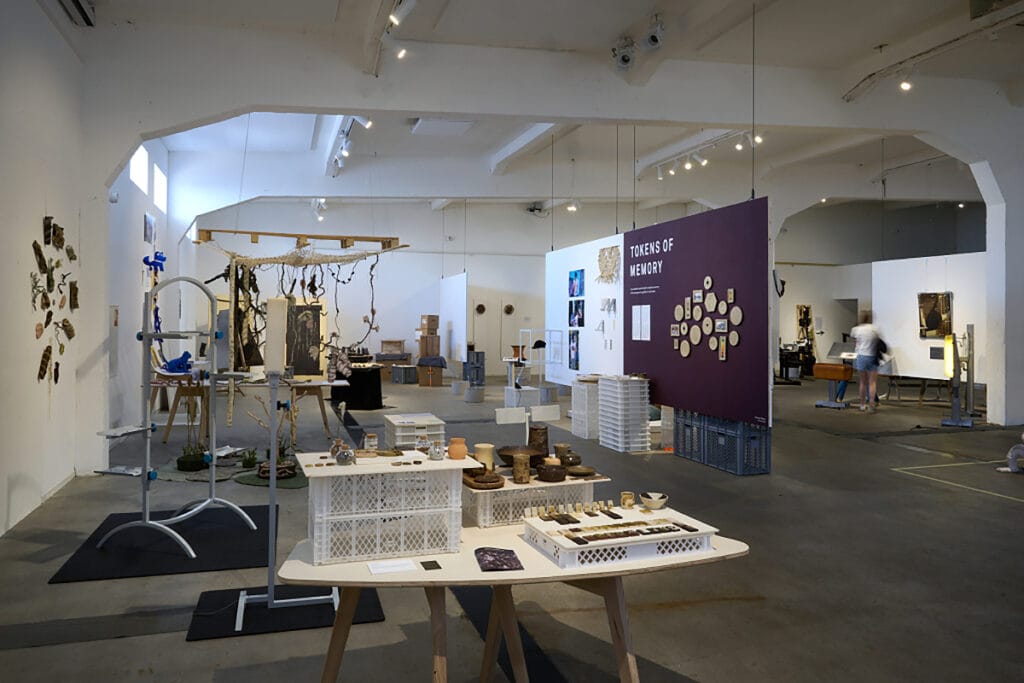
Once inside, everything is exactly as it should be. A beautiful industrial building without too much fuss, where the work of graduates from the Spatial Design, Illustration, and Product Design departments is displayed in the same straightforward manner. Clear and concise, and in keeping with the quintessentially Rotterdam motto “Niet Lullen Maar Poetsen” (“Don’t Talk, Just Do It”)—something to be happy about in today’s world, and certainly refreshing. There’s a pleasant calm in the space today, despite the hustle and bustle around us.
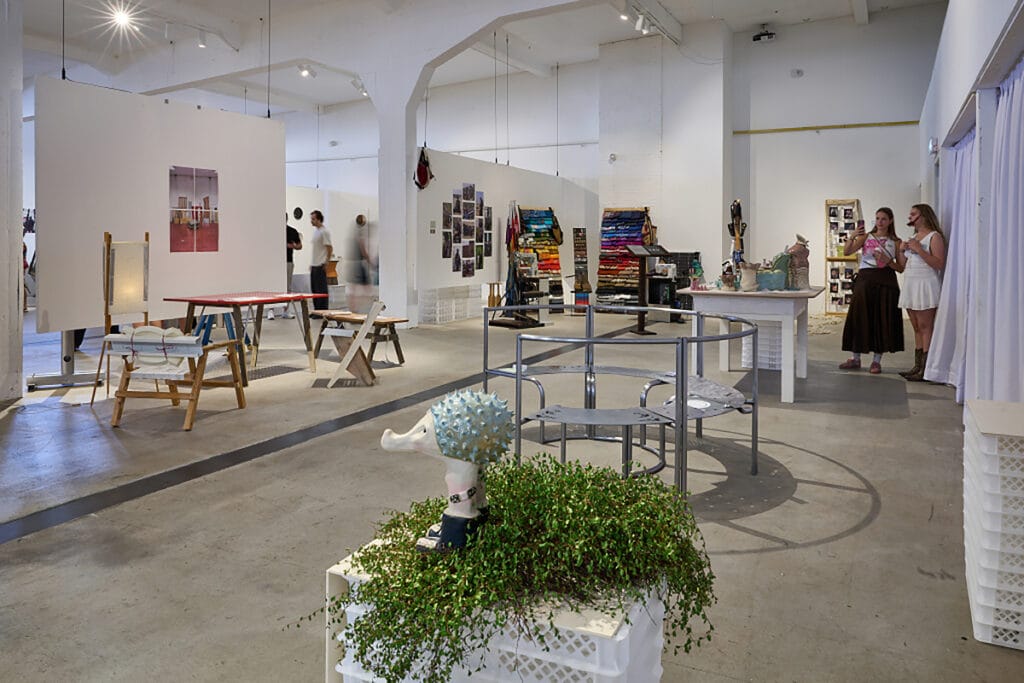
It is a designer’s task to view the world through different eyes and to reinterpret products, materials, and customs. The graduates of the Willem de Kooning Academy do this without much fanfare, with razor-sharp precision and a clear conclusion. They place themselves at the service of the product and the material, resulting in a coherent narrative about the role of the designer in our society that runs as a common thread through the exhibition.
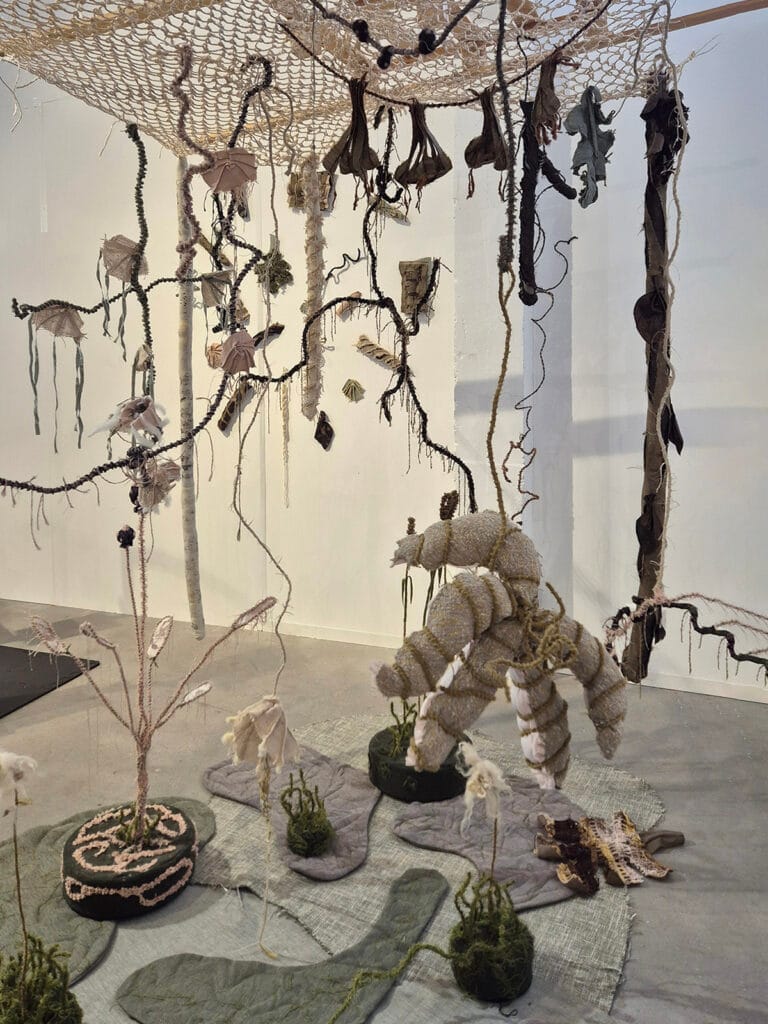
A good example of this is Wildgroei, a work by Amber Evers, who visited artist Couzijn van Leeuwen’s studio as a child, where a seed was planted. In her thesis project, she explores what happens when you make space for what wants to emerge and let go of the end result. Through experimentation with secondhand textiles, she created forms reminiscent of bark, leaves, and flowers that—much like their natural counterparts—arose entirely from a combination of chance and external influences.
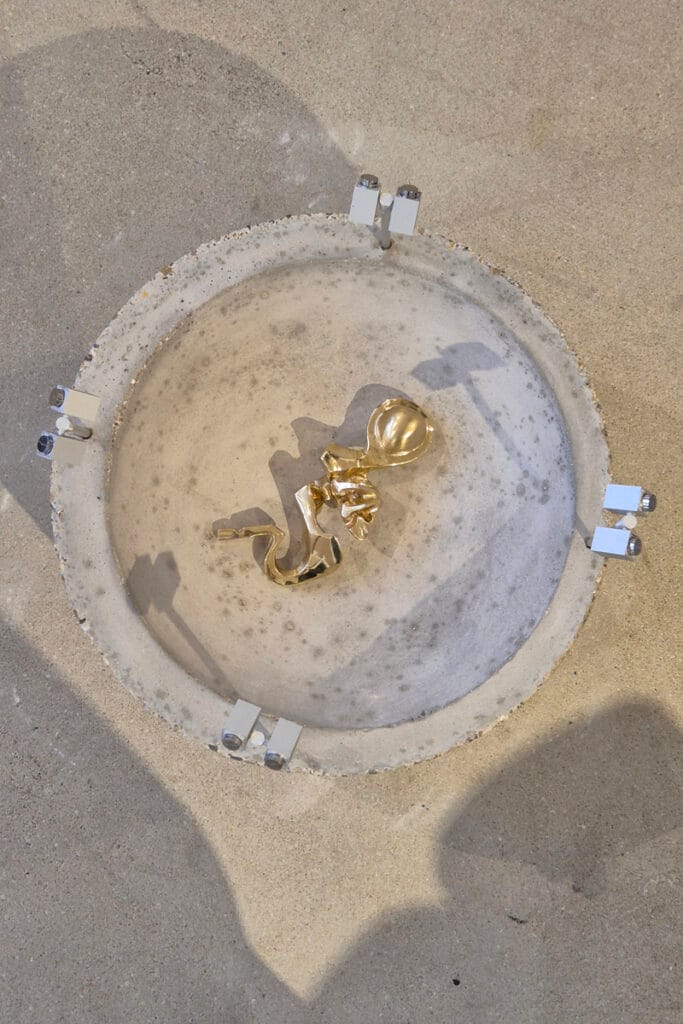
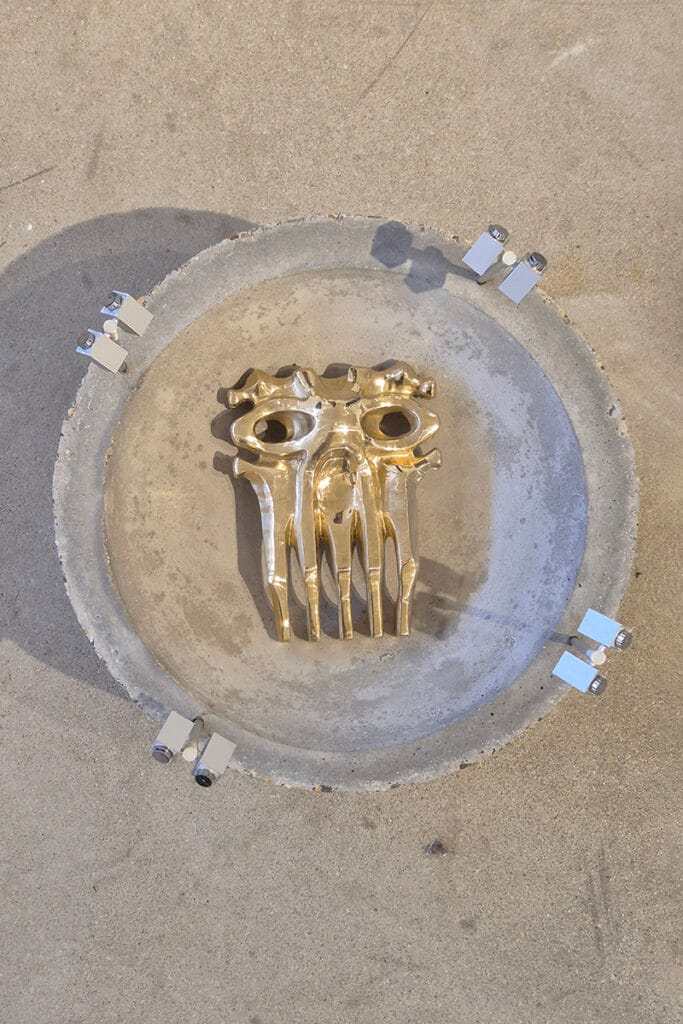
At the heart of the exhibition is the work of Luca op Heij, titled Precious Nothings. Drawing on her background as a jewelry maker, she explores the meaning of gold in relation to her own craftsmanship. She admires the patience required by the craft, the intimacy of working by hand, and the many possibilities offered by a material like gold, but at the same time, she has reservations about the darker aspects associated with the material and incorporates this legacy into her work. The result is a series of sculptural forms that transcend the proportions of the human body and offer a different interpretation of the concept of ‘jewelry’.
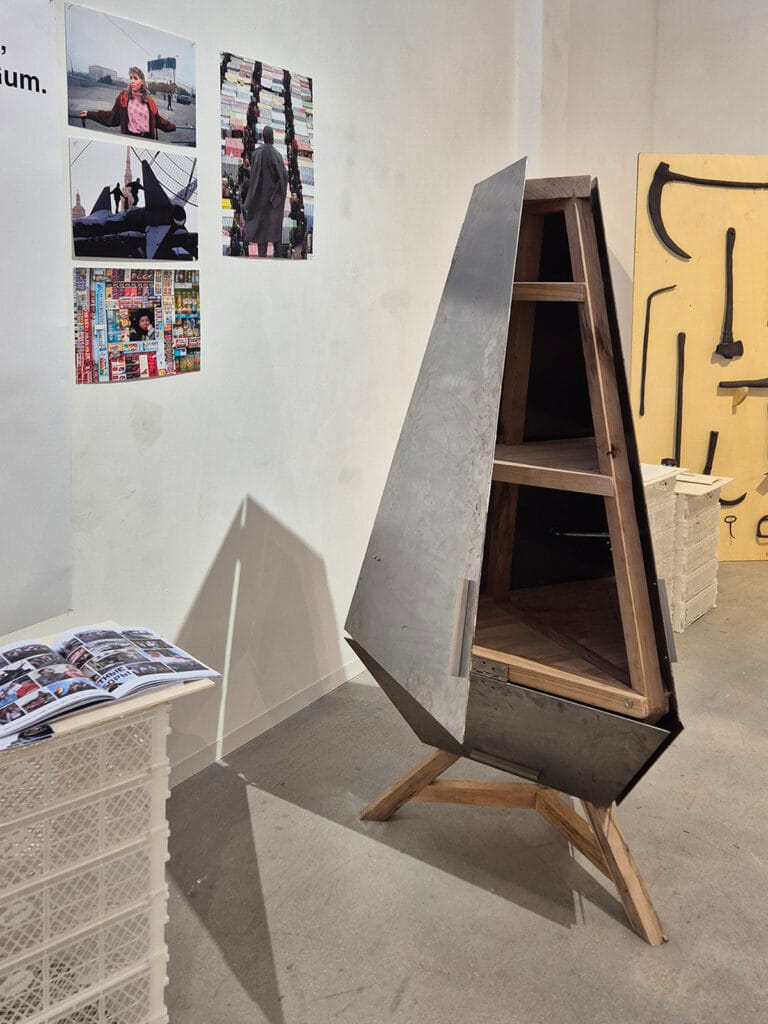
To my left, against the wall, my attention is drawn to a cabinet with brutalist features. As I get closer, it turns out to be part of the work Peace, Friendship, Chewing Gum by Anton Lavrenyuk, who took the title from an incident at the border of the former Soviet Union in 1985, in which chewing gum belonging to a Western delegation was confiscated as “Western propaganda.” Chewing gum thus became a symbol of political change and of the naive, optimistic freedom of that era. Inspired by this, he designed a piece of furniture reminiscent of the kiosks from the 2000s (which, after all, did sell chewing gum), to be decorated with stickers, serving as a time capsule for that bygone era.
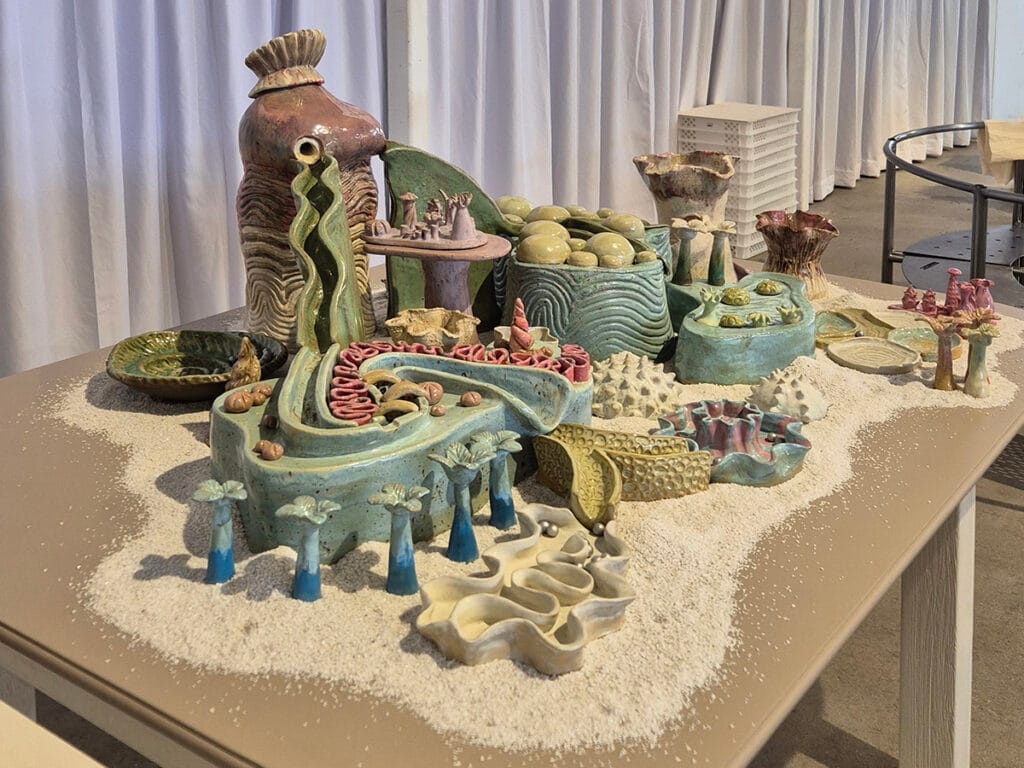
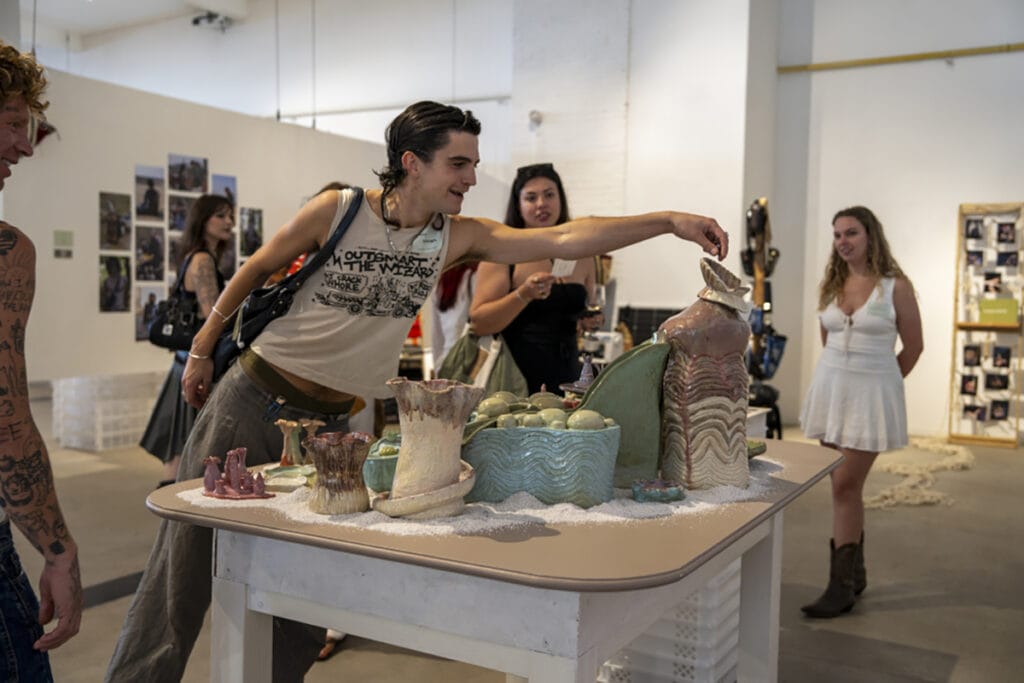
Fortunately, escapism is also present in this exhibition. After all, where would we be if a designer didn’t take us by the hand for a moment into a world where we can catch our breath? Danique Voskamp achieves this with The Elsewhere, a ceramic marble run shaped entirely by hand. This work offers a tactile and physical experience in a world where we’re surrounded by screens, virtual reality, and endless digital possibilities, according to Danique. I think she’s right—and I’m not the only one: people are eagerly making use of the marble run.
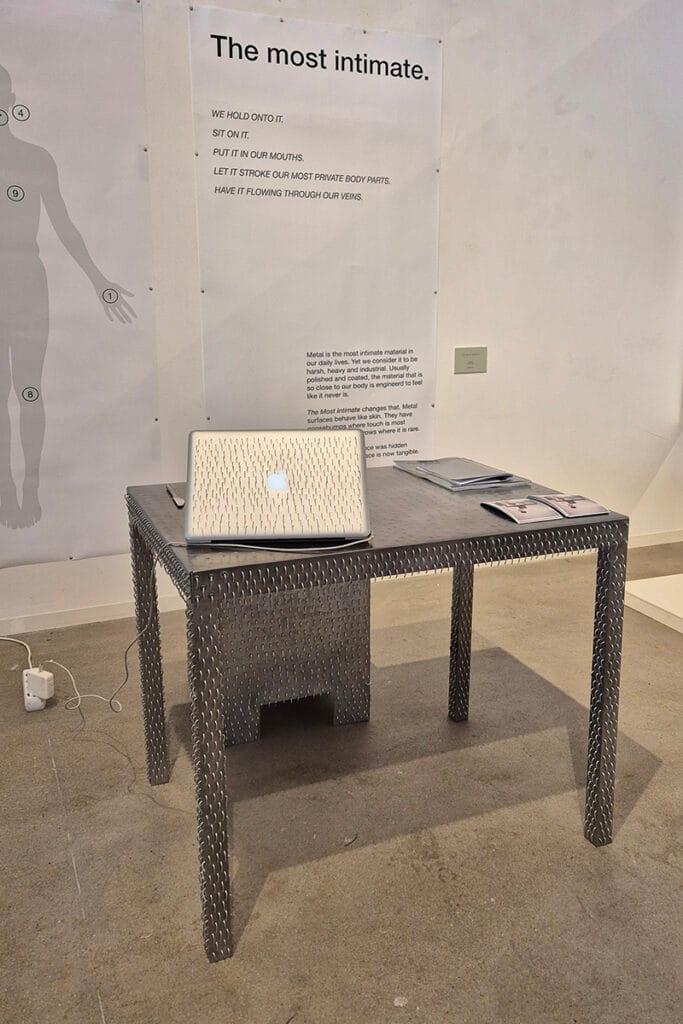
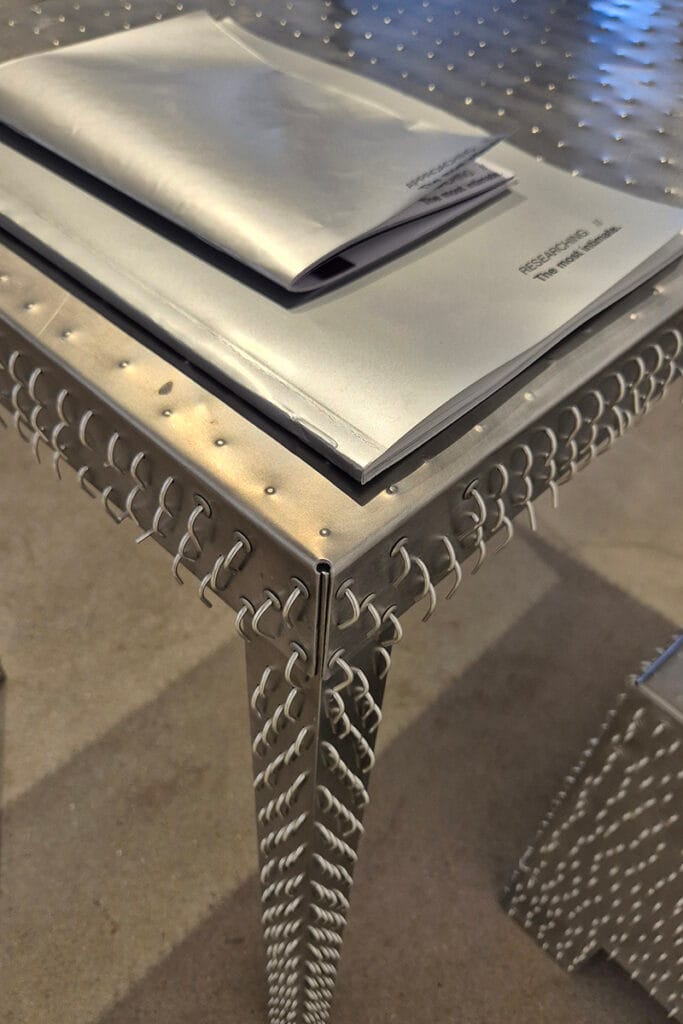
Rounding out this brief overview is The Most Intimate by Naomi Elser. She views metal in an entirely new way and places it closest to humanity. And when you think about it, she’s actually right. We always see metal as cold and hard, heavy and industrial. And while that may sometimes be true, metal is also the most intimate material in our daily lives: we wear it on and in our bodies, we eat it, we work on it and with it, and we constantly touch it in one way or another. In The Most Intimate, metal behaves like skin. Elser places hairs on metal, adds goosebumps to trackpads, stubble to MacBooks, and enhances the experience of eating by presenting cutlery with bumps. Truly intimate.
What strikes me about these works is that, just like in the rest of the world, there aren’t that many narratives to choose from. It’s important to identify and analyze the elements that are already there, and then reinterpret them—executing them differently and better. And that’s exactly what they’re doing so effectively in Rotterdam.
I recognize that same pattern in the graduation projects I’ve seen over the past twenty years. Here, too, I find a project centered on collecting waste in the city, which is then used to create new products. Or a project that interweaves the aesthetic characteristics of one thing with those of another, resulting in interior design products that have the look and feel of fitness equipment.
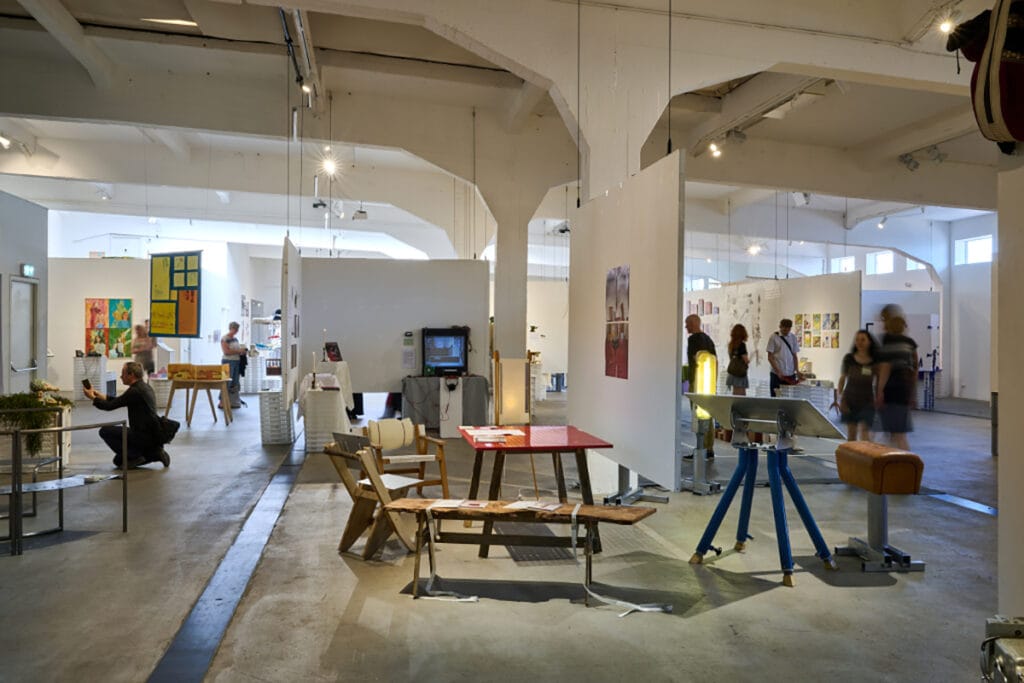
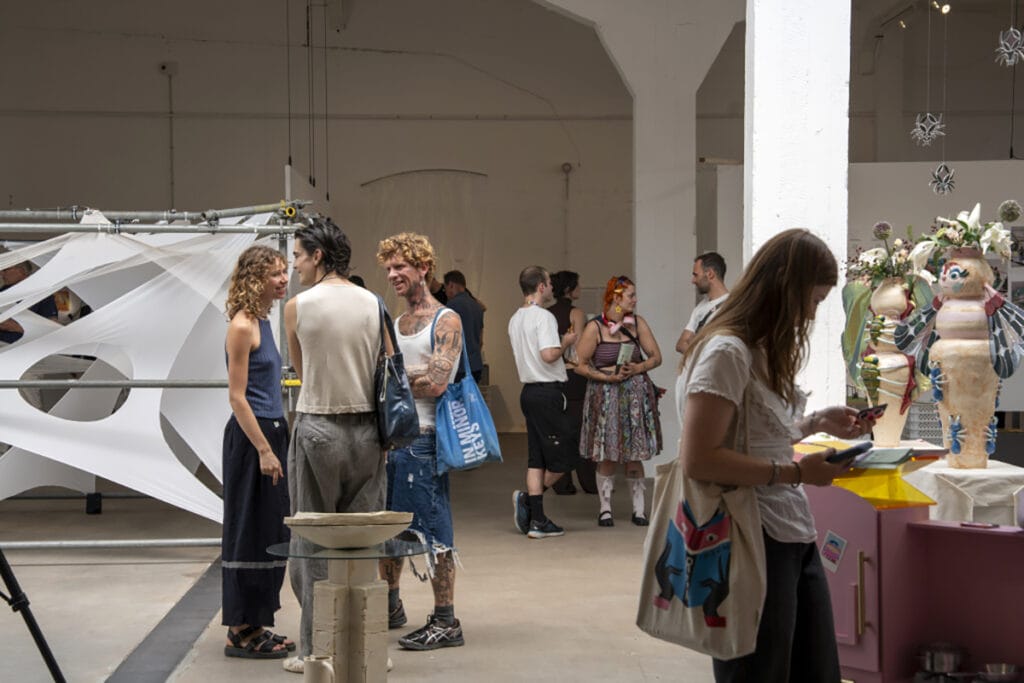
And I haven’t even mentioned the materials researchers who make it their mission to turn a tradition inside out, juxtapose its elements, and rearrange the whole in such a way that something entirely new emerges from those same elements. It doesn’t have to be grand and sweeping, or plastered with the overused buzzword “urgency,” which we use to once again pile pressure onto a younger generation. No, a narrative is there for designers who are willing to see it, who take it up and use it to propose an alternative in a constructive way. One that says, “What if we…?” and isn’t afraid to expose their vulnerability in the process. That’s what I saw in Rotterdam, and I hope to see more of it in the coming years.
Photography projects: Jos Kranen
Photography overviews: Willen de Kooning Academy, Mehrbanoo Abedini


