Biobased materials are on the rise. Chains are emerging, major players are getting involved, and industrial methods are being developed. “You’re seeing a shift from ‘interesting’ or ‘remarkable’ to ‘better alternative’. We already have several solutions for tomorrow available; the next step is acceptance.”
This is how Leonne Cuppen (Yksi Connect), co-curator of MaterialDistrict in Utrecht, interprets the chosen theme of NextNow. The annual fair will take place on March 4, 5, and 6. “But the Young Talents with fresh, new ideas must also continue to inspire us. Because ultimately, we will have to embark on a path toward regenerative design,” she emphasizes. “I hope we will recognize the urgency of this. For me, that, too, is encapsulated in the theme NextNow.”


The new building in Strijp-S in Eindhoven, the district of the former Philips factories, is called Matchbox because it makes you think of a matchbox indeed. A concrete core for the elevator and stairwell provides extra strength, but the rest is made of wood and as much biobased materials as possible. The building will store as much CO2 as was needed for the construction.
The owner, housing association Trudo, which also moved its own office into the building in the beginning of this year, is thus demonstrating its sustainability ambitions. Almost simultaneously, “the largest social housing project made of wood in the Netherlands” began elsewhere in the city. A total of 200 social housing apartments will be built in a handful of four- and five-story blocks. In the Eindhovens Dagblad, Trudo director Jos Goijaerts speaks of “the belief that steps must be taken in the field of biobased construction.”
Prejudices
“The examples mentioned concern timber construction, but we also see it clearly in other areas: the materials are available, and we have solutions that are no longer experimental, but immediately applicable. “This applies to construction, interiors, and even infrastructure,” says Leonne Cuppen, in the past for many years owner and coordinator of Yksi Expo in Eindhoven and currently active as a consultant under the name Yksi Connect.. “So therefore NextNow, the future is now. The challenge is no longer a lack of alternatives, but their acceptance. Across the board: from investors, governments, designers, developers, and manufacturers, all the way to users and consumers.”
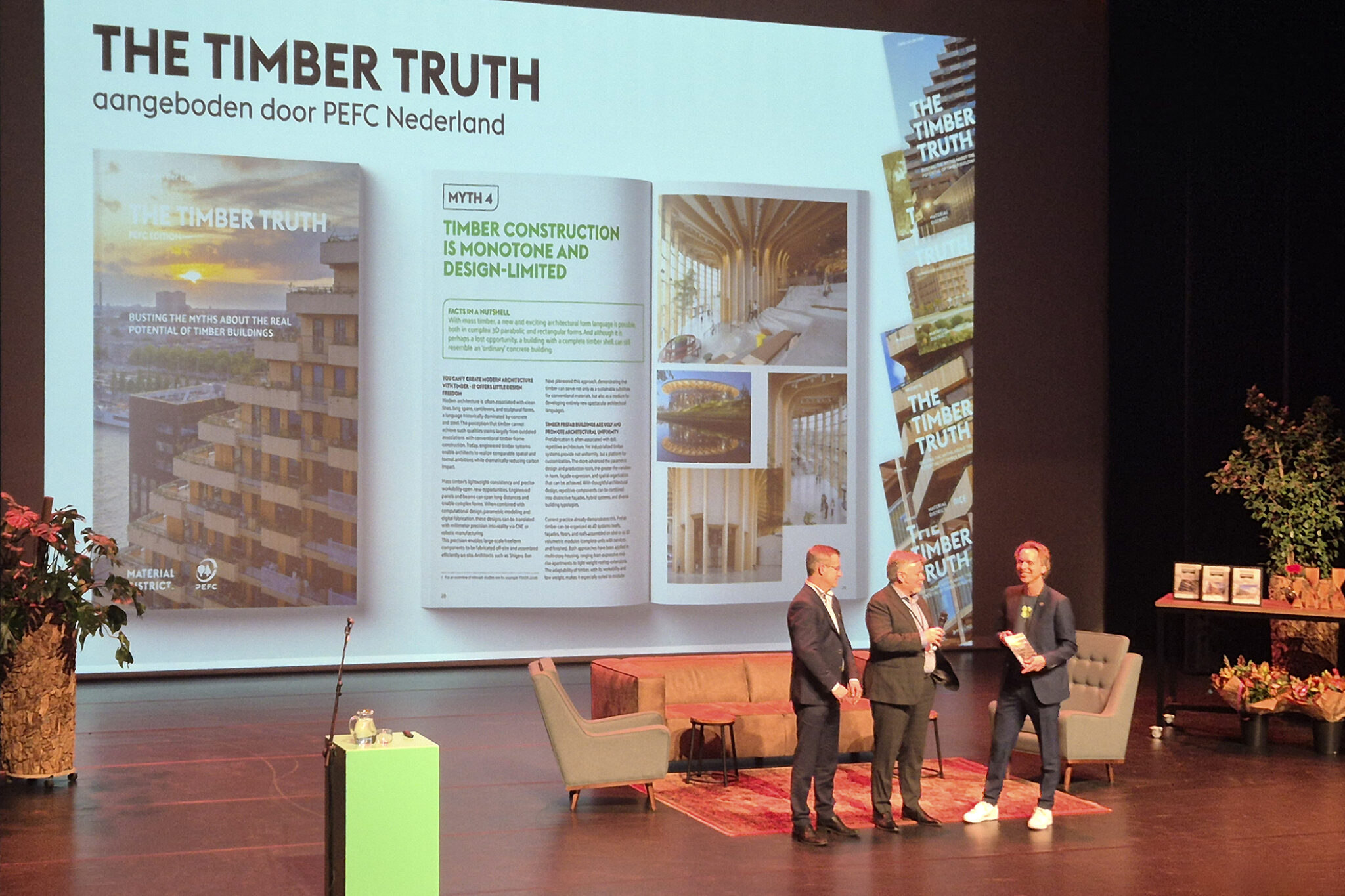
This is a step-by-step process, because, sticking with timber construction, there are many prejudices and misunderstandings. As a successor to The Timber Construction Revolution, Pablo van der Lugt recently published the handbook The Timber Truth, which debunks several myths and misunderstandings about timber construction, from fire safety to availability and CO₂ storage. As Van der Lugt said at the presentation: “Timber construction often starts with a 3-0 deficit compared to traditional materials due to incorrect preconceptions.”
Dutch Mountains
Despite the hurdles to overcome – perhaps the most significant being the somewhat higher costs – timber construction, according to Leonne Cuppen, is a good example of a field where a definitive breakthrough seems imminent. “I see it happening all around me here in Eindhoven.” Besides the aforementioned examples from the Trudo housing corporation, Museumpark Vonk, a wooden building featuring biobased materials and sustainable techniques, will be completed in a few months as an extension of the Prehistoric Village and Eindhoven Museum. “The architect of this building, pioneer and champion of timber construction Marco Vermeulen, is also fully engaged in the development of Dutch Mountains near Eindhoven’s train station. The two towers, one 133 meters high, are intended to become the tallest hybrid-timber building in the world.”
Mycelium
A more striking and eye-catching example of the process from experimentation to usable and applicable solutions is mycelium, says Cuppen. “In 2013, we showcased a mycelium chair by designer Erik Klarenbeek at Yksi Expo in an exhibition about unique and innovative furniture. It was a real eye-catcher; at the time, hardly anyone had heard of this material.” In the years that followed, she saw growing interest in mycelium. “During Dutch Design Week, among other events, more and more designers showed up who were working with it. It’s the kind of material that typically sparks the curiosity of all those young, inquisitive, and creative minds.” As of 2026, several companies are active in the mycelium market, offering an ever-widening range of end products such as packaging, floor tiles, insulation, building blocks, and leather and food substitutes. As a compelling example, Cuppen cites the “Loop Living Cocoon” coffin by designer Bob Hendrikx, now available after years of development. It grows in just seven days from local mushrooms and upcycled hemp fibers and is fully absorbed by the soil within 45 days. “This shows how, in less than two decades, a shift has been made from ‘interesting’ or ‘remarkable’ to ‘better alternative.’”
Scaling up
The fact that mycelium is now being taken seriously as a material is also demonstrated by the “Growing Façade” project that construction company Heijmans carried out in 2025 in collaboration with studio Klarenbeek & Dros. This modular mycelium panel wall is not only 3D-printed but also designed using AI. It’s flame-retardant, odorless, completely natural, and compostable. The panels also have excellent acoustic properties and contribute to a healthy indoor climate. The company calls it “a tangible step in our 2030 strategy, which focuses on sustainability, well-being, connection, and feasibility. We don’t just want to experiment, we want to scale up.”
“In short, biobased materials and biobased construction are no longer in the background but are increasingly becoming serious business,” says Cuppen. “You’re now seeing more and more well-known names and major players emerge in this field.” For example, the Ministry of Infrastructure and Water Management is a partner in the Nieuw Zwanenburg project, a workshop of the future for biobased construction in civil engineering, road construction, and hydraulic engineering in Oirschot, in which Cuppen is closely involved.

Biobased noise barrier
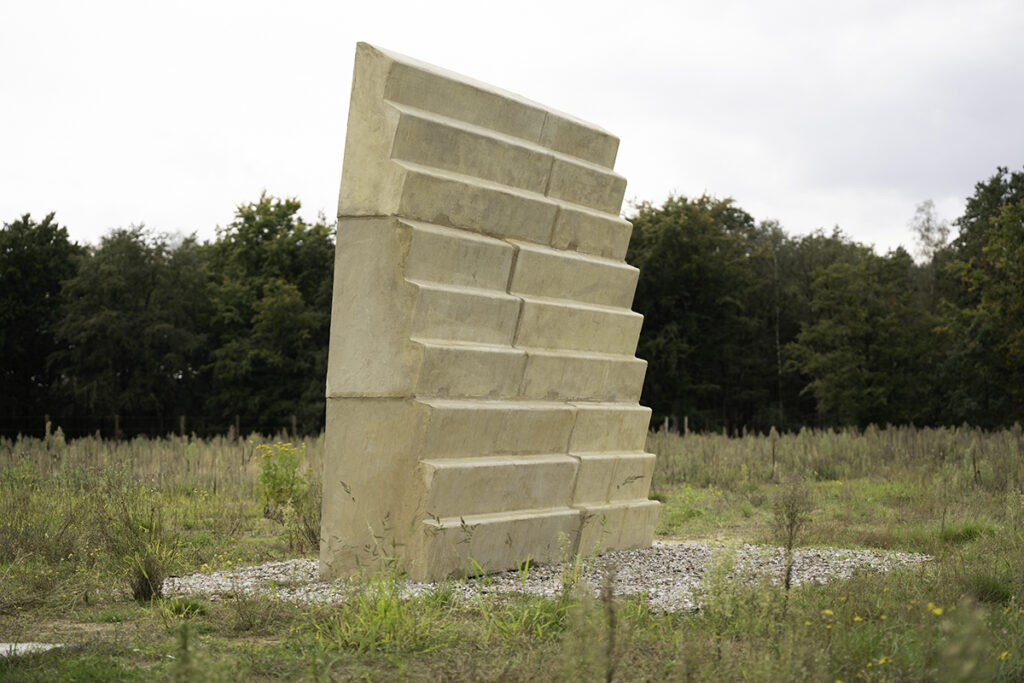
Rijkswaterstaat, the executive body of the Ministry of Infrastructure and Water Management, last year launched a competition for a biobased noise barrier that also retains water, enhances biodiversity, and visually enhances the surrounding area. Natrufied Architecture’s “Zacht Zicht” (Soft View) was declared the winner out of 19 submissions. This design combines natural fiber plants, a wooden support structure, and integrated water collection with nesting facilities and native plants. The result is a modular system that not only absorbs sound but also buffers rainwater and provides a home for plants and animals. A prototype is currently being built at Nieuw Zwanenburg, which will later be tested along the A58 motorway.
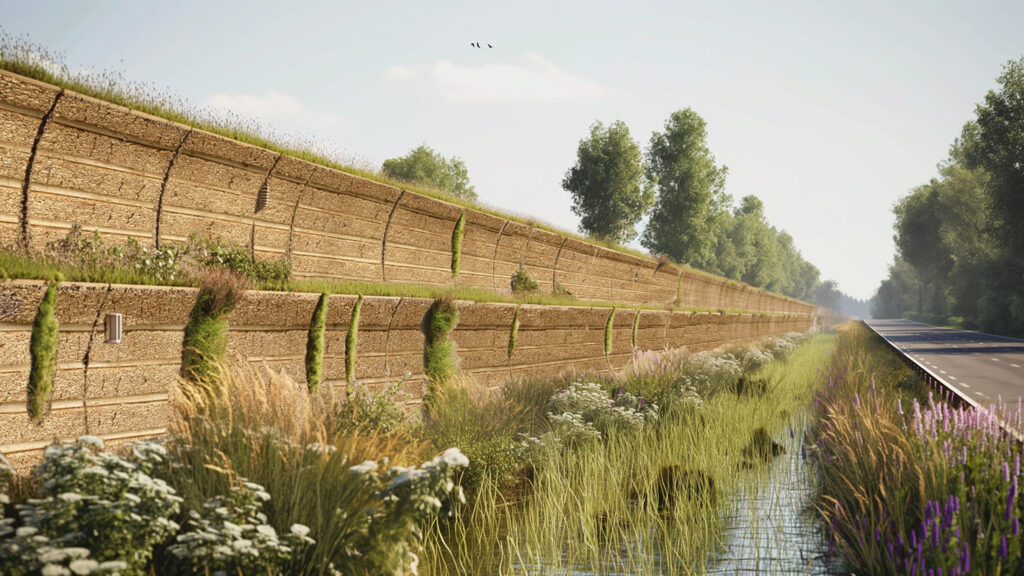
Cuppen also sees a trend towards the further professionalization of ideas and concepts. As an example, she cites the company Formwork Robotics, which is currently investigating the feasibility of a method using a robot for applying sprayed soil with hemp fibers to insulate buildings industrially using biobased materials. “Besides collaboration within supply chains and the entry of large companies, these kinds of innovations bring biobased materials and construction a significant step forward,” says Cuppen.
Young Talents
At the same time, the new generation of designers continues to experiment and explore new avenues, new materials, and new applications. “It’s wonderful to see that in recent years, more and more young designers have taken it for granted that they are contributing to a better world.” They often seek these new roads, new materials, and new applications in nature or in the traditions of the past, when humans were much more dependent on nature and lived in harmony with it. Or they combine old techniques or crafts with contemporary possibilities. “Innovation doesn’t always necessarily mean improvement or acceleration. “Sometimes it’s good to slow down or look back at the past,” Cuppen believes.
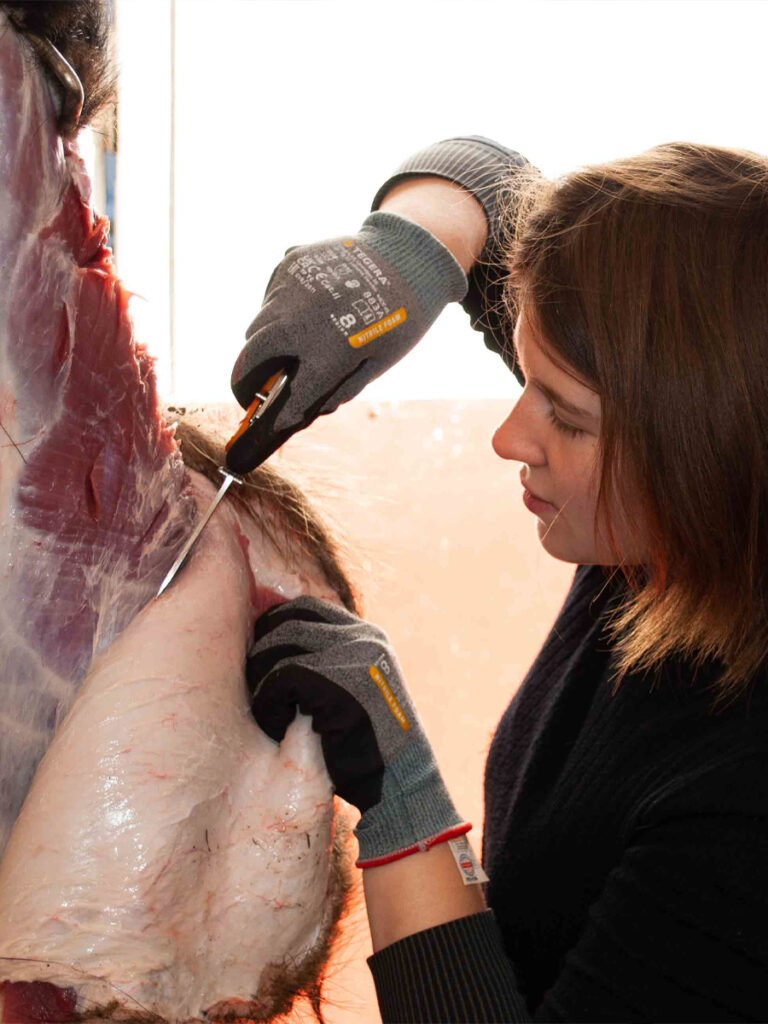
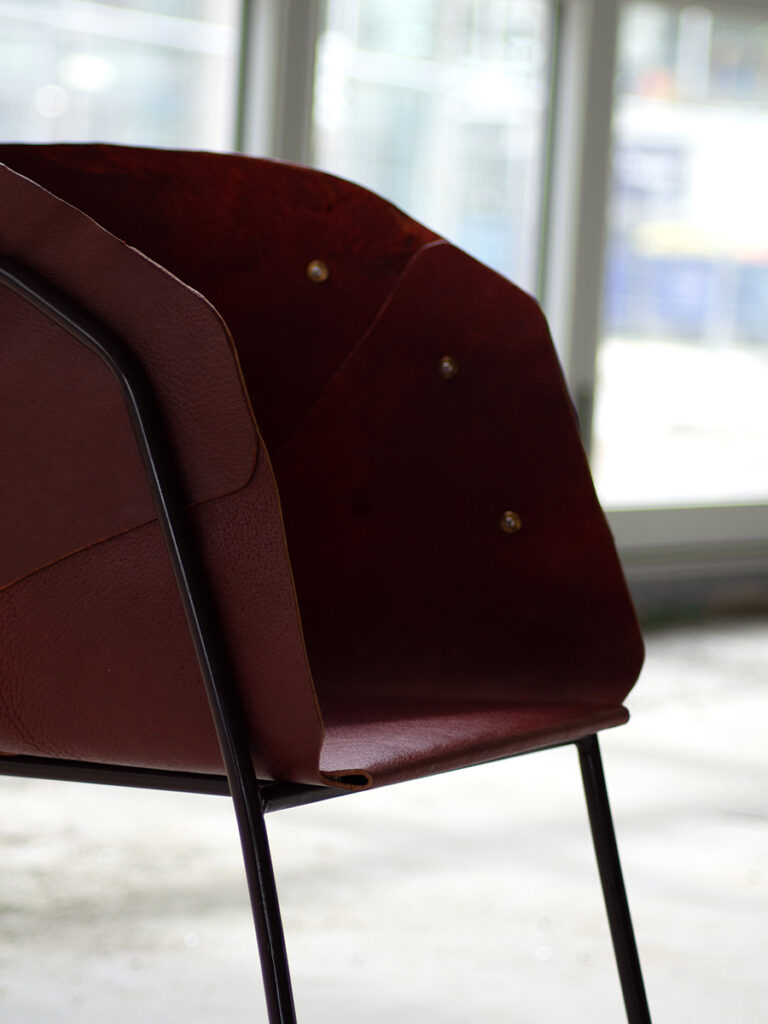
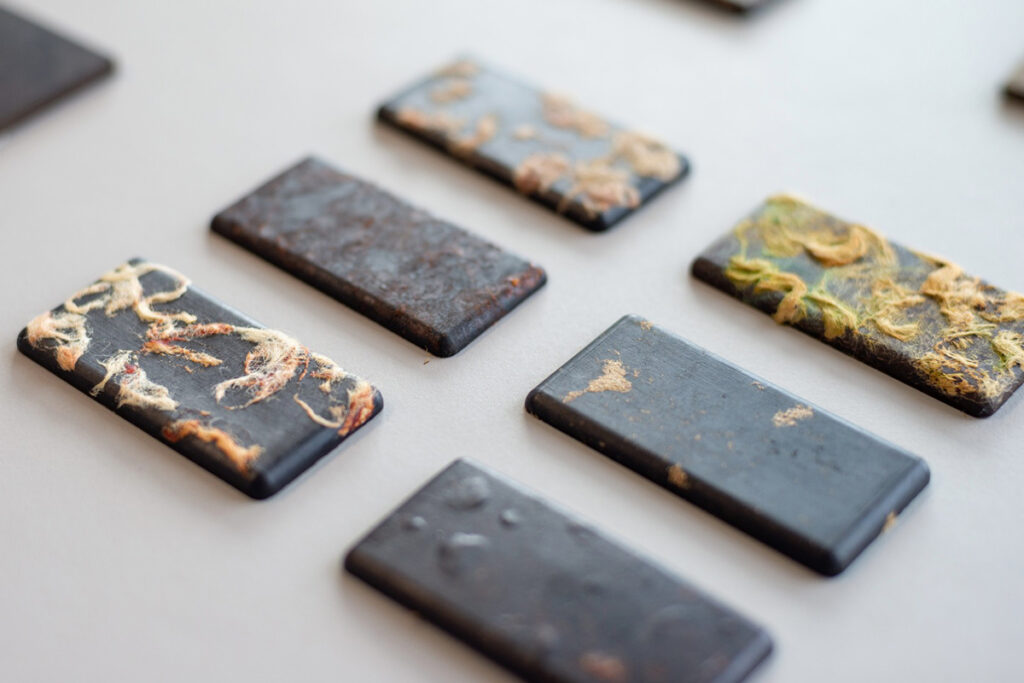
With this in mind, as co-curator, she has again selected seventeen Young Talents for this edition of MaterialDistrict to showcase their inspiring work. Like Emma Werkhoven, with surprising applications of naturally tanned leather. And Isa Jansen, who investigates how social acceptance of biobased materials could be increased if we could bring about a shift in perceptions of aesthetics. In other words, perhaps materials don’t always have to be perfect, and we can also start to see aging and decay as ‘beautiful’.
Urgent
All in all, Cuppen is positive about the developments. “At the end of the last century and the beginning of this century, the concept of sustainability gained a foothold and subsequently became commonplace. We are now gradually realizing that we need to take things a step further.” It’s a whole new process to grasp the concept of circularity – Refuse, Rethink, Reduce, Reuse, Repair, Refurbish, Remanufacture, Repurpose, Recycle, Recover. Because, let’s face it, too many people still think recycling is the solution.”
Yet, we’ll have to go the extra mile to ultimately embark on the path to regenerative design, Cuppen emphasizes. “Not just limiting damage, but actively restoring and strengthening ecosystems. And not just with an eye to the environment and nature, but also focused on human health and well-being. I hope we’ll come to understand the urgency of this. For me, that, too, is encapsulated in the theme of NextNow.
Leonne Cuppen works as a curator and consultant in the creative as well as the commercial industries. She is active in many boards, jury’s and advise committees.
This interview by Walter van Hulst previously appeared in the exhibition catalogue of MaterialDistrict Utrecht 2026.