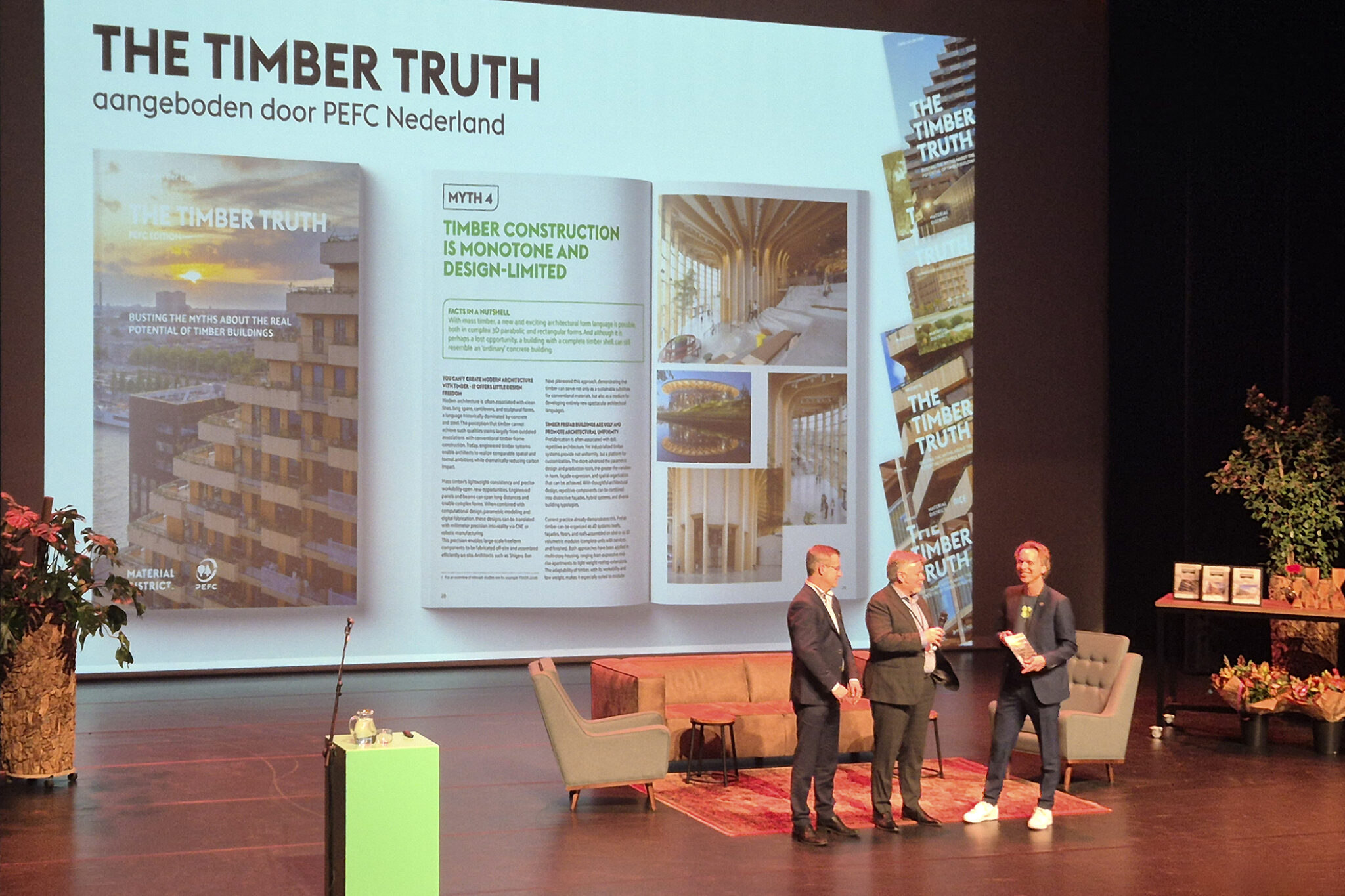
Which materials are no longer future concepts, but ready to be applied today? What does circular production look like in practice? And which innovations are making a real difference in architecture and interior design right now? MaterialDistrict Utrecht provides answers to all these questions.
This year, everything revolves around NextNow: materials and solutions that are no longer future concepts, but ready to be applied today in architecture, interior design and public space. The challenge is not the lack of sustainable alternatives — they already exist. The real step forward lies in broader adoption. During MDU2026, you will discover a mature generation of biobased, circular and recycled materials that are already proving their value in real-world projects.
Young Talent
During MaterialDistrict Utrecht there is a special attention for Young Talents, curated by Leonne Cuppen.
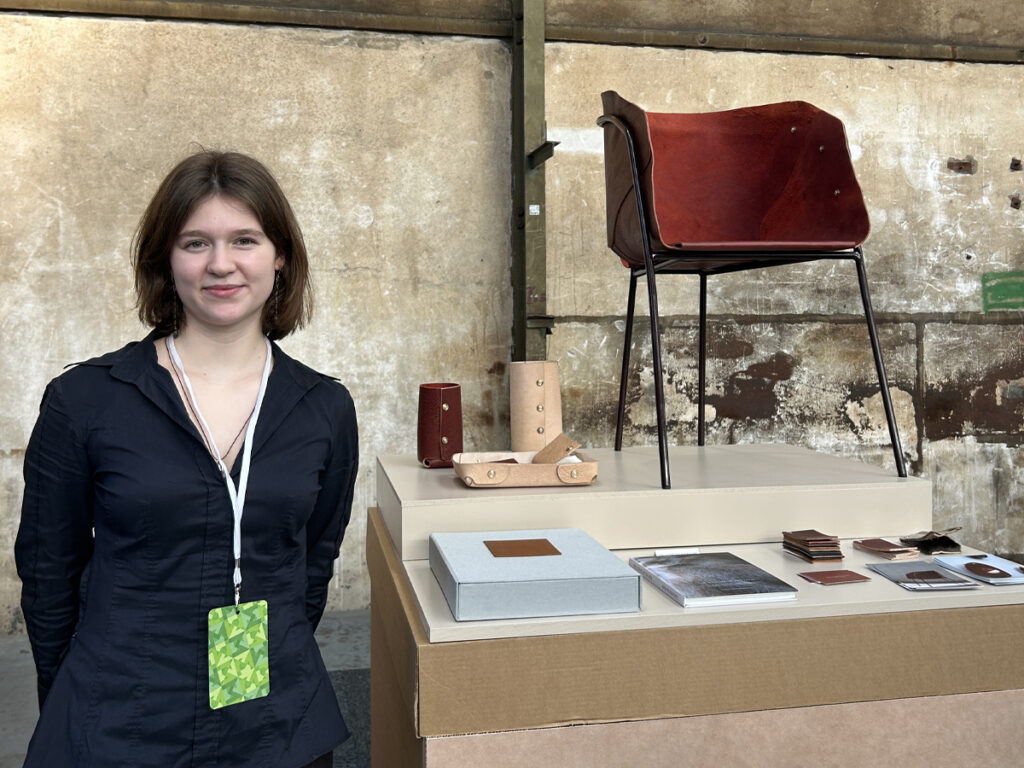
Emma Werkhoven – The Weight of the Hide
The Weight of the Hide is a project, exploring the ethical complexities of leather through hunting, tanning, and design. Guided by local experts, Emma Werkhoven travelled to Sweden to take the full process into her own hands. Taking responsibility for the life behind the leather. The leather is made from wild boar, a by-product that in hunting, is usually discarded. The resulting objects, film and book, invite reflection on sustainable tanning with respect for its origin. Emma aims to create a local circular system. Working with and for hunters through tanning and design.
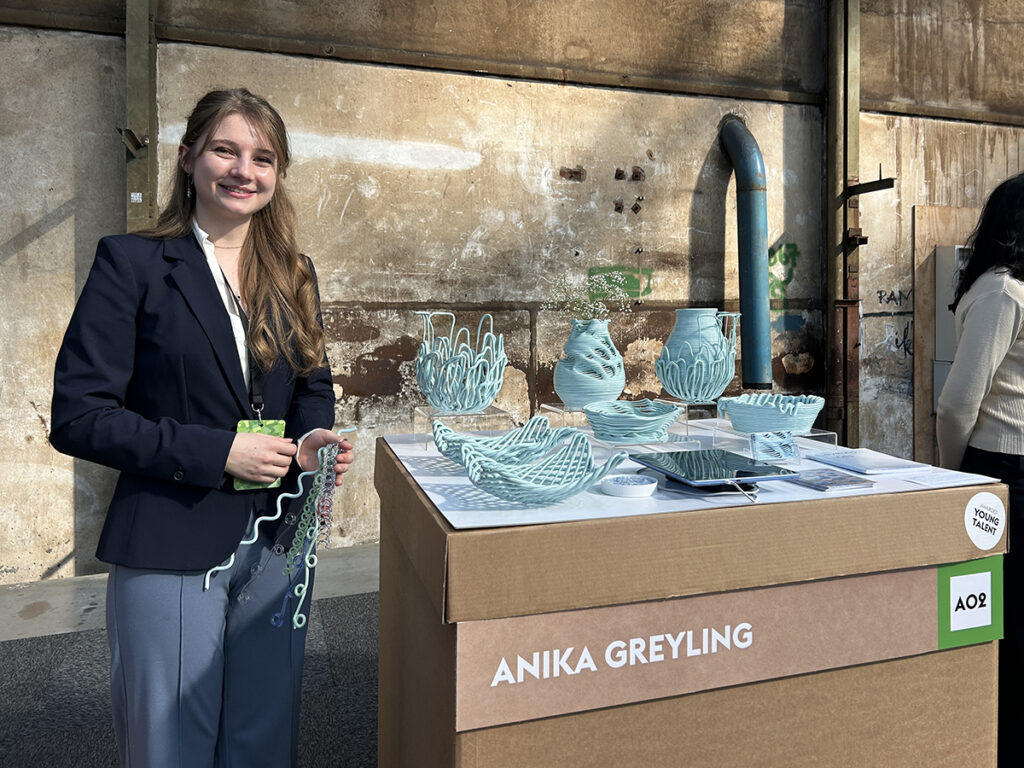
Anika Greyling – Layered lines
Layered lines is a technical research that investigates ways that a designer can intervene in the intermediary stages to embrace the unpredictability of the 3D printing process. By adjusting parameters of the machine, such as fan speed and extrusion rates, Anika plays with gravity and cooling rates of recycled plastic, in addition to draping and stacking the material in moulds to manipulate the final outcome. A selection of samples is presented that could be used now as functional objects, with the potential to be scaled up for future application in furniture design or even architecture.
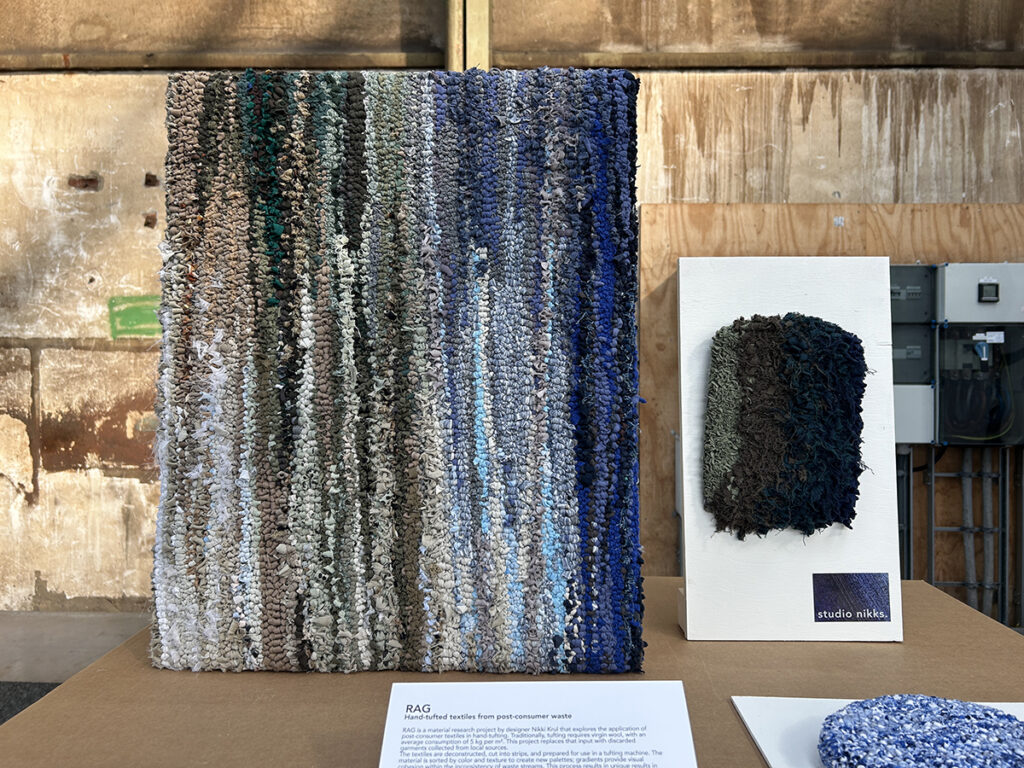
Studio Nikks. – RAG
RAG is a material research project by designer Nikki Krul that explores the application of post-consumer textiles in hand-tufting. Traditionally, tufting requires virgin wool, with an average consumption of 5 kg per m². This project replaces that input with discarded garments collected from local sources. The textiles are deconstructed and prepared for tufting, resulting in unique high-pile surfaces for carpets, wall panels, and acoustic applications, combining craftsmanship and material innovation with aesthetic value.
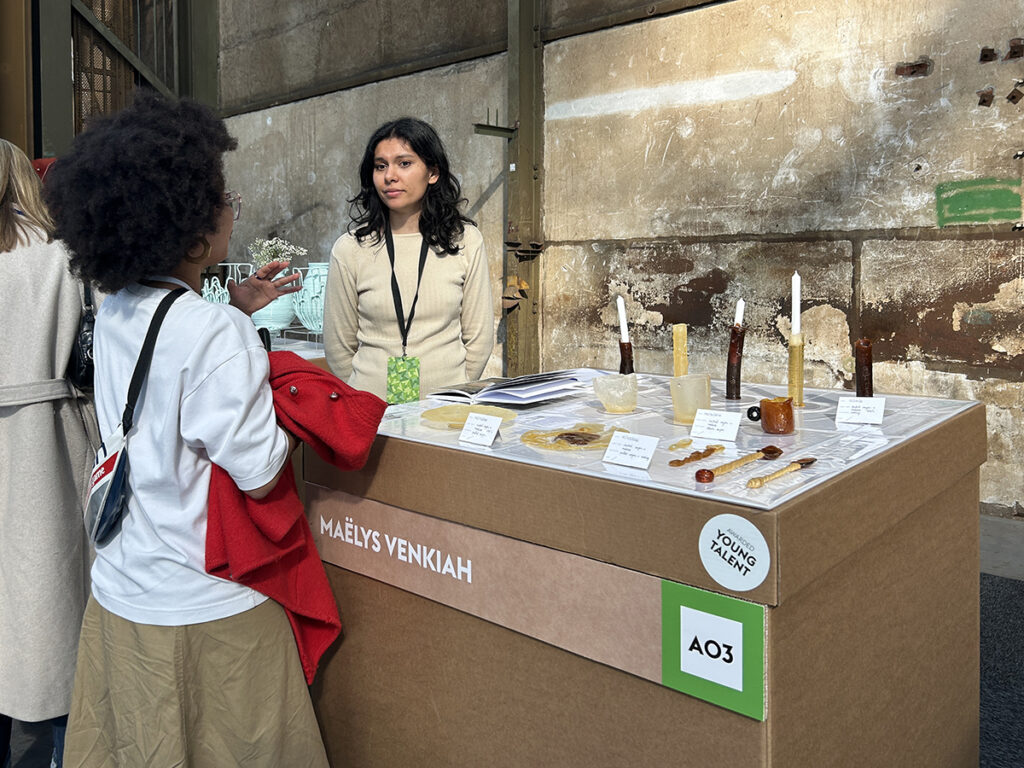
Maëlys Venkiah – Sugarware
Sugarware reimagines domestic objects as intentional, time based-products. Made entirely of sugar, each piece is designed to be used, displayed, and eventually consumed. Their temporary nature encourages mindful consumption, ritual use, and emotional attachment rather than accumulation. These objects invite users to slow down, to care, and to accept change, offering an alternative to permanent goods through experience, presence, and material vulnerability.
Observology – Texture Clay
Imagine a ceramicist crafting a cup, shaping clay by hand before it is dried, glazed, and fired. In the shift to digital fabrication, the complexity of craft is often overlooked, while digital makers become constrained by rigid workflows. Texturing Clay reframes craft and machine as co-agents, using a multifunctional Zmorph CNC to carve textures directly into clay. Through a hardware-hacking toolkit, a Grasshopper-based path-generation interface, and a user guide, the system integrates craft knowledge with digital control, fostering exploratory digital craftsmanship and shared knowledge.

A Matter of Fruit – Apple Pomace Films
A Matter of Fruit creates plant-based materials from apple pomace, the by-product of juice and cider production. The apple pomace films combine natural aesthetic with functional performance, filtering light, defining spaces, and supporting healthy, low-impact interiors. Translucent, opaque, smooth or textured, apple pomace films can be printed, shaped, sewn, and laser cut. Using renewable resources, the films reflect seasonal variations of each harvest. Perfect for interior applications such as blinds, dividers, and lampshades, the material offers a non-toxic alternative to synthetic textiles.

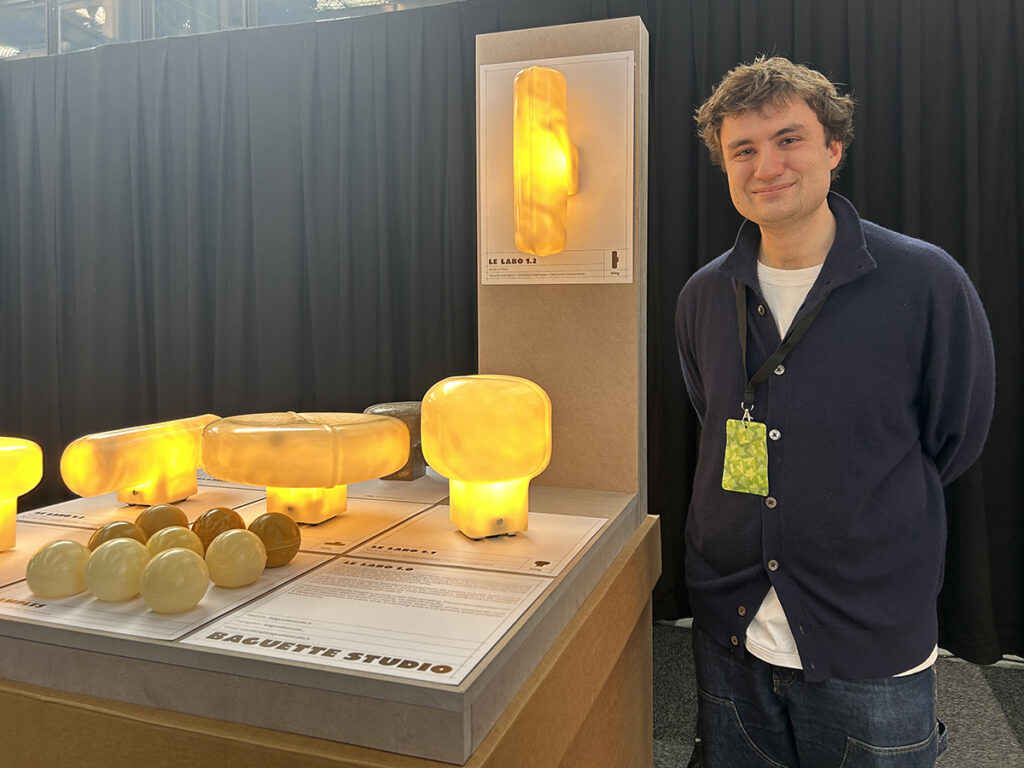
Baguette Studio – Le Labo 1.0
This project rethinks the consumption of goods by making industrial processes transparent, local, and adaptable. At its core is a lighting system that is fully remouldable thanks to its 100% natural wax composition. The collection consists of three lighting objects. Using a rotational moulding technique borrowed from the plastics industry, each lamp is made in less than 45 minutes. Designed to be reshaped through local micro-production points, the lamp becomes an evolving product, fostering a more sustainable relationship with objects.
Studio Living Traces – Living Traces
Living Traces explores how an evolving aesthetic can improve social acceptance of N8040, a 100% biobased and waste-based composite developed by the company NPSP. By experimenting with fibres, pigmentation, weathering and biological colonisation, Isa Jansen created facade panels that embrace imperfection and gain value over time. Thereby reframing decay as a design opportunity. Living Traces challenges our aesthetic model rooted in perfection, mass production and newness and demonstrates a future where buildings and nature evolve in harmony.

Carmen Enríquez – Controlling Roughness
Controlling Roughness explores the roughness of a bio-circular material as a design feature controlled through a 3D printing process. Experimental results show that 3D printing parameters can be modified to control the material’s roughness, directly influencing acoustic properties. A series of blocks was developed to demonstrate contrasts in acoustic performance, ranging from minimal to highly pronounced effects. The research highlights new possibilities for 3D printing with bio-circular materials, where roughness becomes a functional architectural asset.

Diana Kusyová – Remeslo
Project Remeslo explores traditional crafts such as thatching and basketry and their place in today’s world. Many of these techniques are slowly fading away and are now maintained by only a handful of artisans. Rooted in Slovakia, the project is shaped by learning directly from rural craftsmen and the importance of keeping tangible heritage alive through contemporary design. By reinterpreting these materials and techniques within furniture design, the project reveals new sustainable opportunities built on traditional practices.

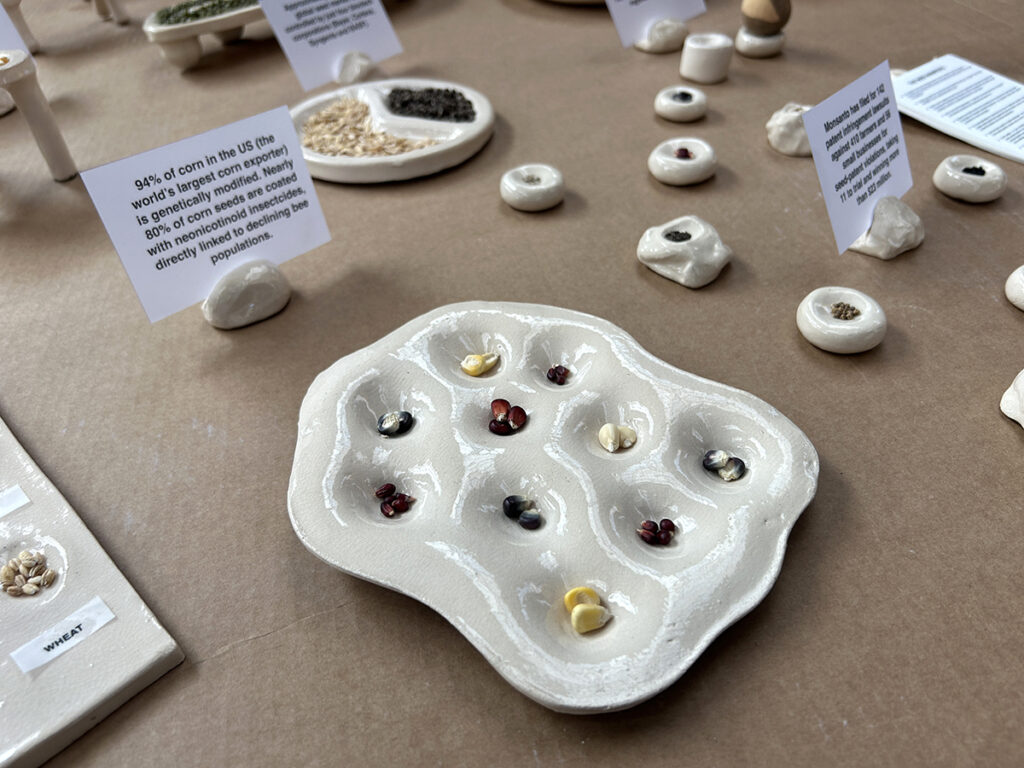
Boyana Voynova – Seed Mnemonics
Seed Mnemonics is an interactive seed exhibition about seed literacy and sovereignty, representing the agricultural system today through the lens of its smallest, yet most fundamental actors – the seeds. The project illustrates crucial information about the damage industrial agricultural practices are causing through a series of ceramic seed displays and glossary entries. Seed Mnemonics is tied together by a Seed Manifesto, encouraging the audience to participate in the movement for seed freedom and offering practical ways to be proactive on a policy, communal and personal level.
Moritz Ploens – 3D-grown objects
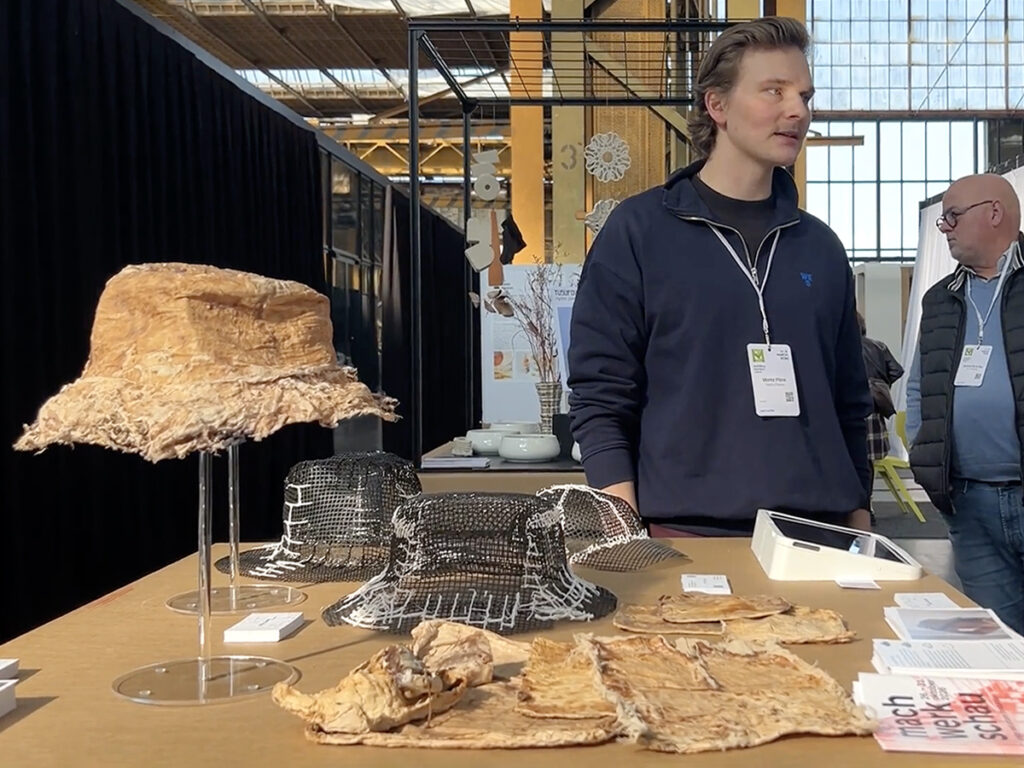
3D-grown objects are products made from pure fungal mycelium. They exploit mycelium’s ability to adapt its geometry during the growth phase itself. Using a processing method specifically developed for this application, hats and other objects are grown directly into their final shape, significantly reducing material waste and the number of post-processing steps. The resulting objects demonstrate how the intrinsic growth characteristics of mycelium can be harnessed for precise, resource-efficient fabrication.
Studio Weerstand – Finished Reading
Finished Reading is a material research project and architectural building block by Studio Weerstand, based in Eindhoven. Made entirely from discarded books sourced from libraries and second-hand shops, each block is formed using a process inspired by ancient papermaking. Every book is transformed individually, resulting in unique blocks that retain traces of their literary origins. Finished Reading questions how we value materials when their original function fades, proposing transformation, craftsmanship and material memory as alternatives to anonymous recycling.

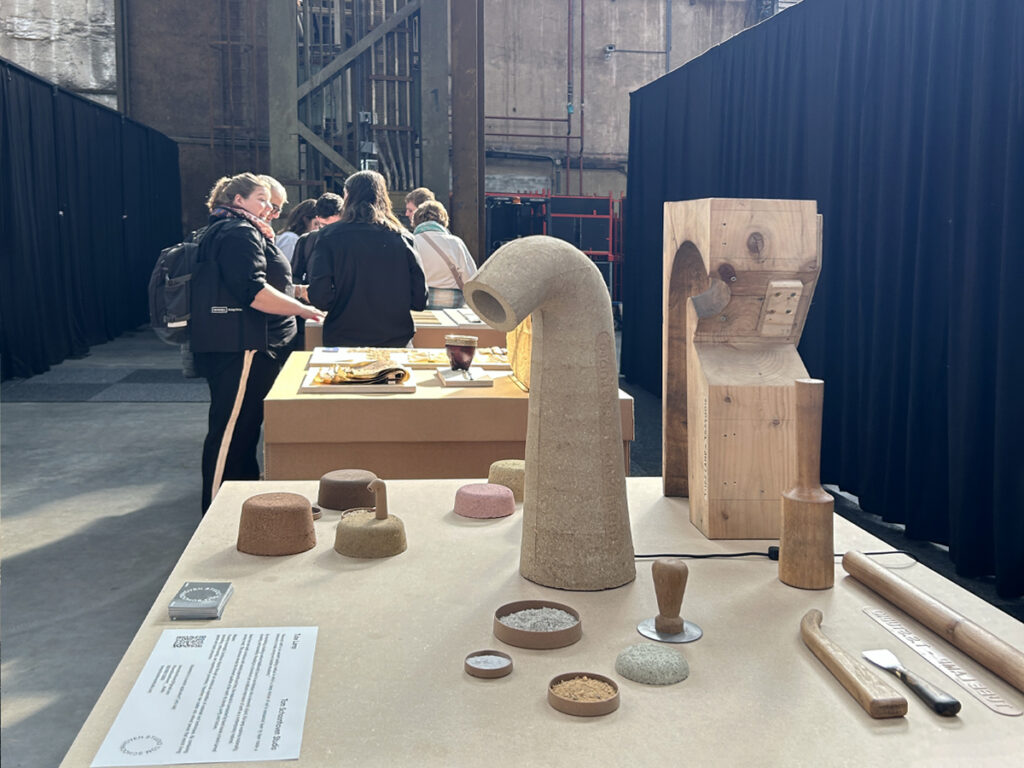
Tom Schoonhoven Studio – Tube Lamp
This lamp is produced using the ancient rammed earth technique, traditionally found in architecture. Made from raw earth combined with natural pigments and lime, the material is compacted by hand inside a carved wooden mould. This process reveals the inherent qualities of the earth: its density, stratification, and texture. By translating a building method into a domestic object, the lamp explores materiality, durability, and traceability, resulting in a functional yet sculptural expression of earth as a contemporary material.
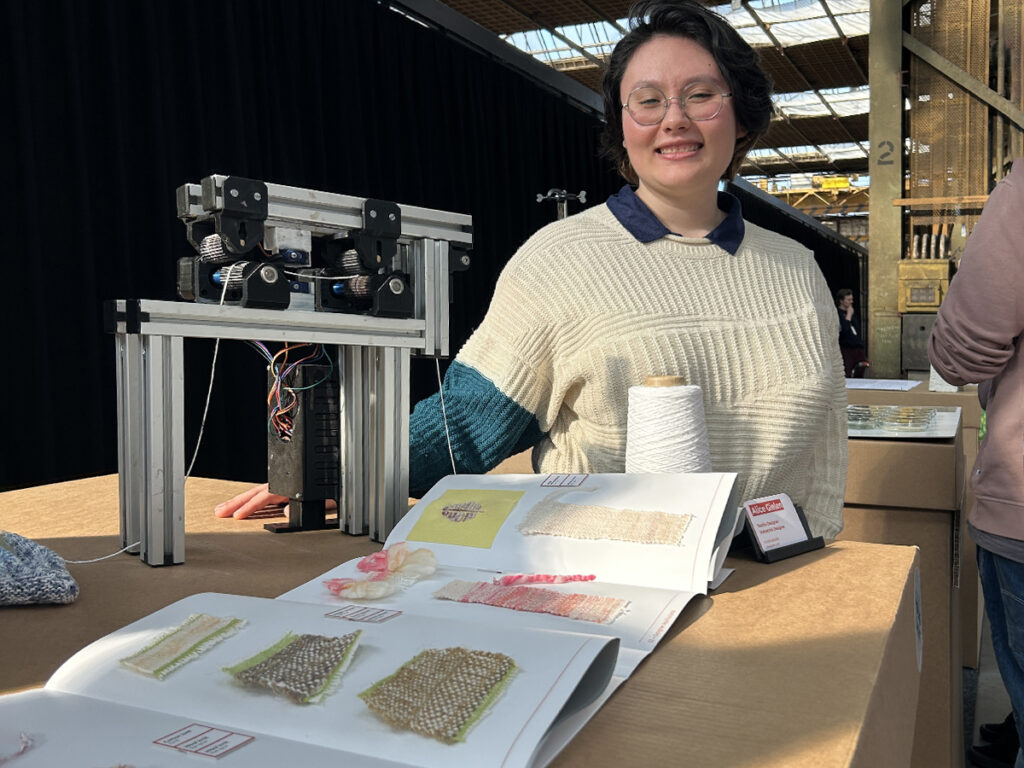
Alice Gielen – Reimagining Textile Design
This project explores programmed sliver dyeing—coloring fibers before spinning—to introduce flexibility and efficiency into traditional techniques like ikat and kasuri. By reducing labor intensity, it enables more dynamic and experimental textile design. The challenge was to create a more interactive and adaptable fabrication process. This was achieved through a sliver fiber printer that fosters human-machine collaboration, reducing material waste and expanding creative possibilities in pattern-making and textile innovation.
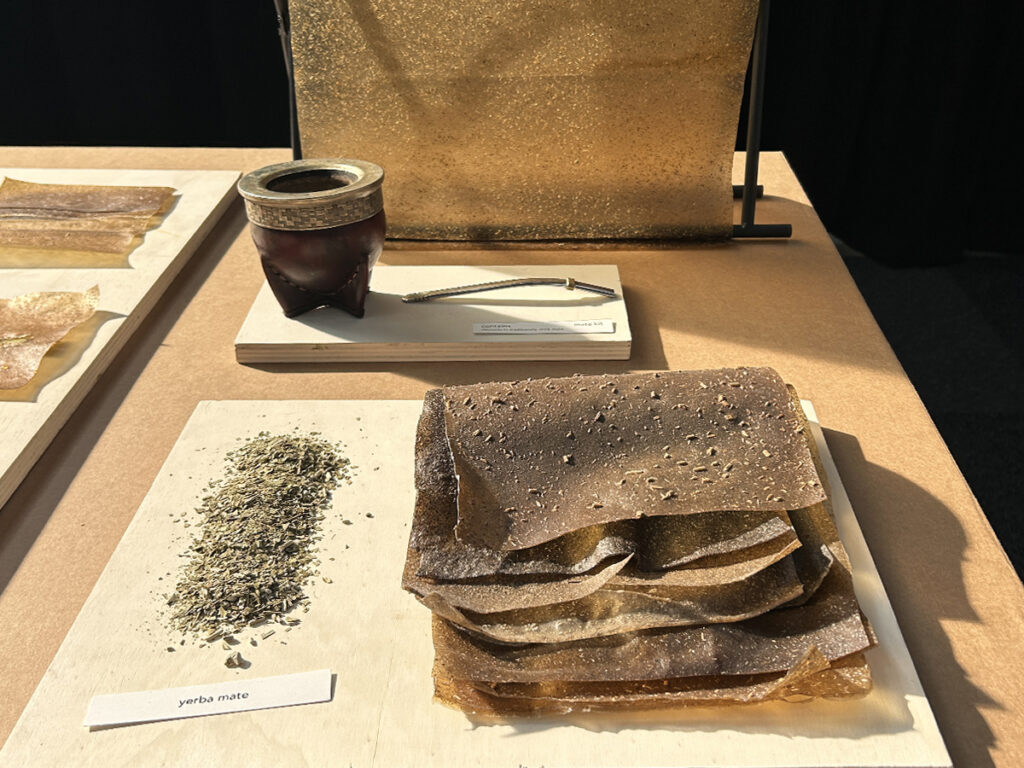
Studio Aggu – More than a Bioplastic
More than a Bioplastic is a material research project by Argentinian designer Agustina Gutierrez, who transforms discarded yerba mate waste into large-scale bio-textiles. Rooted in Argentina’s daily mate ritual, the project connects cultural heritage with sustainable design. Rather than offering a fixed solution, it invites dialogue on material origins, community and the future of bio-based materials.
Tim Couwenberg – Between Growth and Structure
Between Growth and Structure is a cutting-edge material collection that showcases the development of a biodegradable material. Made from a unique blend of carboxymethyl cellulose and sodium alginate, sourced from algae and combined with natural residues, it embodies a new approach to sustainable material design. The same core ingredients can be processed in different ways to create rigid, structural forms as well as flexible, transparent materials. This adaptability makes it ideal for applications in fashion, furniture, and architectural design.

Photography: Dutch Design Daily