Report by Branko Popovic
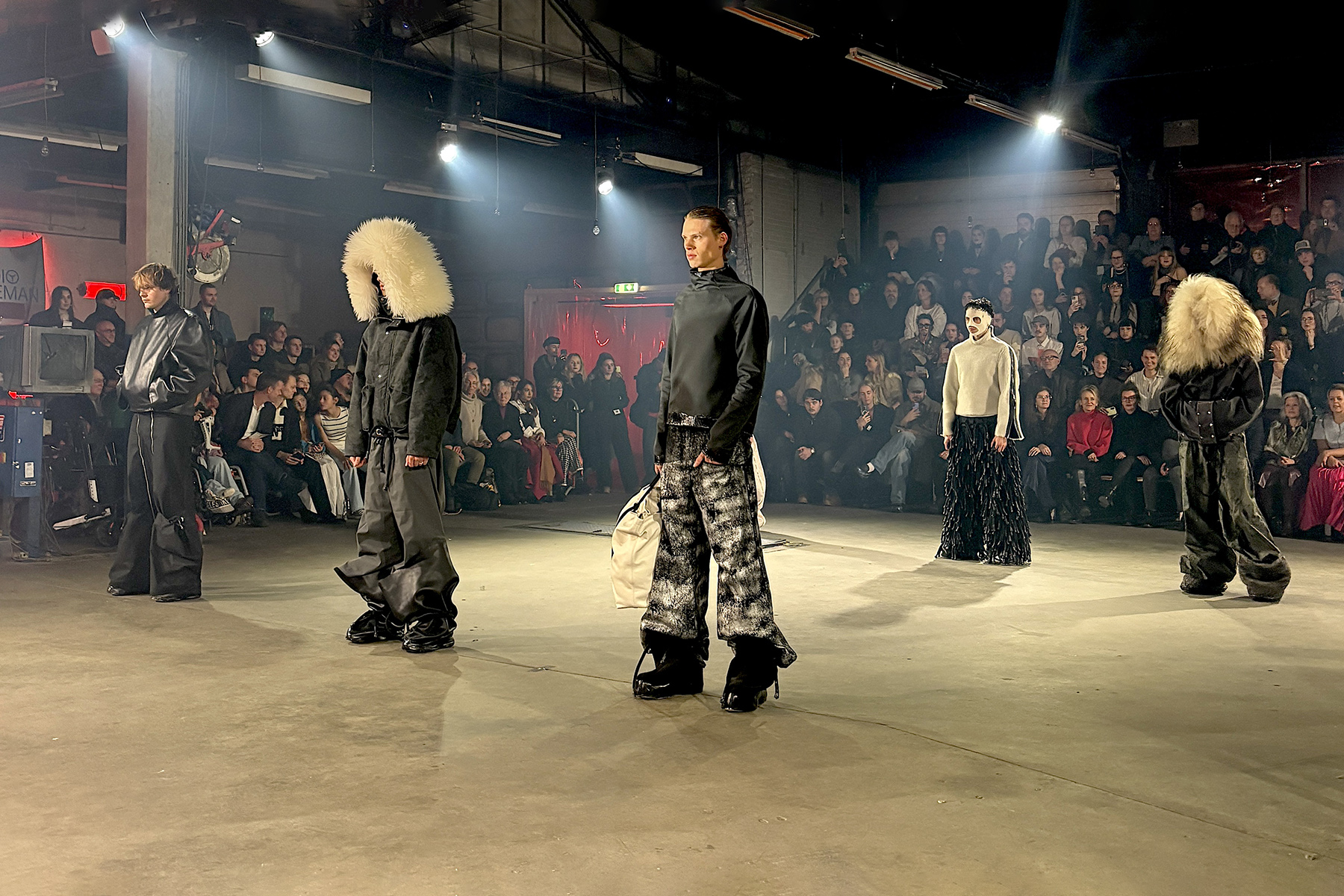
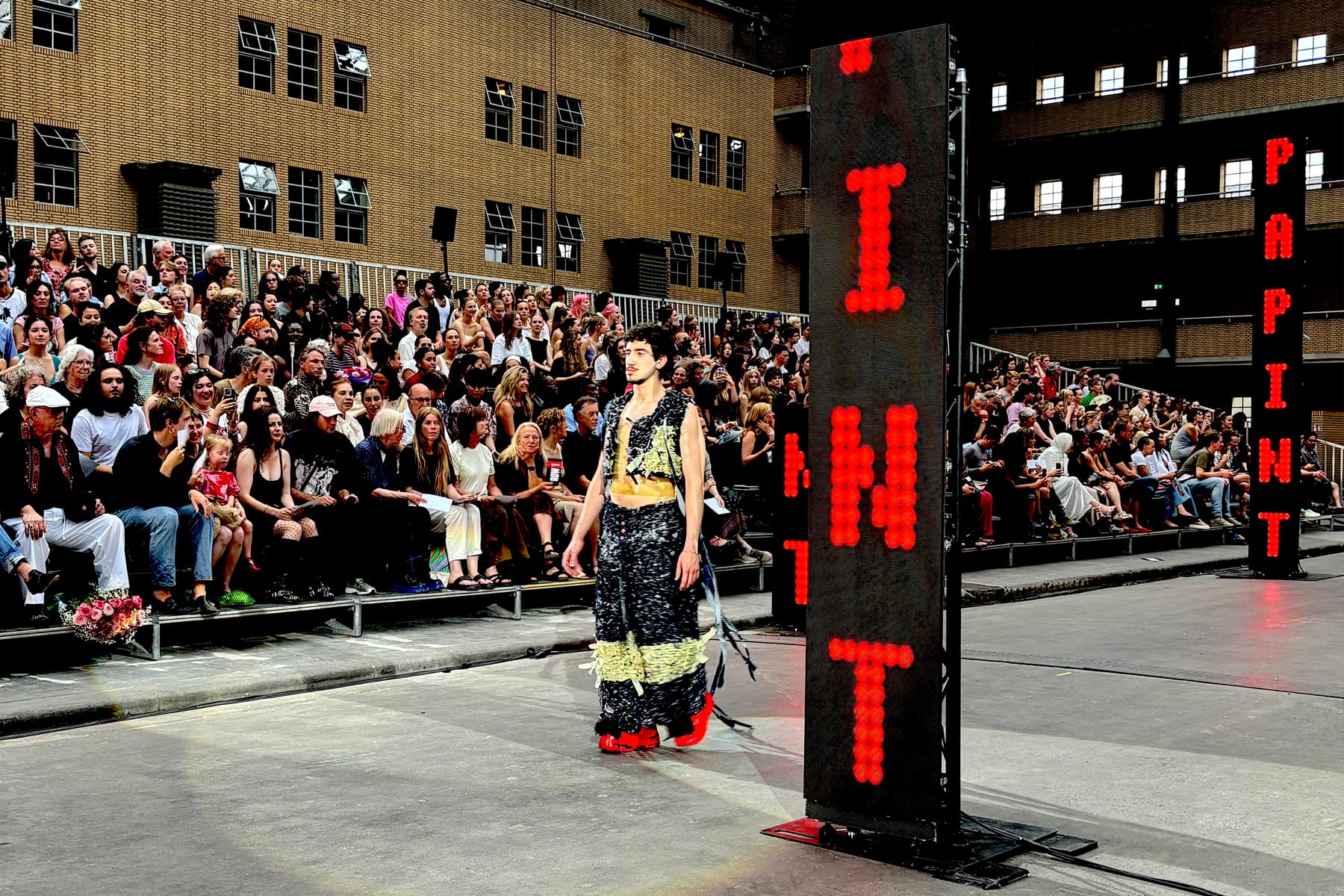
On Thursday, 18 June 2026, the AMFI Fashion & Design Graduation Show 2026 took place at Centrale Markthal in Amsterdam, where 43 graduating students presented collections that reflected a generation deeply engaged with questions of identity, belonging, resistance, and transformation.
Every graduation show offers a snapshot of the next generation, this year’s edition felt united by a common desire: to reclaim identity in an increasingly fragmented world. While the collections varied in aesthetics, from sculptural tailoring and digital streetwear to folklore-inspired craftsmanship, the underlying narratives repeatedly returned to themes of heritage, mental health, gender, memory, faith, and self-determination. Clothing is used as a way to process personal histories, challenge social structures, and imagine alternative futures.
Across 43 collections, the strongest common thread was a willingness to expose personal experiences as a means of addressing broader societal questions. Whether reflecting on migration, religion, labour, queerness, memory, or mental health, the designers demonstrated that fashion today is as much about ideas as it is about garments.
Identity in Flux
Many designers explored the complexity of cultural identity and the feeling of existing between worlds. Sabine Kanters’ Neither / Both reflected on her Dutch-Indonesian background and the experience of navigating multiple cultures without fully belonging to either, giving visual form to diaspora and hybridity.


Similarly, Alina Manolescu revisited her Romanian roots, translating traditional garments from Maramureș into contemporary streetwear as a way of reconnecting with heritage. For Angelina Tarasava, identity became speculative history. Bimbo from USSR imagined an alternative evolution of post-Soviet fashion, blending brutalist architecture, Soviet symbolism, and environmental influences into a playful yet critical reinterpretation of nostalgia and ideology.


Fashion as Protest and Reclamation
Several collections directly confronted systems of power and exclusion. Storm Nijhuis’ Hellion stood out as a bold fashion protest, reclaiming religious condemnation by transforming the notion of the ‘sinner’ into a symbol of queer empowerment. Through religious iconography and striking material contrasts, the collection challenged binary notions of purity and morality.


Likewise, Angelina Wielkens’ Jesus Saves Bro questioned superficial judgments and labels, arguing for a more nuanced understanding of faith and identity in contemporary culture. Domi van Gils addressed another form of social control with The Nightwalker, a collection born from the experience of feeling unsafe in public space. By reclaiming the night through fashion, she transformed vulnerability into agency.
Personal Narratives Become Collective Stories
Mental health and emotional resilience surfaced repeatedly throughout the show. Tyrese Rosel translated the invisible realities of depression into garments that sought to create recognition and empathy, making internal struggles physically visible.


Nice Lin’s Doormat critiqued toxic workplace culture through the metaphor of being ‘walked over,’ exposing the emotional cost of professional endurance in a society obsessed with productivity. Meanwhile, Šimon Mareš approached family trauma with biting humour in Worst Designer Ever, using the absurdity of divorce proceedings and divided possessions as inspiration for intentionally clashing garments that embodied incompatibility itself.


Memory, Heritage and Transformation
A fascination with memory and reconstruction connected several collections. Kisó Kismarczi explored how fading memories reshape cultural heritage, combining traditional household textiles with upcycled streetwear to revive fragmented histories.


Transformation was also central to Ugnė Kurutytė’s Chasing the Predator, an allegorical narrative about pursuing unattainable ideals and becoming trapped in cycles of unrealistic expectations. The work resonated with contemporary conversations around social media and identity performance. Similarly, Barbara Assiso’s GRIMA transformed involuntary sensory discomfort into exaggerated silhouettes and distorted volumes, encouraging audiences to embrace rather than avoid unsettling experiences.


Performance, Persona and Excess
Several graduates embraced theatricality as a design strategy. Veronica Passariello’s Scream of Consciousness was among the show’s most memorable presentations, celebrating exaggerated identities inspired by Leigh Bowery and surreal cinema. Rather than toning down excess, the collection amplified it, questioning conventional standards of beauty and acceptability.


Even Ella-José Echtermeijer’s playful knitwear collection critiqued entrenched ideas of femininity by reimagining etiquette through the lens of childlike disobedience, creating garments that appeared proper at first glance but subtly undermined social expectations.
Material as Meaning
Craftsmanship remained central throughout the show, but materials were rarely used for aesthetics alone. Janis Krauja explored the symbolic relationship between horse and rider, using sculptural forms and upcycled materials to investigate connection, control, and mutual dependence. Teun van Doorn reflected on his evolving relationship with fashion itself, balancing admiration with critique in a collection rooted in craftsmanship and industry reflection. And Roos Deckers’ Acge, with its focus on comfort, lingerie, and vulnerability, suggested that material choices can shape emotional experience as much as visual appearance.


Absurdity, Ritual and the Performance of Identity
Several designers examined how social structures and inherited traditions shape our lives in subtle yet powerful ways. Barbora Necpalová’s I Season with Ants used absurdity as both inspiration and critique, reflecting on a world where trivial concerns coexist with genuine crises and incompetence in positions of power has become normalized. By likening individuals to ants navigating systems beyond their control, the collection captured the quiet anxiety and helplessness that define much of contemporary life.


Tradition was reimagined through a queer lens in Gokste von Trockenfluss’ collection, rooted in the Arapinten ritual of Xiropotamos. Rather than treating ritual as static heritage, the designer explored it as a living and evolving practice, examining renewal, inheritance, and the tension of existing as a queer body within patriarchal cultural structures. The result was a thoughtful dialogue between preservation and transformation, showing how fashion can reinterpret ceremonial dress for new generations.


Digital Glitches and Self-Made Legends
Technology and performance also emerged as recurring motifs. Mikky Eliza Oskam’s Corrupted File translated the visual language of digital glitches into tactile streetwear, drawing inspiration from gaming culture and digital fashion. Imperfections, errors, and system failures became design features rather than flaws, suggesting that disruption itself can generate new forms of beauty and identity.

Meanwhile, Ida Stachura looked to history for inspiration with a collection dedicated to the legendary Polish silent film star Pola Negri. Fascinated by Negri’s ability to construct her own public persona through scandal and spectacle, Stachura celebrated self-invention as an act of empowerment. Her work served as both an homage to a cinematic icon and an encouragement to actively shape one’s own narrative rather than waiting for recognition from others.


Photography: Branko Popovic