Longread by Anne van der Zwaag
When it comes to staying in unique places, there are plenty of options for lovers of heritage and architecture, as well as design and interior decor. Each spot is more special than the next, and of course, it all depends on personal taste. The monuments of Hendrik de Keyser offer a unique experience. This association is dedicated to preserving architecturally or historically significant buildings and their interiors. Among other things, they do this by acquiring buildings, restoring them, and then making them available for vacation rentals.
Huis Slegers
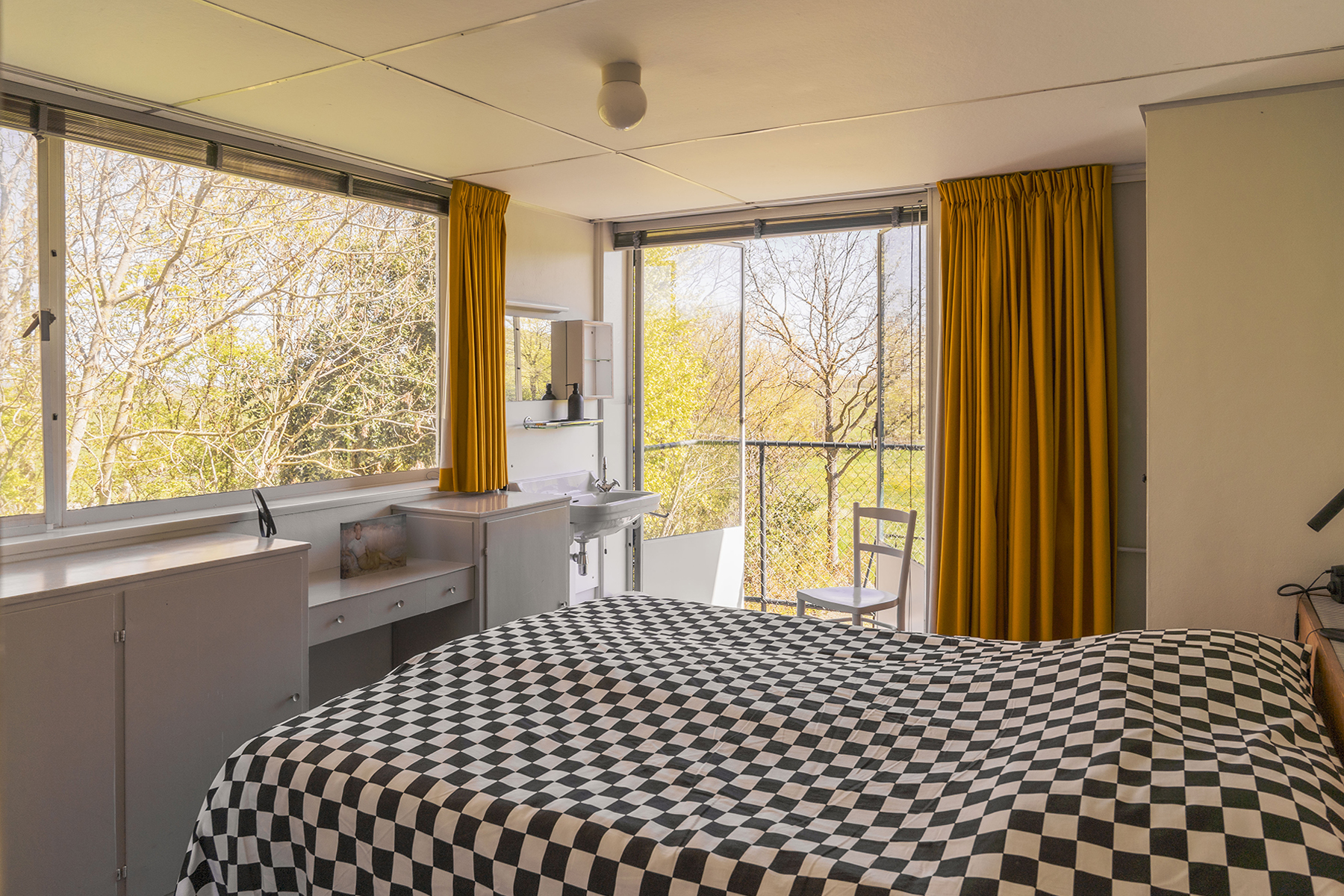
One such gem can be found in the town of Velp, in the province of Gelderland. In the 1950s, visual artist Piet Slegers and his wife Gerda commissioned Gerrit Rietveld to design a home with a studio apartment for them here. Initially, the couple wanted to remain in their hometown of Waalre, but that municipality rejected Rietveld’s design. In Velp, people were well acquainted with his work; Rietveld had already built the adjacent house, De Stoop, there.
The equally eye-catching Huis Slegers is also a textbook example of De Stijl and was created in close collaboration with the clients. All dimensions are based on one-meter modules, and in addition to brick, a great deal of glass was used. The house was designed to let in plenty of natural light and to connect with the simple garden, also designed by Rietveld, which, like the house, was intended to be functional. Both inside and out, everything has remained virtually unchanged—from the white, black, and primary color scheme to the layout, the views, and the shower. The small kitchen, including its fixtures, the zigzag chairs, and the table are also original. Typical of Rietveld is the cohesion between the exterior and the interior. The extent to which this remains intact, as well as the excellent condition of the house, make a stay here unique.


Huis Dijkstra
Dating back even further, yet also a prime example of modernism and a wonderful place to stay, is Huis Dijkstra in Groet, North Holland. The vacation home was designed in 1934 for the Dijkstra family by the architectural firm of Ben Merkelbach and Charles Karsten. Co-founders of the architectural group “De 8” and pioneers of the revolutionary Nieuwe Bouwen movement. Simplicity, functionality, light, air, and nature became increasingly important in the interwar period, and this is reflected in the house.
The austere building is situated amidst greenery, featuring large windows and striking glass patio doors that were a novelty at the time. The furniture could be moved outside in an instant for an optimal experience of nature. The house was renovated and modernized by the family’s son but remains largely in its authentic state. In 2012, he transferred the property to Hendrik de Keyser, on the condition that the association would maintain the original purpose and thus the function of a vacation home.



Huis Billiet
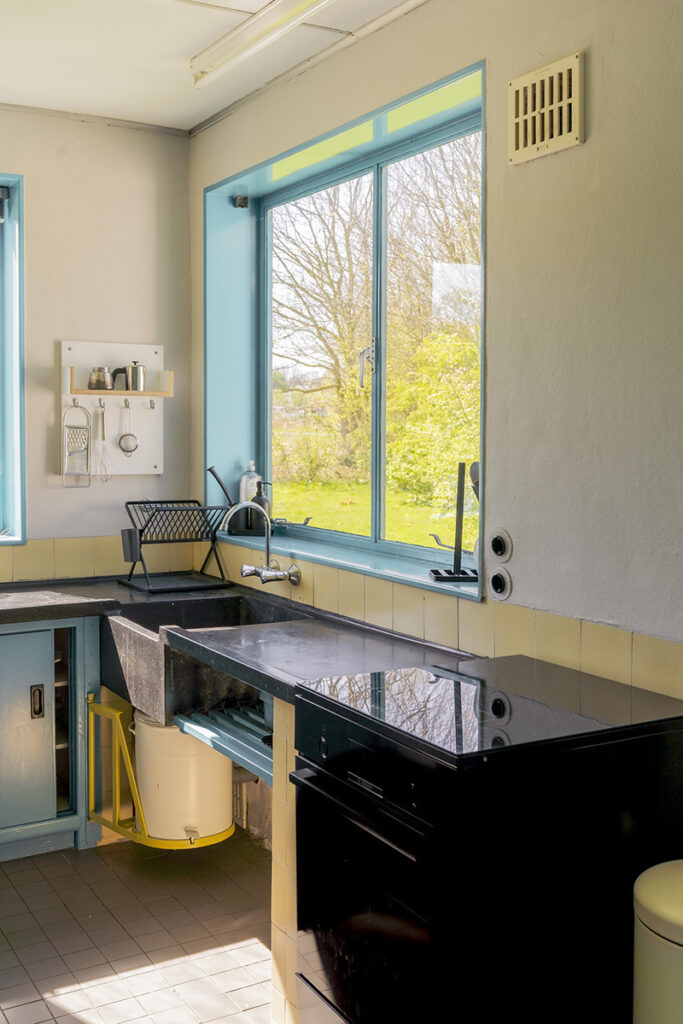
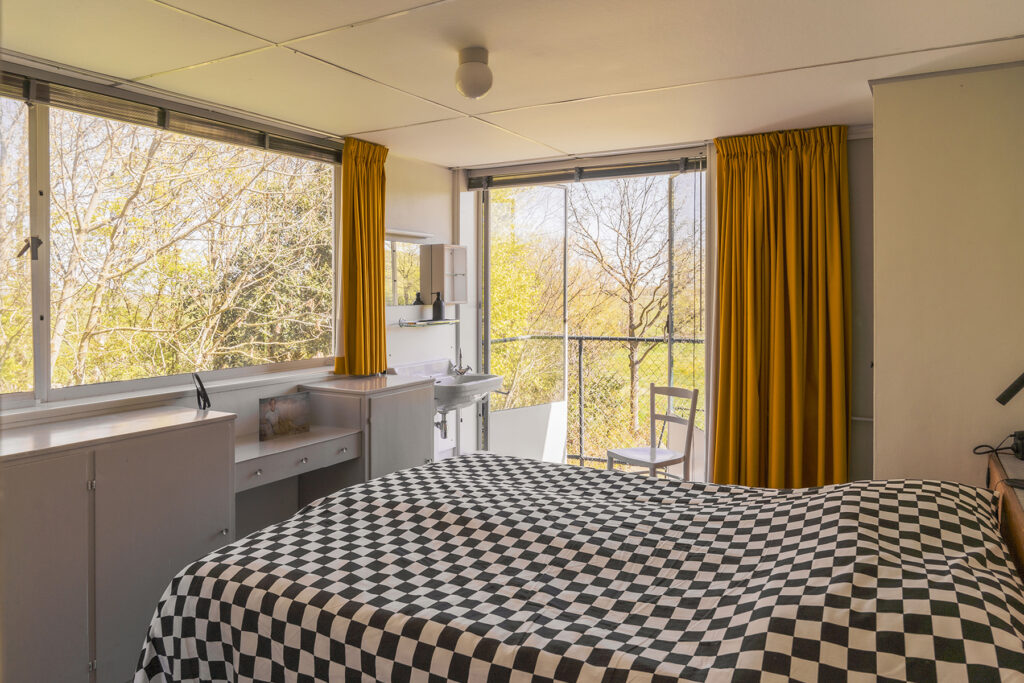
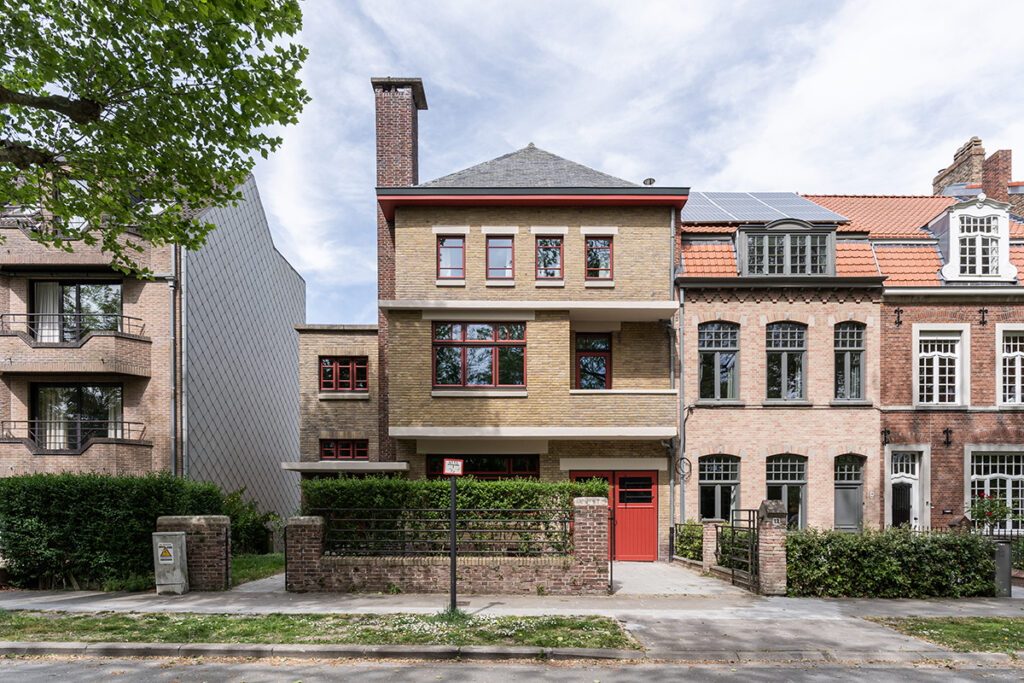
Restoring and transforming a listed historic building is no small feat, as Jessie Priem and Dries Van Den Broucke of Bruges—the proud owners of Huis Billiet—know all too well. Named in the Belgian tradition after its original builder, Jules Billiet, who commissioned the construction of a residence and diamond-cutting workshop in the 1920s according to the principles of De Stijl. Here, too, you sleep in a total work of art featuring materials, colors, and furniture that were daring for their time, with light playing a starring role. Characteristic features include the use of concrete, as well as the interplay of volumes and color schemes. The geometry of the interior is striking, with ten different colors interacting with one another and the woodwork of, for example, the cabinets. The tiles in the entryway, dining room, kitchen, bathroom, and restroom also create a unique architectural effect. This piece of modernist heritage by Belgian architect Huib Hoste has been lovingly restored by the current owners, allowing you to stay there as a guest today. New elements and contemporary comforts have been stylishly woven into the past. But that required a great deal of paperwork, research, and a healthy dose of patience and perseverance.


Silhûs
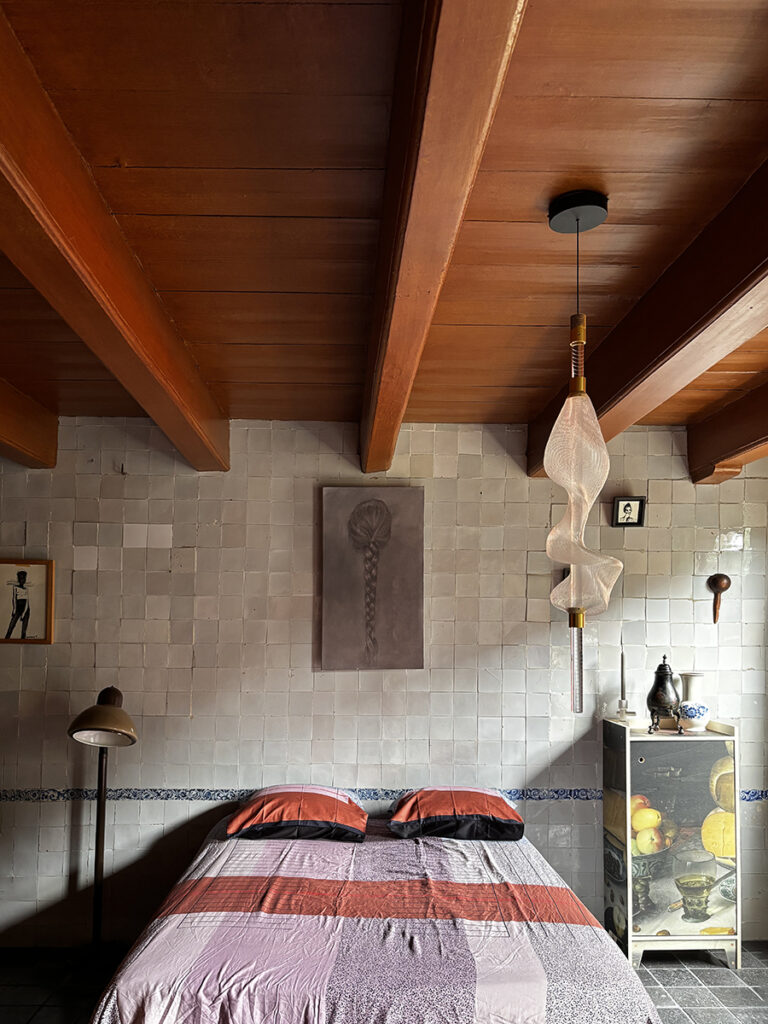
And that last point is perhaps the greatest challenge in transforming a historic building into a contemporary lodging. We experienced this firsthand when we purchased a former captain’s house and sailmaker’s workshop dating from 1750 in the Frisian water sports village of Woudsend. The restoration process for such a project is primarily for enthusiasts and requires a great deal of time and dedication. An antique dealer and auctioneer preceded us, restoring the house to its original condition and transforming it into a museum home—complete with tile murals and paintings on the fireplaces. We took over from him and converted the attic into a large loft with modern conveniences while preserving the historic atmosphere. By working with modular elements, the original structure remains intact. The Silhûs is furnished with antique pieces, as well as contemporary designs by Dutch trendsetters such as Ward Wijnand, Kars+Boom, Dirk Duif, Thier&vanDaalen, and Willem Zwiers. A place that connects the past and the present and preserves the house for the future.



Lloyd Hotel & Cultural Embassy
Lucas Mol took it a step further, transforming a massive colossus at the former Crailo barracks into a design hotel. That in itself isn’t new. Years ago, Amsterdam’s Lloyd Hotel was already guiding guests through rooms where they could marvel at the quirky furniture of Richard Hutten, Wannes Rooyaards, and Ineke Hans, and step into a refreshing bathroom designed by Joep van Lieshout. Unfortunately, the hotel has since been renamed The Hoxton, and you now stay there in a “stylish” yet oh-so-generic setting.


Hotel Piet Hein Eek
Piet Hein Eek also paved the way on Halvemaanstraat in Eindhoven. Here, you sleep surrounded by art, design, and antiques in thirteen unique rooms. Each room has its own color theme and was designed in collaboration with an artist. Among others, Sjimmie Veenhuis, Jan van der Ploeg, and Tom Claassen were involved in the project, and of course, all the furniture was crafted in-house by Eek. Young talent Teun Zwets created an entire apartment out of discarded sheet materials and painted the entire space blue using leftover paint.


De Groene Afslag
In Bussum, Lucas Mol took a truly ambitious approach to transforming an old military training center. Over the past few years, he has realized his sustainable (design) dream in this completely dilapidated building. De Groene Afslag, a creative hub and event venue for scientists, artists, entrepreneurs, thinkers, and investors, had already existed for a few years in a more temporary form. With the purchase of the enormous building on the Crailo military complex, he optimized his ambitions in the field of sustainable transition.
Last fall, he opened his “house of change” for the Dutch economy here, designed by RAU Architects, including a plant-based restaurant and a circular hotel, whose 30 rooms were decorated by artists and designers. Each in their own way, they show us how everything can be reused and why we need to put nature back at the center. For example, Antoine Peters conceived of a forest of legs as trees and transformed the room into a “walk-in forest,” while WhiteNoiseDada created a luxury suite made entirely from waste. In her room, Amy Lewis uses traditional Japanese weaving techniques to recycle textiles that never made it to the store, and Lara Reumer filled the room with intriguing artworks made from old electronics. The entire building has been largely renovated with secondhand materials, and you’ll find curious artworks and design objects everywhere. Here, you are invited to think differently about the present, the past, and especially the future—including the future of architecture and design.


